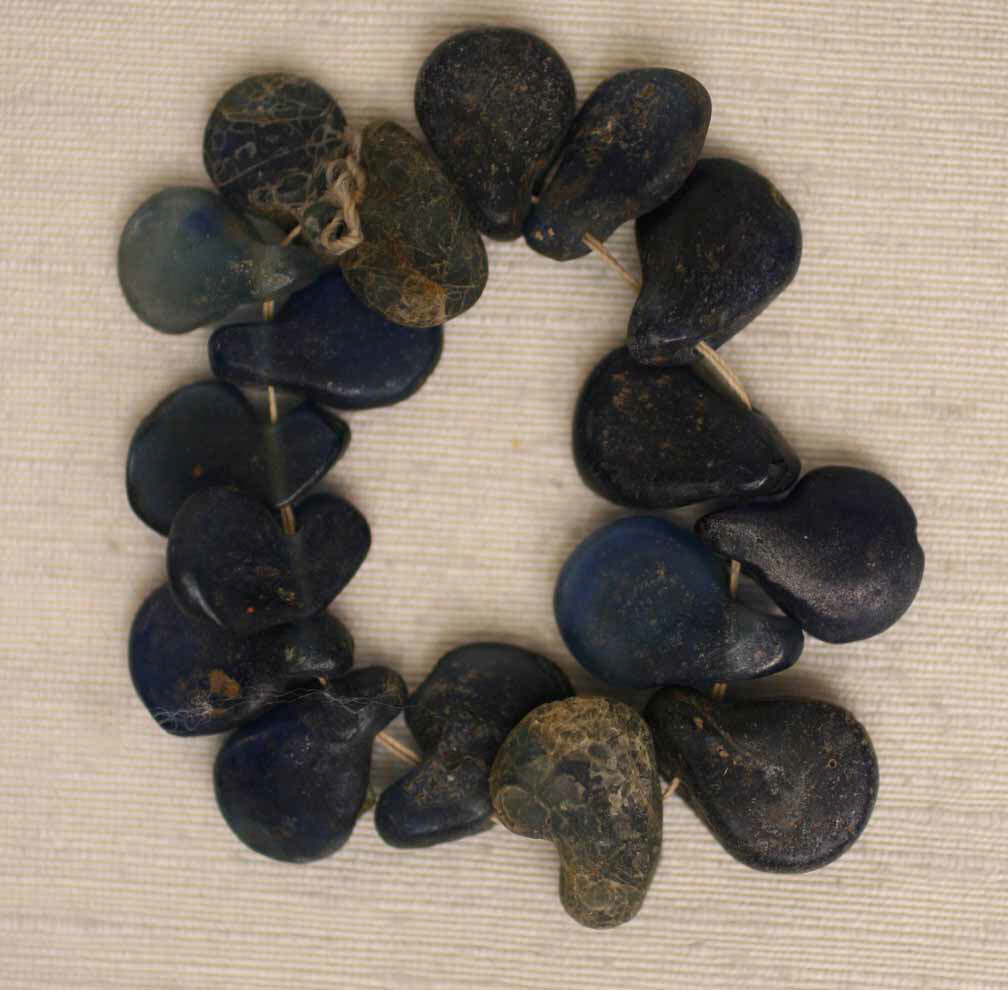
Executive Heritage Analysis: Glass Pendants from Ancient Civilizations
This strategic research paper examines the symbolic, historical, and spiritual dimensions of glass pendants from ancient civilizations, with a focused application for Katherine Fashion Lab’s 2026 high-end luxury strategy. As a Lead Heritage Curator, I analyze how these artifacts embody power, adornment, and transcendence, offering a unique foundation for modern luxury positioning.
Symbolic Power: The Glass Pendant as a Talisman of Authority
In ancient civilizations, glass pendants were not mere decorative objects; they were potent symbols of authority, protection, and social hierarchy. The earliest known glass pendants, dating to the Mesopotamian and Egyptian periods (circa 2500 BCE), were crafted using core-forming techniques, often incorporating vibrant hues of blue, green, and gold. These colors were not arbitrary—blue represented the Nile and the heavens in Egypt, signifying divine favor, while green symbolized rebirth and fertility. The pendant’s placement on the chest, near the heart, amplified its symbolic power, acting as a conduit between the wearer and the gods.
For Katherine Fashion Lab, this historical context underscores the pendant’s role as a statement of identity. In 2026, high-end luxury consumers seek objects that convey personal narrative and status. By integrating ancient symbolic motifs—such as the Eye of Horus or the Mesopotamian tree of life—into contemporary glass pendants, the brand can evoke a sense of timeless authority. This strategy aligns with the heritage-driven luxury trend, where provenance and meaning justify premium pricing. The pendant becomes a wearable artifact of power, appealing to discerning clients who value authenticity over mass-produced symbolism.
Historical Adornment: Craftsmanship and Cultural Exchange
The history of glass pendants reveals a rich tapestry of cultural exchange and technical innovation. Ancient Phoenician and Roman glassmakers perfected techniques like millefiori and mosaic glass, creating pendants that were traded across the Mediterranean. These objects adorned elites in Greece, Rome, and Persia, often as part of elaborate necklaces or amulet bags. The glass medium itself was revolutionary—translucent, luminous, and capable of mimicking precious stones like lapis lazuli or turquoise at a fraction of the cost. This democratization of luxury allowed broader access to protective symbols, yet the finest pieces remained exclusive to royal and priestly classes.
For Katherine Fashion Lab’s 2026 strategy, historical adornment offers a blueprint for craftsmanship storytelling. The brand can position glass pendants as heirloom pieces, emphasizing artisanal techniques such as lampworking or pâte de verre. By referencing ancient methods—like the Roman practice of embedding gold leaf within glass—the lab can create a narrative of enduring luxury. This approach resonates with the slow fashion movement, where clients invest in objects with history. A pendant that takes weeks to craft, inspired by a 3,000-year-old design, commands respect and a higher price point, reinforcing Katherine Fashion Lab’s commitment to heritage excellence.
Spiritual Meaning: The Pendant as a Vessel for Transcendence
Across ancient cultures, glass pendants served as spiritual intermediaries, believed to ward off evil, attract luck, or aid in afterlife journeys. In Egyptian funerary practices, glass amulets shaped like scarabs or ankhs were placed on mummies to protect the soul. Similarly, in early Chinese civilizations, glass bi discs—often worn as pendants—were linked to celestial harmony and the emperor’s mandate. The glass medium’s transparency was metaphorically potent: it symbolized clarity of vision, purity of spirit, and the ability to see beyond the material world. These pendants were often consecrated in rituals, infusing them with mana or spiritual charge.
For Katherine Fashion Lab, spiritual meaning is a differentiator in luxury markets. In 2026, consumers increasingly seek objects that offer emotional and metaphysical resonance. By designing glass pendants with intentional spiritual symbolism—such as protective circles, sacred geometry, or elemental colors—the brand can cater to the wellness luxury segment. Marketing should highlight the pendant’s role as a personal talisman, not just an accessory. Collaborations with spiritual advisors or historians can lend authenticity, while limited-edition releases tied to lunar cycles or solstices create exclusivity. This strategy transforms the pendant into a daily ritual object, deepening customer loyalty and brand affinity.
2026 High-End Luxury Strategy: Integrating Heritage into Modernity
To position glass pendants as a cornerstone of Katherine Fashion Lab’s 2026 collection, the following strategic pillars are recommended:
1. Heritage-Inspired Design Language: Develop a capsule collection of glass pendants that directly reference ancient motifs, using modern color palettes (e.g., deep cobalt, amber, and iridescent pearl). Each piece should include a provenance card detailing its historical origin, material symbolism, and spiritual significance. This elevates the pendant from commodity to collectible.
2. Limited-Edition Artisan Collaborations: Partner with master glassblowers from regions known for ancient traditions, such as Murano (Italy) or Hebron (Palestine). These collaborations ensure technical excellence and narrative depth. Release pendants in numbered series, with certificates of authenticity, to appeal to the investment-grade luxury market.
3. Experiential Retail and Digital Storytelling: Create immersive retail environments where clients can learn about the pendant’s history through augmented reality displays or interactive workshops. A digital archive—accessible via QR code on the pendant’s packaging—can include videos of artisans, historical references, and guided meditations on the pendant’s spiritual meaning. This builds a phygital luxury experience that bridges past and present.
4. Price Architecture and Positioning: Position glass pendants at a premium tier, starting at $2,500 for simple designs and scaling to $15,000 for complex, multi-technique pieces. This pricing reflects the material’s historical value, craftsmanship, and symbolic weight. By avoiding discounting and emphasizing rarity, Katherine Fashion Lab can maintain an aura of exclusivity.
5. Sustainability and Ethical Sourcing: Align with ancient ideals of harmony by using recycled glass and ethically sourced metals for findings. This resonates with the conscious luxury consumer, who values environmental stewardship as a form of spiritual practice. Market the pendants as “reborn artifacts”—objects that carry forward ancient wisdom into a sustainable future.
Conclusion: The Pendant as a Strategic Asset for 2026
Glass pendants from ancient civilizations offer Katherine Fashion Lab a rich repository of symbolic power, historical adornment, and spiritual meaning. By translating these heritage elements into a modern luxury strategy, the brand can differentiate itself in a crowded market. The pendant becomes more than an accessory—it is a talisman of identity, a testament to craftsmanship, and a bridge to the transcendent. For 2026, this approach positions Katherine Fashion Lab at the intersection of heritage and innovation, delivering high-end luxury that is both timeless and deeply resonant.