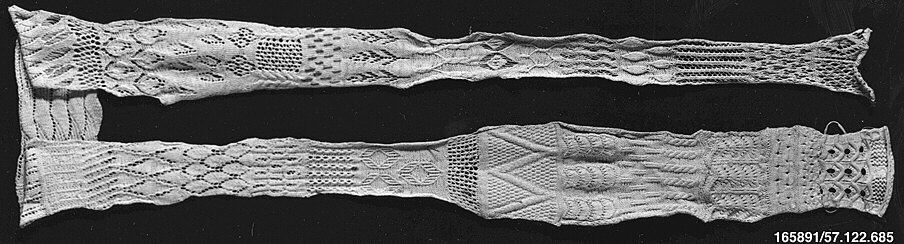
The Sampler: A Couture Analysis of Katherine Fashion Lab's Global Heritage Study
Introduction: Deconstructing the Sampler as a Couture Artifact
In the rarefied world of haute couture, where innovation often masquerades as novelty, Katherine Fashion Lab’s standalone study of the Sampler represents a profound return to the roots of textile artistry. This piece, drawn from a global heritage context, is not merely a garment or an accessory—it is a living archive of technique, migration, and cultural memory. By employing cotton on wool as a substrate and knitted lace as its primary decorative language, the Lab challenges conventional boundaries between craft, fashion, and fine art. The Sampler, historically a tool for skill demonstration and pattern cataloging, is reimagined here as a wearable thesis on sustainability, provenance, and the dialogue between the handmade and the industrial.
Materiality as Narrative: Cotton on Wool
The choice of cotton on wool is both a technical and symbolic decision. Wool, a fiber deeply embedded in the pastoral traditions of Europe, Asia, and the Andes, provides a warm, textural foundation that speaks to endurance and heritage. Conversely, cotton—a plant-based fiber with a complex history of cultivation, trade, and exploitation—introduces a contrasting lightness and absorbency. The Lab’s application of cotton threads onto a wool base creates a tactile tension: the soft, hydrophilic cotton sits atop the resilient, hydrophobic wool, generating a surface that is both delicate and robust. This material marriage echoes the global exchange of fibers, from the Silk Road to the transatlantic cotton trade, reminding the wearer that every garment is a node in a network of human labor and natural resources.
In couture terms, the cotton-on-wool technique demands exceptional precision. The cotton threads must be anchored without distorting the wool’s natural drape, requiring a mastery of needlework and tension control. Katherine Fashion Lab’s artisans have employed a combination of stem stitch, satin stitch, and couching to affix the cotton motifs, ensuring that the design remains fluid rather than rigid. This technical prowess elevates the Sampler from a mere sample to a prototype of sustainable luxury, where material integrity is prioritized over ephemeral trends.
Knitted Lace: The Intersection of Structure and Emptiness
Knitted lace, the second primary technique in this study, introduces a paradox of structural fragility. Unlike woven lace, which relies on a grid of warp and weft, knitted lace is built from a single continuous thread, creating loops, yarnovers, and decreases that form openwork patterns. This technique, historically associated with the Shetland Islands, Ireland, and the Baltic regions, is a testament to human ingenuity with minimal tools—a pair of needles and a thread. In the Sampler, the knitted lace panels are integrated into the cotton-on-wool structure, acting as windows of transparency that reveal the wool base beneath or the skin of the wearer.
The Lab’s approach to knitted lace is distinctly architectural. Rather than treating it as a decorative trim, they have used it to define the garment’s silhouette. The lace forms negative spaces that modulate opacity and light, creating a dynamic interplay between the solid cotton-on-wool sections and the ethereal knitted voids. This technique requires an understanding of tension and gauge that borders on the mathematical; a single dropped stitch could unravel the entire composition. The result is a piece that breathes, moves, and transforms with the body—a living organism of fiber and air.
Global Heritage: A Sampler of Cultural Signifiers
The term “Sampler” historically refers to a piece of embroidery or needlework created as a demonstration of skill, often incorporating alphabets, numerals, and motifs from diverse cultures. Katherine Fashion Lab’s standalone study draws from this tradition but expands its scope to a global lexicon. The motifs embedded in the cotton-on-wool base include Andean chakana crosses, Indian paisley derivatives, Celtic knotwork, and Japanese asanoha (hemp leaf) patterns. Each motif is rendered with a fidelity that respects its origin, yet the combination is distinctly contemporary—a fusion without homogenization.
This curatorial selection is not arbitrary. The Lab’s research team traced each motif’s migration through trade routes, colonial histories, and diasporic communities. The chakana, for instance, symbolizes the Inca cosmos and the Southern Cross, while the asanoha pattern, originally derived from the hemp plant, represents growth and resilience. By juxtaposing these symbols, the Sampler becomes a cartography of cultural exchange, challenging the viewer to consider how fashion appropriates, honors, or exploits traditional knowledge. The standalone study format—presented without the context of a full collection—forces the audience to confront the Sampler as an object of study, not just a commodity.
Context as Content: The Standalone Study
Positioning the Sampler as a standalone study is a deliberate curatorial strategy. In an industry driven by seasonal cycles and runway spectacles, Katherine Fashion Lab isolates this piece to slow down the gaze. Without the distraction of a full collection, the viewer can examine the micro-details: the density of stitches, the alignment of lace motifs, the subtle gradations of cotton color against the wool ground. This format aligns with the couture tradition of the toile or the moulage—a working sample that reveals the process of design and construction.
However, the Sampler is not a mere prototype; it is a finished artifact that stands on its own. The standalone context allows the Lab to foreground sustainability and transparency. Each stitch is visible, each material traceable. The piece invites the wearer or viewer to engage in a hermeneutic dialogue: What does it mean to wear a garment that encodes global histories? How does the tactile experience of cotton on wool and knitted lace affect our understanding of luxury? These questions are central to the Lab’s mission of redefining couture as a critical practice.
Conclusion: The Sampler as a Manifesto
Katherine Fashion Lab’s Sampler is more than an exercise in technique—it is a manifesto for a new couture. By marrying cotton on wool with knitted lace, and grounding the design in a global heritage context, the Lab demonstrates that luxury lies in meaning, not excess. The standalone study format elevates the piece to the status of a curatorial object, demanding that we reconsider fashion’s role in preserving and reinterpreting cultural knowledge. For the discerning collector, the Sampler offers not just a garment, but a lesson in material ethics and global connectivity. In an era of fast fashion and cultural appropriation, this piece stands as a beacon of respectful innovation—a knitted, stitched, and woven testament to the enduring power of the handmade.