Embroidery as Narrative: A Global Heritage Study in Silk and Velvet
Introduction: The Artisanal Dialogue Between Craft and Context
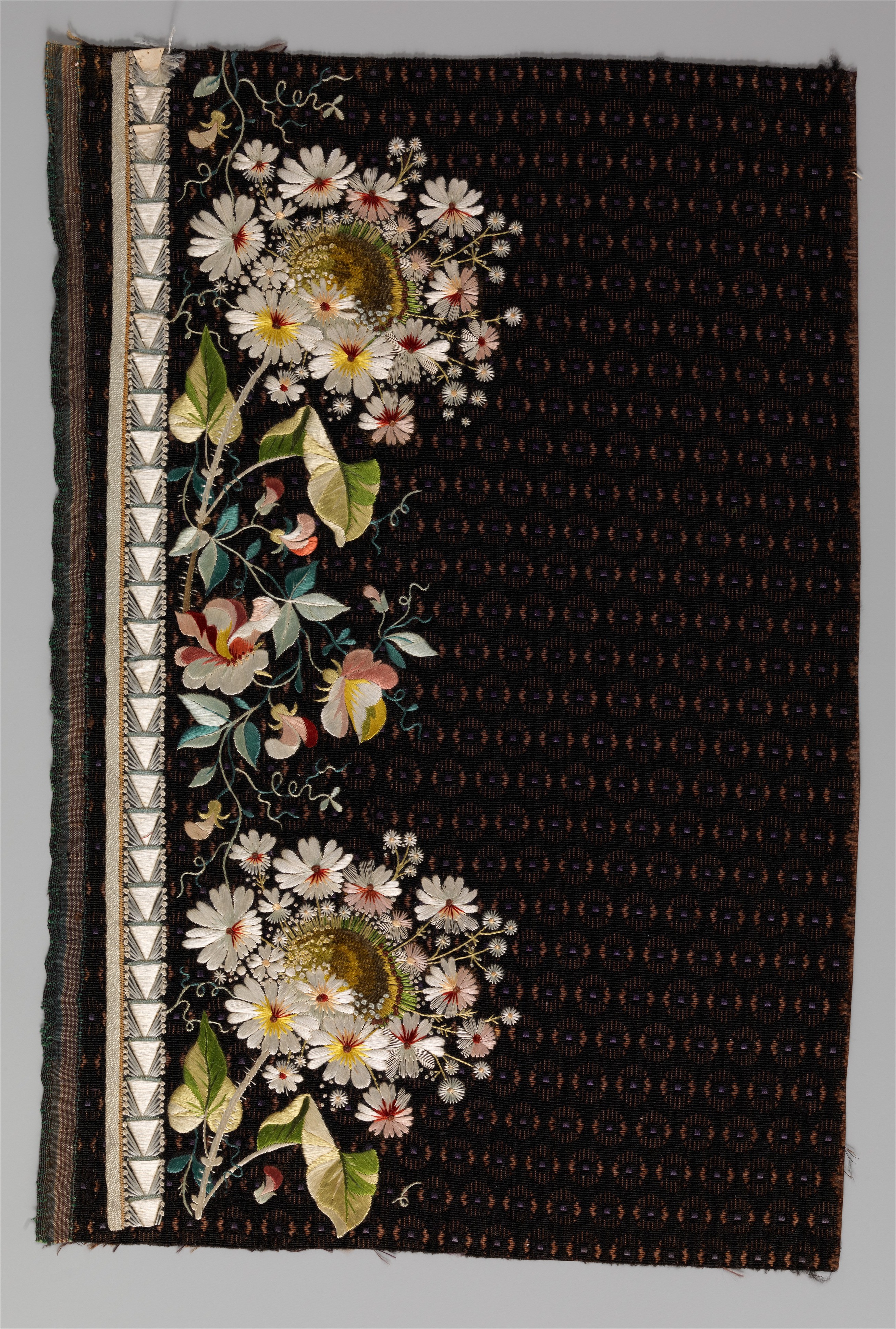
Katherine Fashion Lab presents an embroidery sample for a man’s suit that transcends mere decoration, emerging as a sophisticated dialogue between global heritage and contemporary couture. This standalone study, rendered in silk embroidery on silk velvet, invites a rigorous examination of materiality, technique, and cultural resonance. The sample is not a prototype for production but a curatorial artifact—a testament to the lab’s commitment to preserving and reinterpreting artisanal traditions through the lens of modern menswear. At first glance, the piece commands attention through its tactile richness: the deep, plush nap of black silk velvet absorbs light, while the embroidery—a dense interplay of gold, crimson, and ivory threads—creates a luminous counterpoint. This is not merely a fabric; it is a canvas where centuries of craftsmanship converge.
Material Analysis: The Synergy of Silk and Velvet
The choice of silk velvet as the base fabric is deliberate and significant. Silk velvet, with its origins in ancient China and later refinement in Italian and French ateliers, represents a pinnacle of textile luxury. Its construction—a pile woven from silk filaments—offers a surface that is both soft and structured, allowing embroidery to sit with a sculptural quality. The velvet’s deep, uniform nap provides a subtle backdrop that enhances the embroidery’s dimensionality without competing for attention. In this sample, the velvet is dyed a charcoal black, a color historically associated with formality and power in menswear, yet its matte finish introduces a modern restraint.
The embroidery thread is pure silk, chosen for its luster and strength. Silk thread, when worked into the velvet, creates a delicate tension: the softness of the pile contrasts with the crisp, defined stitches, producing a textural symphony. The use of gold-wrapped silk threads in the design’s central motifs adds a reflective quality that shifts with movement, evoking the opulence of Byzantine or Mughal court attire. This material pairing is not accidental; it echoes the global exchange of silk along the ancient trade routes, from the Silk Road to the Spice Route, embedding the sample in a lineage of cross-cultural luxury.
Technique: The Architecture of Stitch and Symbol
The embroidery technique employed is a hybrid of traditional hand-stitching and machine-assisted precision, reflecting the lab’s ethos of marrying heritage with innovation. The primary stitch is the satin stitch, used to fill the larger floral and geometric forms with smooth, uninterrupted surfaces. This stitch, requiring meticulous tension control, allows the silk thread to lie flat and reflect light uniformly, creating a mirror-like finish in the gold sections. For the finer details—such as the intricate filigree borders and the delicate vine tendrils—the stem stitch and chain stitch are utilized, offering both durability and fluidity. The chain stitch, in particular, evokes the handwork of Indian zardozi or Chinese Suzhou embroidery, where continuous loops create a raised, almost beaded effect.
A notable technical feature is the use of couching to anchor heavier gold threads. Here, fine silk filaments are laid over the gold thread and stitched at intervals, creating a ribbed texture that mimics the opus anglicanum of medieval Europe or the metal-thread work of Ottoman kaftans. This technique not only secures the metallic elements but also adds a structural rhythm to the design. The sample’s embroidery density is high—approximately 80% coverage in the central motif—yet the velvet remains supple, a testament to the embroiderer’s skill in balancing tension and flexibility.
Design Motifs: A Lexicon of Global Heritage
The embroidery’s iconography is a deliberate fusion of global motifs, curated to represent a “global heritage” narrative without falling into pastiche. The central element is a stylized pomegranate, a symbol of fertility, prosperity, and resurrection across Persian, Greek, and Chinese cultures. Its form is rendered with symmetrical, overlapping petals that recall the “tree of life” patterns found in Safavid carpets and Mughal miniatures. Surrounding the pomegranate are geometric interlocks inspired by Islamic arabesques, their infinite repetition suggesting both mathematical precision and spiritual infinity. These geometries are framed by floral scrolls that echo the “millefleurs” of French Gothic tapestries, yet their asymmetry introduces a contemporary dynamism.
The color palette is equally deliberate: gold represents enlightenment and eternity, crimson denotes vitality and nobility, and ivory symbolizes purity and craftsmanship. The interplay of these hues on the black velvet creates a chiaroscuro effect, where the embroidery seems to float above the fabric. This visual depth is further enhanced by the use of graduated shading in the pomegranate’s seeds, achieved through a technique of layering threads of varying tones—a method reminiscent of the “needle painting” tradition in European botanical illustration.
Contextual Significance: The Standalone Study as Curatorial Statement
This embroidery sample is presented as a standalone study, a format that elevates it beyond functional design to a piece of applied art. In the context of Katherine Fashion Lab, such studies serve as research artifacts, documenting the process of cultural synthesis. They are not intended for immediate commercial production but for exhibition and scholarly dialogue. The sample challenges the conventional hierarchy in menswear, where embroidery is often relegated to decorative trim or lapel details. Here, the embroidery is the suit’s essence—a narrative device that transforms the garment into a wearable archive of global textile heritage.
From an MBA-level strategic perspective, this study underscores the lab’s positioning in the luxury market: it targets connoisseurs who value provenance, technique, and intellectual rigor over trend-driven consumption. The sample’s global heritage motifs align with the growing demand for “cultural sustainability” in fashion, where brands are expected to honor and reinterpret traditional crafts. By sourcing silk from Japan, velvet from Italy, and employing artisans trained in Indian zardozi and French broderie, the lab creates a supply chain that is both ethical and narrative-rich. This approach not only differentiates the product but also justifies a premium pricing strategy, appealing to a clientele that views fashion as an investment in cultural capital.
Conclusion: A Future-Forward Heirloom
In this embroidery sample, Katherine Fashion Lab achieves a rare synthesis: it is at once a homage to global heritage and a blueprint for future menswear. The silk-on-velvet construction, the meticulous technique, and the curated iconography coalesce into a study that is both timeless and avant-garde. For the discerning observer, this piece is not merely a sample but a manifesto—a declaration that couture can be a vessel for cultural memory, craftsmanship, and innovation. As the lab continues to explore this intersection, the standalone study remains a vital tool for pushing the boundaries of what a man’s suit can represent: not just a garment, but a story stitched in silk and gold.