Heritage Analysis: The Kris with Sheath
Subject Overview and Cultural Provenance
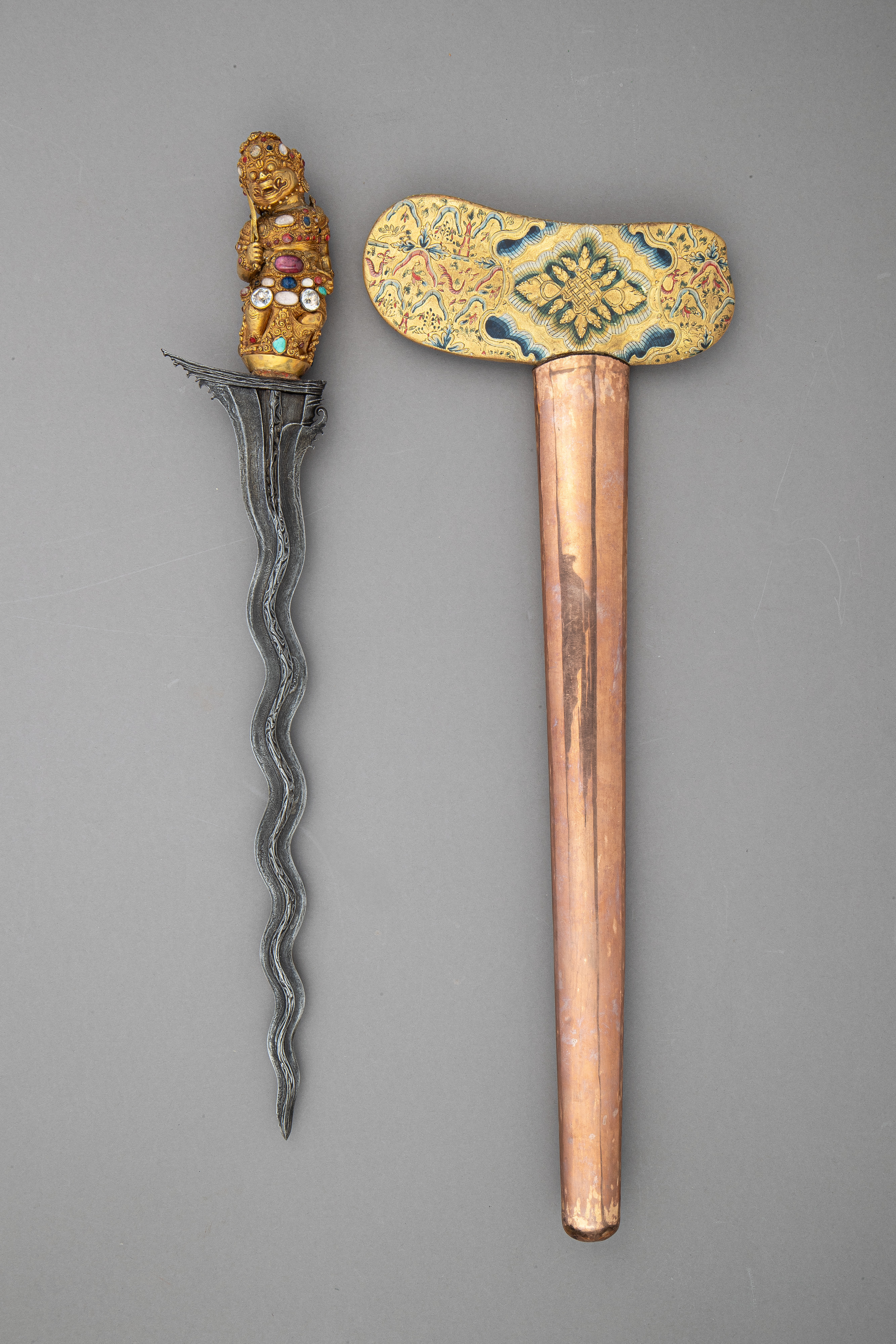
The Kris with Sheath, originating from the rich cultural tapestry of Bali, Indonesia, represents far more than a ceremonial blade. Crafted from steel, wood, copper, gold, semiprecious stones, turquoise, and pigment, this artifact is a masterwork of symbolic engineering and spiritual iconography. For Katherine Fashion Lab, this piece offers a profound case study in the intersection of cultural symbolism, historical adornment, and spiritual meaning—elements that are increasingly pivotal in the 2026 high-end luxury strategy landscape. As a strategic standalone research subject, the Kris reveals how materiality and form can encode power, status, and metaphysical protection, providing a blueprint for luxury brands seeking to transcend mere aesthetics and embed deep narrative resonance.
Symbolic Power: The Kris as a Conduit of Authority and Protection
The Kris is not merely a weapon; it is a sacred object imbued with animistic and Hindu-Balinese cosmological significance. Its wavy blade, known as luk, is often interpreted as a representation of the mythical serpent Nāga, symbolizing cosmic energy, fertility, and the perpetual cycle of life and death. For Balinese royalty and spiritual leaders, the Kris was a talisman of authority, believed to possess its own kekuatan (spiritual power) that could protect its owner from malevolent forces, both physical and metaphysical. The pamor (pattern welding) on the steel blade is not decorative; it is a visual language of status—specific patterns were reserved for kings or high priests, signifying their divine right to rule or mediate between realms.
This symbolic power is amplified by the sheath, which is itself a work of art. The use of gold and semiprecious stones—particularly turquoise, a stone associated with protection, healing, and spiritual attunement in many cultures—transforms the Kris into a portable shrine. For the 2026 luxury consumer, this concept of wearable authority is compelling. The Kris demonstrates that true luxury is not about ostentation but about imbuing objects with agency. A high-end brand can leverage this by designing pieces that act as personal totems, offering the wearer a sense of empowerment and protection—a narrative far more resonant than simple material value.
Historical Adornment: The Intersection of Craft and Status
Historically, the Kris was an essential component of Balinese courtly attire, worn during ceremonies, diplomatic missions, and rites of passage. Its adornment was a stratified language of identity. The hilt, often carved from rare wood or ivory, might depict a deity, a demon, or a stylized human figure, each choice communicating the owner’s lineage, spiritual allegiance, or personal virtues. The sheath, or warangka, was typically constructed from wood and overlaid with copper, gold, or silver, with intricate repoussé work depicting scenes from the Ramayana or local folklore. The pendok (metal band) and gandar (scabbard) were often inlaid with turquoise and other gemstones, creating a chromatic harmony of earth tones and vibrant blues.
This meticulous attention to adornment highlights a key lesson for Katherine Fashion Lab: luxury is embedded in process and provenance. The Kris was not mass-produced; each piece was a collaboration between a pande (blacksmith), a goldsmith, a woodcarver, and a stone setter, often working under the patronage of a royal house. For a 2026 luxury strategy, this model of atelier-based, multi-craft collaboration is ideal. Brands can position themselves as curators of heritage techniques, partnering with master artisans to create limited-edition pieces that tell a story of cultural continuity. The Kris proves that historical adornment is not static; it is a dynamic dialogue between maker, wearer, and society—a dialogue that today’s discerning consumers crave.
Spiritual Meaning: The Kris as a Mediator Between Worlds
At its core, the Kris is a spiritual object. In Balinese tradition, a Kris is believed to house a penunggu (spirit guardian) and must be treated with respect—often offered incense, flowers, and prayers during Galungan or other temple festivals. The pamor patterns are not merely decorative; they are considered sacred geometric formulas that channel cosmic energy (prana). The blade’s luk (waves) are said to represent the seven levels of existence in Hindu cosmology, from the earthly realm to the divine. The turquoise and other stones are chosen for their vibrational properties, believed to align the wearer’s energy with the universe.
This spiritual dimension is critical for the 2026 luxury market, which is increasingly driven by mindfulness, intentionality, and wellness. The Kris offers a template for objects of power that go beyond status symbols to become tools for personal transformation. A luxury brand can integrate this by designing collections that are ritualistic—pieces that are meant to be worn during specific practices, meditations, or life transitions. The use of semiprecious stones like turquoise can be marketed not just for their beauty but for their energetic properties, appealing to a consumer base that values holistic well-being. The Kris teaches that spiritual meaning is not a superficial add-on but a foundational element that can elevate a brand from commercial to sacred.
2026 High-End Luxury Strategy: Translating the Kris into Modern Context
For Katherine Fashion Lab, the Kris provides a strategic blueprint for a 2026 luxury line that is both culturally respectful and commercially innovative. The following strategic pillars emerge from this analysis:
1. Narrative-Driven Design: Each piece in a luxury collection should tell a story of protection, authority, or spiritual alignment. The Kris’s symbolic power can be translated into jewelry, accessories, or ready-to-wear that features wave motifs, pamor-inspired patterns, or turquoise inlays. The narrative should be transparent and educational, positioning the brand as a custodian of Balinese heritage.
2. Artisanal Provenance and Limited Editions: Emulate the Kris’s production model by partnering with Balinese pande and goldsmiths. Create a “Master Artisan Series” that produces no more than 100 pieces per design, each with a certificate of authenticity detailing the craft and cultural significance. This scarcity and craftsmanship align with the 2026 luxury consumer’s desire for exclusivity and authenticity.
3. Ritual and Wellness Integration: Develop a “Sacred Adornment” collection that includes wearable talismans—necklaces, rings, or bracelets designed to be used in meditation or personal rituals. Include a care guide that explains how to “activate” the piece through intention-setting, mirroring the Kris’s spiritual maintenance. This taps into the wellness luxury trend, projected to grow by 12% annually through 2026.
4. Material Alchemy: Use the Kris’s material palette—steel, gold, copper, turquoise, and pigment—as a signature. The contrast of industrial steel with precious gold and organic turquoise creates a visual tension that is both modern and ancient. For 2026, this alchemical blend can be a brand hallmark, symbolizing the union of strength and spirituality.
5. Cultural Stewardship and Ethical Luxury: Ensure that all sourcing of turquoise and gold follows ethical and fair-trade practices. Collaborate with Balinese cultural institutions to ensure that the designs are not appropriative but celebratory and educational. A portion of proceeds can fund the preservation of traditional Kris-making workshops, reinforcing the brand’s commitment to heritage.
Conclusion
The Kris with Sheath is a masterclass in how an object can embody symbolic power, historical adornment, and spiritual meaning. For Katherine Fashion Lab, it offers a rich, multidimensional foundation for a 2026 luxury strategy that is both visionary and grounded. By translating the Kris’s essence—its narrative depth, artisanal integrity, and metaphysical resonance—into a modern luxury context, the brand can position itself at the forefront of a new paradigm: one where luxury is not just possessed but experienced, not just worn but revered. This is the future of high-end fashion: objects that matter, stories that endure, and a heritage that inspires.