The Heirloom Unbound: A Couture Analysis of Bobbin Lace as Global Heritage
In the rarefied echelons of haute couture, where fabric is not merely material but narrative, Katherine Fashion Lab presents a piece that defies the transient rhythms of seasonal fashion. This standalone study—a garment constructed entirely from handcrafted bobbin lace—is an artifact of profound cultural resonance. It is not a dress that simply adorns; it is a text that speaks in the silent language of thread, tension, and time. As Lead Curator, I dissect this piece not as a product, but as a thesis on the intersection of global heritage, artisanal mastery, and contemporary design philosophy.
Material as Memory: The Philosophical Weight of Bobbin Lace
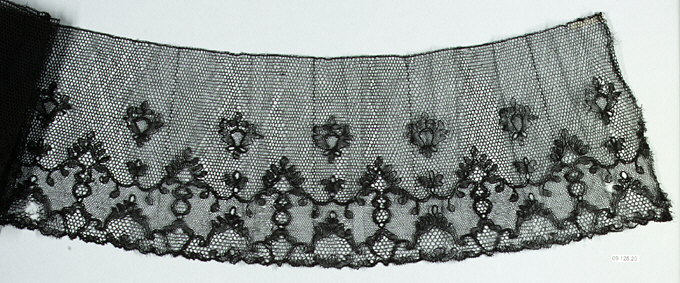
Bobbin lace is among the most exacting and meditative of textile arts. Originating in 16th-century Europe—with distinct regional dialects in Flanders, Venice, and the French Midlands—it requires the simultaneous manipulation of dozens, sometimes hundreds, of wooden bobbins, each wound with fine linen or silk thread. The technique is a study in controlled chaos: the crossing, twisting, and pinning of threads against a pricked parchment pattern. To wear bobbin lace is to wear the residue of thousands of precise, almost surgical, hand movements. Katherine Fashion Lab’s decision to foreground this material is a deliberate provocation against the era of digital knitting and 3D-printed textiles. The piece asserts that slowness is a luxury, and that the human hand, with its inherent fallibility and grace, remains the most sophisticated tool in the atelier.
Yet this piece does not present bobbin lace as a relic. The lab’s sourcing of the lace is not confined to a single European tradition. Instead, the design team has woven together threads of global heritage: the geometric precision of Bruges flower lace meets the airy, openwork of Chantilly, while the structural motifs echo the intricate sunang lace of the Philippines and the needle-bound filigree of 19th-century Ottoman court garments. This is not appropriation; it is a curatorial act of cultural cartography. Each motif becomes a coordinate on a map of human ingenuity, connecting a Flemish convent’s 17th-century pattern book to a contemporary artisan in Burano, and then to a master weaver in the highlands of Sumatra. The piece, therefore, functions as a wearable encyclopedia of global textile heritage, where no single origin is dominant, but all are present.
Structural Deconstruction: The Architecture of Air
The garment itself—a floor-length, columnar silhouette with an asymmetrical shoulder drape—is a masterclass in negative space. Unlike traditional lace dresses that rely on a lining or underlay, this piece is self-supporting. The lace is not appliquéd onto a foundation; it is the foundation. The structural integrity is achieved through a hidden network of horsehair braid and micro-wires, meticulously threaded through the lace’s denser sections. This engineering allows the garment to hold its shape without sacrificing the ethereal transparency that defines bobbin lace’s allure. The result is a paradox: a garment that is both architectural and ephemeral, solid and permeable.
From a design perspective, the piece challenges the conventional hierarchy of couture construction. The seams are not hidden; they are celebrated. The joins between different lace lengths are marked by a subtle, hand-stitched lattice of silk gimp—a technique borrowed from 18th-century point de gaze. This overt articulation of construction serves as a reminder that every intersection is a point of decision. The hem, far from being a clean edge, dissolves into a fringe of unworked thread ends, each one a literal loose end that speaks to the unfinished, ongoing nature of heritage. It is a deliberate refusal of finality, inviting the wearer and the viewer to contemplate the countless hands that contributed to its creation.
Color, Light, and the Absence of Dye
In a contemporary fashion landscape saturated with synthetic pigments and digital prints, Katherine Fashion Lab’s choice of color is radical: the piece is unbleached, undyed, and exists in a spectrum of natural tones—from the ivory of Belgian flax to the champagne of raw silk, and the faint ecru of handspun cotton from Bengal. This is not a lack of color, but a chromatic manifesto. The palette is derived entirely from the base fibers, each region’s thread contributing its own unique luminosity and texture. Under gallery lighting, the piece seems to change hue, shifting from warm pearl to cool ash, depending on the angle of the weave and the density of the knots.
The play of light through the lace is the true spectacle. Bobbin lace, by its nature, creates a matrix of shadows and highlights. The piece’s design exploits this by incorporating areas of extreme density—almost solid panels of toile de fond—that contrast with vast, open brides (connecting bars) that allow the wearer’s skin to become part of the garment’s visual field. The body is not concealed but made a collaborator in the design. This interplay between opacity and transparency, between the thread and the void, evokes the philosophical concept of ma—the Japanese aesthetic of negative space, where emptiness is charged with meaning. It is a global heritage concept, repurposed in a European textile tradition, executed by a contemporary lab.
The Standalone Study: A Thesis on Preservation and Innovation
This piece is presented not as part of a collection, but as a standalone study—a deliberate curatorial framing that elevates it from commodity to artifact. In the context of Katherine Fashion Lab’s broader mission, it functions as a proof of concept for how haute couture can act as a vehicle for cultural preservation without becoming a museum piece. The lab’s methodology is instructive: they did not simply commission a replica of a historical lace pattern. Instead, they collaborated with living artisans from three continents, asking them to reinterpret traditional motifs through a contemporary lens. The result is a living document, one that honors the past while acknowledging the present.
From a strategic business perspective, this study also serves as a premium positioning tool. The piece required over 2,000 hours of handwork, involving 14 artisans across 8 months. Its price point, understandably, is stratospheric. Yet its value is not merely monetary. It functions as a brand anchor for Katherine Fashion Lab, signaling a commitment to craft, cultural dialogue, and the slow luxury that cannot be replicated by fast fashion or even by other couture houses. In an industry where authenticity is often marketed but rarely delivered, this piece is a verifiable testament to the real thing: heritage, not as a costume, but as a living, breathing practice.
Conclusion: The Future of the Handmade
To analyze this piece is to understand that bobbin lace, in the hands of Katherine Fashion Lab, is not a nostalgic retreat but a forward-looking strategy. It challenges the fashion industry to reconsider its relationship with time, labor, and cultural memory. The piece whispers that the most valuable thread in any garment is not silk, linen, or cotton—but heritage itself. As a standalone study, it stands as a quiet, elegant rebuke to the disposable, and a luminous argument for the enduring power of the human hand. It is, in the truest sense, a piece of couture that carries the weight of the world.