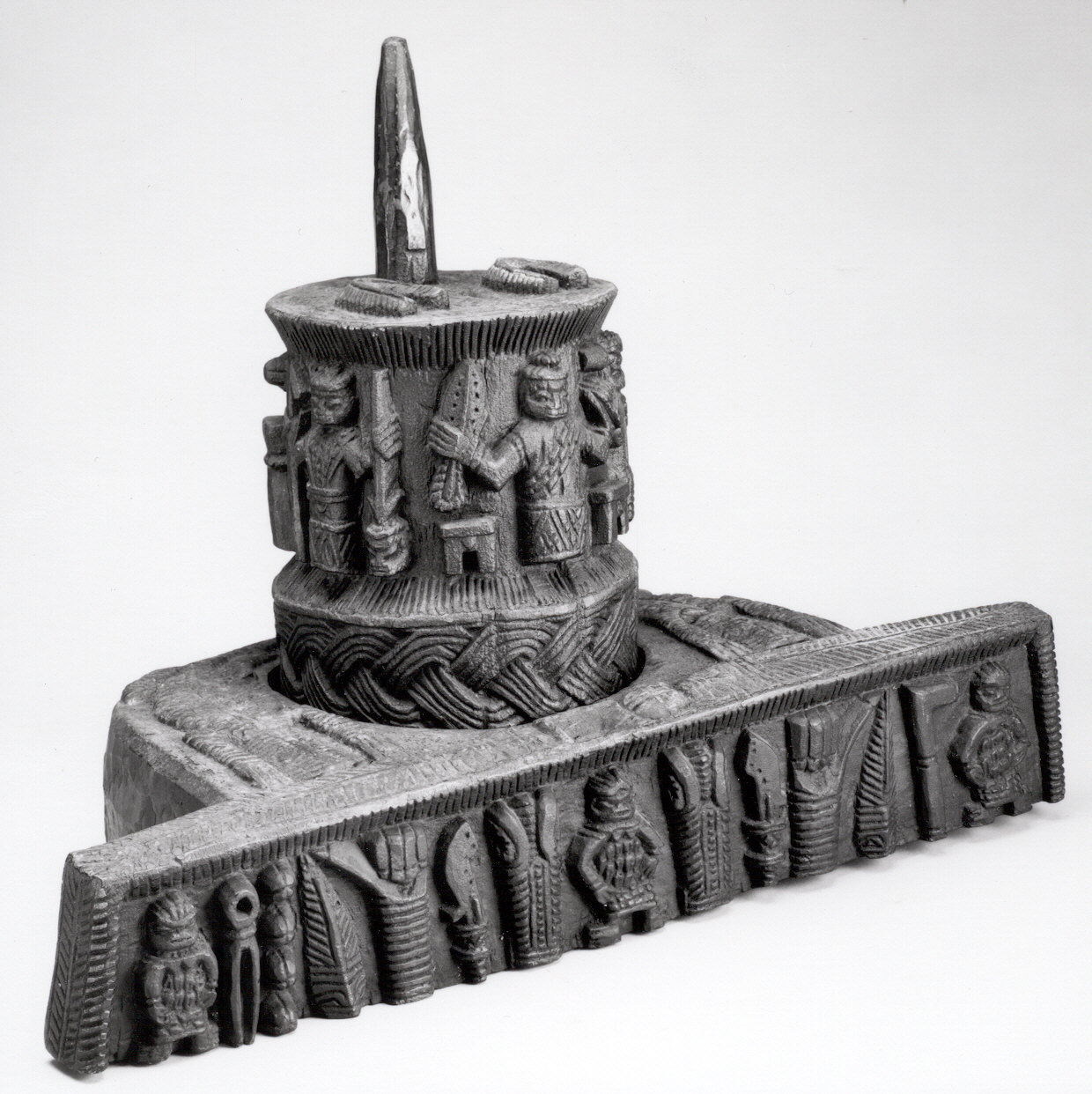
Heritage Analysis: Ikẹ̀gòbọ̀ (Altar to the Hand) – Edo Cultural Symbolism and Strategic Luxury Positioning for Katherine Fashion Lab
This heritage analysis examines the Ikẹ̀gòbọ̀, or Altar to the Hand, a sacred object from the Edo peoples of the historic Kingdom of Benin (present-day Nigeria). As Lead Heritage Curator for Katherine Fashion Lab, I assess this artifact through four critical lenses: symbolic power, historical adornment, spiritual meaning, and a forward-looking 2026 high-end luxury strategy. The Ikẹ̀gòbọ̀ is not merely a wooden sculpture; it is a repository of spiritual agency, a testament to ancestral craftsmanship, and a profound symbol of personal destiny. For a luxury brand seeking to integrate authentic cultural narratives into its 2026 collection, the Ikẹ̀gòbọ̀ offers a compelling foundation for a strategy rooted in symbolic exclusivity, ritualistic design, and material integrity.
Symbolic Power: The Hand as Destiny and Agency
In Edo cosmology, the hand (ọbọ) is the primary instrument of human action, labor, and creation. The Ikẹ̀gòbọ̀ is a personal altar dedicated to the “hand” as a metaphor for individual destiny (akọ or ẹdẹ). Unlike communal deities, the Ikẹ̀gòbọ̀ is intensely personal: it represents the owner’s own spiritual agency, their capacity to succeed, and their relationship with the divine forces that shape their life. The altar is typically carved from a single piece of wood, often iroko or ebony, and features a central figure—usually a male or female human form—with exaggerated, enlarged hands. These hands are not anatomical; they are symbolic amplifiers of the owner’s power to work, trade, and prosper. The figure often holds a staff or a ritual object, further emphasizing authority and spiritual command.
For the luxury context, this symbolic power translates into a personalized narrative of agency. In 2026, high-end consumers increasingly seek objects that reflect their own life journeys and spiritual aspirations. The Ikẹ̀gòbọ̀’s focus on the hand as a conduit for destiny aligns with the luxury sector’s growing interest in bespoke, talismanic accessories. A Katherine Fashion Lab collection inspired by this artifact could feature hand-shaped motifs, finger rings, or wearable altars that serve as personal power objects. The symbolism is not merely decorative; it is a statement of self-determination, a core value for the modern luxury client.
Historical Adornment: The Aesthetics of Sacred Craftsmanship
The Ikẹ̀gòbọ̀ is a masterwork of Edo wood carving, a tradition that flourished under the patronage of the Oba (king) of Benin. Historically, these altars were commissioned by wealthy merchants, warriors, and high-ranking officials to honor their personal achievements and secure continued success. The adornment of the altar is rich with cultural codes: the figure’s hair is often carved in a distinctive coiffure, indicating status; the body is adorned with coral beads (ivie), a material reserved for royalty and the elite; and the base may feature sacrificial residues—cowrie shells, palm oil, chalk, or blood—that signify ritual activation.
The aesthetic language of the Ikẹ̀gòbọ̀ is bold, geometric, and tactile. The carving style emphasizes symmetry and exaggerated proportions, particularly in the hands and feet, to convey spiritual potency. The wood is often darkened with soot or oil, giving it a deep, lustrous patina that suggests age and veneration. For historical adornment, the altar’s integration of sacrificial materials transforms it from a static object into a living, dynamic entity. This is a critical insight for luxury: the object’s value is not only in its material but in its ritual history.
In a 2026 luxury strategy, Katherine Fashion Lab can reinterpret this historical adornment through textural contrast and material storytelling. Imagine a collection where dark, carved wood is juxtaposed with polished coral, raw cowrie shells, and gold leaf. The use of sacrificial aesthetics—such as patina finishes, inlaid chalk, or resin-embedded cowrie—can evoke the altar’s spiritual depth without literal replication. The key is to honor the craftsmanship lineage while translating it into wearable, contemporary forms. This approach respects the Edo tradition of material hierarchy, where coral, ivory, and rare woods signified status and divine favor.
Spiritual Meaning: The Altar as a Living Portal
The Ikẹ̀gòbọ̀ is not a decorative object; it is a functional spiritual portal. In Edo practice, the altar is activated through regular offerings of kola nuts, palm wine, and animal blood. These sacrifices are not mere gestures; they are energetic exchanges that renew the owner’s spiritual contract with their destiny. The altar is believed to house the owner’s ẹdẹ (spiritual double) or ọbọ (hand spirit), which requires constant propitiation to ensure prosperity, protection, and success. The presence of sacrificial materials—dried blood, chalk lines, palm oil stains—is not a flaw; it is a sign of efficacy. A well-used altar shows visible evidence of ritual engagement.
This spiritual dimension offers a profound narrative for luxury. In an era of mindful consumption, clients seek objects that are not just beautiful but meaningful. The Ikẹ̀gòbọ̀’s concept of a “living” object—one that requires care, attention, and ritual—can inspire a luxury line that emphasizes care rituals, daily devotion, and personalization. For example, a Katherine Fashion Lab “Altar to the Hand” capsule could include a small wooden pendant that the owner anoints with oil or places on a dedicated stand each morning. The act of ritual engagement becomes a luxury experience, transforming the object from a commodity into a companion. This aligns with the 2026 trend of spiritual luxury, where brands offer not just products but practices.
2026 High-End Luxury Strategy: From Artifact to Icon
To position the Ikẹ̀gòbọ̀ as a cornerstone of Katherine Fashion Lab’s 2026 strategy, we must move beyond replication and into cultural co-creation. The following strategic pillars are recommended:
1. Symbolic Exclusivity through Limited Editions: Just as the Ikẹ̀gòbọ̀ was a personal commission for Edo elites, Katherine Fashion Lab should offer a bespoke “Hand Altar” service. Clients can commission a carved wooden pendant or ring, personalized with their own symbolic motifs (e.g., a specific animal or geometric pattern representing their destiny). Each piece is accompanied by a ritual guide and a certificate of origin, linking the client to Edo heritage. This creates narrative scarcity—the object’s value is tied to its unique spiritual commission.
2. Material Integrity and Craftsmanship: The Ikẹ̀gòbọ̀’s use of rare woods and coral must be echoed in the choice of sustainable, ethically sourced materials. For 2026, Katherine Fashion Lab should partner with Edo artisans to source certified iroko wood and recycled coral (to avoid environmental harm). The production process should be documented as a craftsmanship narrative, highlighting the carver’s hand and the ritual significance of each tool. This aligns with the luxury market’s demand for transparency and artisanal authenticity.
3. Ritual-Based Customer Experience: The spiritual meaning of the Ikẹ̀gòbọ̀ can be translated into a retail experience. In 2026, Katherine Fashion Lab’s flagship stores could feature a “Ritual Room” where clients participate in a guided activation ceremony—a modern, respectful interpretation of Edo offerings. This might involve the client anointing their purchased piece with a signature fragrance oil or placing it on a dedicated altar stand. The experience is transformative, not transactional, and builds deep emotional loyalty.
4. Symbolic Power in Marketing: The marketing campaign should center on the theme of “The Hand That Shapes Destiny.” Visuals should emphasize hands in dynamic, empowered poses—holding, creating, offering. The narrative should avoid exoticizing Edo culture; instead, it should position the Ikẹ̀gòbọ̀ as a universal symbol of agency that resonates with global luxury consumers. Collaborations with Edo cultural institutions, such as the Benin Royal Museum, can ensure cultural accuracy and revenue-sharing for the community.
Conclusion
The Ikẹ̀gòbọ̀ is far more than a historical artifact; it is a strategic blueprint for luxury that is personal, spiritual, and materially honest. For Katherine Fashion Lab’s 2026 collection, this altar offers a pathway to symbolic power through hand motifs, historical adornment through textural richness, and spiritual meaning through ritual engagement. By respecting the Edo tradition of the living altar, the brand can create objects that are not worn but lived with—objects that become part of the client’s own story of destiny and success. This is the future of luxury: not just beauty, but belonging to a lineage of meaning.