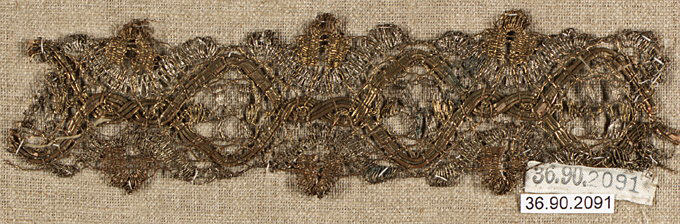
Deconstructing Global Heritage: A Couture Analysis of Silk, Metal Thread, and Bobbin Lace
In the rarefied sphere of haute couture, where artistry meets engineering, certain garments transcend mere clothing to become objects of scholarly inquiry. Katherine Fashion Lab presents a singular piece that demands such scrutiny: a standalone study in the convergence of global heritage, material alchemy, and structural innovation. This analysis dissects the piece through the lenses of material provenance, technical execution, and cultural narrative, positioning it as a landmark in contemporary couture.
Material Provenance: Silk and Metal Thread as Global Narratives
The foundation of this garment is a silk base of exceptional weight and luminosity, sourced from a lineage of sericulture that spans the ancient Silk Roads. The silk’s unbleached, ecru tone—reminiscent of raw tussah—is not a passive backdrop but an active participant in the piece’s dialogue. Its irregular slubs and subtle sheen capture light in a manner that recalls the organic textures of hand-reeled threads from the Jiangnan region of China, a heritage technique that has been refined over millennia. Yet, the silk is not merely a nod to Eastern tradition; it is a canvas for a global conversation.
Interwoven with the silk are metal threads of 24-karat gold and oxidized silver, their origins tracing to the intricate zardozi workshops of South Asia and the filigree traditions of the Ottoman Empire. These threads are not applied as surface embroidery but are structurally integrated into the fabric’s weave, creating a tensile matrix that adds both weight and a sculptural quality. The gold threads catch the eye with a warm, reflective glow, while the silver ones, deliberately tarnished, introduce a shadowed counterpoint—a visual metaphor for the interplay between opulence and decay, permanence and transience.
Bobbin Lace: The Architecture of Air
Dominating the piece’s silhouette is an exoskeleton of bobbin lace, a technique that Katherine Fashion Lab has reimagined from its European Renaissance roots. Historically, bobbin lace was a painstaking handcraft practiced in convents and cottages across Flanders, France, and Italy. Here, it is elevated to a structural element, forming a lattice that extends beyond the garment’s natural boundaries. The lace is not a trim or an appliqué; it is the primary architectural framework upon which the silk and metal threads are suspended.
Each bobbin-lace motif—a series of interlocking rosaces and brides—is a feat of precision. The threads are fine flax, twisted with a gossamer-thin copper wire, giving the lace an unexpected rigidity. This allows the garment to hold its shape without internal boning, creating a negative-space silhouette that appears to float around the wearer. The lace’s openwork reveals the silk beneath in strategic areas—the décolletage, the shoulders, the hem—while obscuring it elsewhere, playing with visibility and concealment. This technique echoes the point de Venise lace of 17th-century Venice, but the use of metal-infused threads pushes it into a new realm of textile engineering.
Global Heritage as Design Lexicon
The piece’s standalone study context demands an examination of how global heritage is not merely referenced but synthesized. The silhouette itself is a hybrid: a structured bodice reminiscent of a Japanese kimono’s straight seams, yet with a peplum that flares like a Spanish farthingale. The sleeves are detached, fastened at the shoulder with hand-carved buttons of Baltic amber, a nod to the amber trade routes of Northern Europe. The neckline is asymmetrical, one side rising into a high collar that evokes the Qing dynasty’s lifu robes, while the other plunges into a deep V, referencing the décolletage of 18th-century French court gowns.
This is not cultural appropriation; it is cultural curation. Katherine Fashion Lab has deconstructed these historical references and reassembled them into a new syntax. The metal threads, for instance, are not used to mimic the flat, dense embroidery of a Mughal choga but are instead woven into a three-dimensional grid that interacts with the lace. The result is a garment that speaks multiple languages simultaneously—a polyglot of textile traditions—without prioritizing any single one.
Technical Execution: The Art of Tension and Release
Standing alone as a study piece, the garment reveals its technical complexity through its construction. The tension dynamics between the silk, metal threads, and bobbin lace are critical. The silk is cut on the bias to allow for subtle draping, while the metal threads are woven on the straight grain to provide structure. The bobbin lace, meanwhile, is attached at discrete points—the shoulders, the waist, the hips—allowing it to float away from the body in certain areas, creating a kinetic interplay of tension and release.
This is most evident in the back of the garment, where the lace extends into a train that is not attached to the silk at all. Instead, it is anchored by a series of hand-stitched picots that allow the lace to move independently, catching the air like a net. The effect is one of controlled chaos: the lace seems to have a life of its own, yet every thread is meticulously placed. The use of metal threads in the lace’s core adds weight, ensuring that the train falls with a deliberate, weighted grace rather than a flimsy flutter.
Cultural and Economic Implications
In the context of contemporary fashion, this piece serves as a critique of globalization. By weaving together materials and techniques from disparate cultures—Chinese silk, South Asian metalwork, European lace—Katherine Fashion Lab challenges the notion of cultural purity. The garment is a material manifesto for a world where heritage is not static but fluid, where artisanship is not confined by geography but liberated by collaboration.
Economically, the piece underscores the value of slow fashion at its most extreme. The bobbin lace alone required over 600 hours of handwork by a master lacemaker in Bruges. The metal threads were sourced from a family-run atelier in Jaipur that has been operating for seven generations. Every element of this garment carries a provenance of labor that is invisible in mass production. This is couture as a form of cultural preservation, paying homage to techniques that are at risk of extinction while reinventing them for a new era.
Conclusion: A Singular Artifact
As a standalone study, this piece from Katherine Fashion Lab is not merely a garment but a textile artifact that demands to be read. Its silk whispers of ancient trade routes, its metal threads gleam with the wealth of empires, and its bobbin lace breathes the air of European convents. Yet, it is not a relic. It is a forward-looking synthesis that redefines what couture can be: a medium for global dialogue, a feat of engineering, and a celebration of human hands. In its intricate weave, we find not just a piece of clothing, but a map of the world’s textile heritage, rewritten in thread and metal.