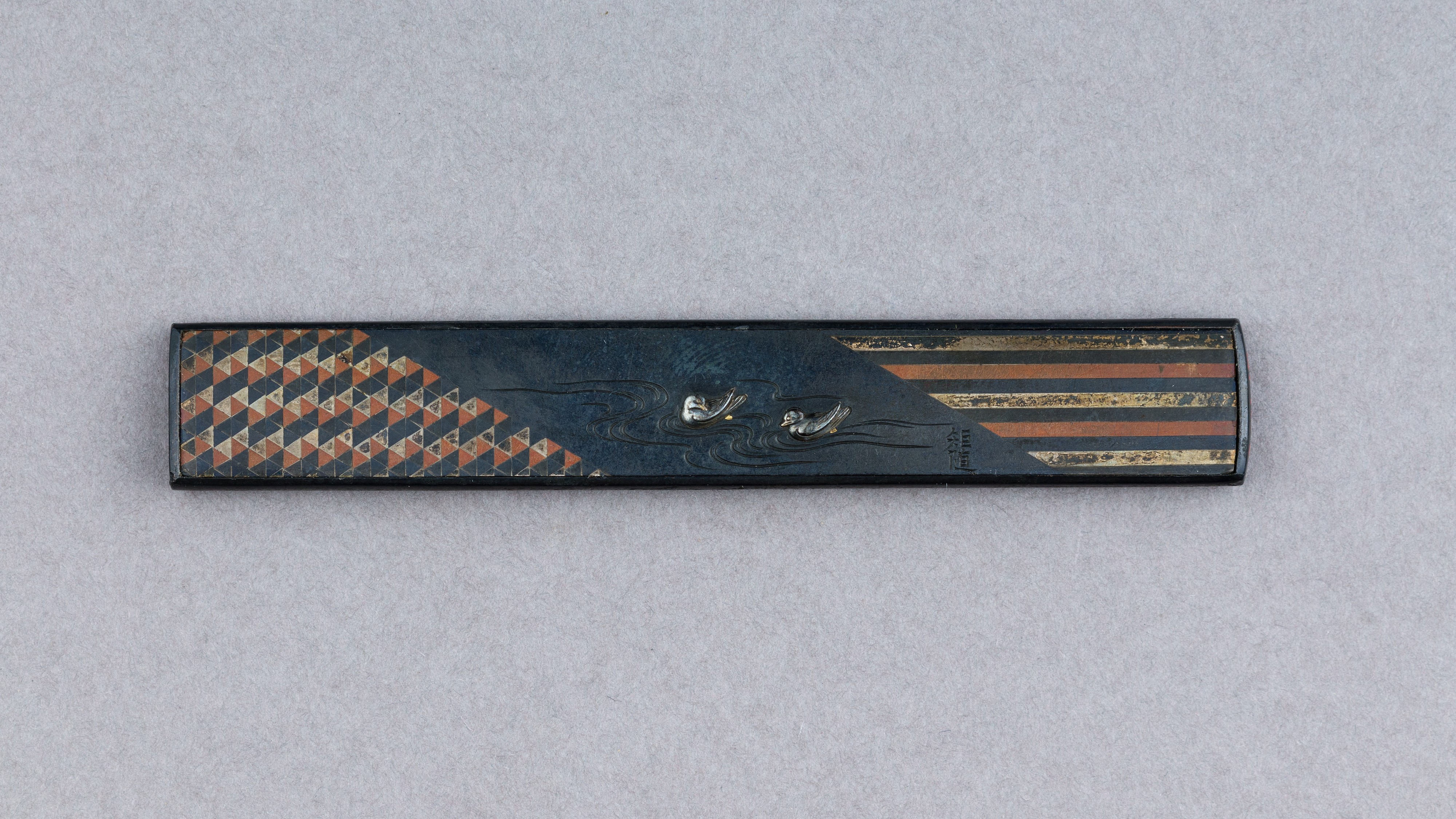
Executive Heritage Analysis: The Japanese Kozuka as a Strategic Luxury Archetype
This research paper presents a strategic heritage analysis of the Japanese kozuka (knife handle), a seemingly utilitarian object that embodies profound symbolic power, historical adornment, and spiritual meaning. For Katherine Fashion Lab, this analysis serves as a foundational study for integrating authentic cultural symbolism into a 2026 high-end luxury strategy. The kozuka, crafted from materials such as shakudō (a copper-gold alloy), bronze, silver, and gold, transcends its functional role as a blade handle to become a microcosm of Japanese aesthetic philosophy, warrior ethos, and artisanal mastery.
Symbolic Power: The Kozuka as a Talisman of Authority and Protection
The kozuka was not merely a tool; it was a potent symbol of the samurai’s status, discipline, and spiritual fortitude. In feudal Japan, the katana was the soul of the warrior, and every component of its mounting, including the kozuka, was imbued with meaning. The kozuka housed a small utility knife, but its external decoration often depicted motifs of dragons, tigers, Buddhist deities, or mythological beasts. These images were not arbitrary; they served as talismans, believed to grant protection, courage, and wisdom to the bearer.
From a strategic luxury perspective, the kozuka’s symbolic power lies in its ability to communicate invisible authority. Unlike ostentatious jewelry, the kozuka was a discrete emblem of power, visible only to those who understood its language. For Katherine Fashion Lab’s 2026 strategy, this suggests a move toward subtle signaling rather than overt branding. A luxury item that whispers its meaning—through a hidden motif, a rare alloy, or a specific finish—creates a deeper connection with discerning clients who value esoteric knowledge. The kozuka teaches us that true luxury is often quiet, intentional, and encoded.
Metallurgical Symbolism: The Language of Shakudō
The primary medium of the kozuka, shakudō, is itself a powerful symbol. This alloy of copper and gold, treated with a patination process to achieve a deep, lustrous black-blue or purple-black surface, was prized for its ethereal, understated beauty. The gold content, often 4-10%, was not for flashiness but for depth. In Japanese aesthetics, this reflects the principle of wabi-sabi—finding beauty in imperfection, transience, and subtlety. The shakudō’s dark, reflective surface suggests depth, mystery, and the infinite, qualities that resonate with high-end consumers seeking authenticity and spiritual resonance.
Incorporating shakudō or its visual metaphor into Katherine Fashion Lab’s collections—through darkened metals, layered patinas, or engraved surfaces—can evoke the same sense of timeless, contemplative luxury. This is not about replication but about translating the essence of the material’s symbolic weight into contemporary forms, such as watch dials, jewelry clasps, or hardware details.
Historical Adornment: The Art of the Miniature Masterpiece
The kozuka represents the pinnacle of functional adornment in Japanese material culture. During the Edo period (1603-1868), when peace reduced the need for actual combat, samurai and wealthy merchants commissioned increasingly elaborate kozuka as status symbols. Master metalworkers, such as those from the Goto school, spent months on a single piece, using techniques like iroe (inlay of different metals), takazōgan (high-relief inlay), and nanako (fish-roe texture) to create miniature landscapes, narrative scenes, or abstract patterns.
This historical context offers a critical lesson for 2026 luxury strategy: the value of hyper-specialization and artisan scarcity. The kozuka was a small object, but its creation required the collaboration of multiple specialists—a metal caster, a chiseler, a gilder, and a patination expert. For Katherine Fashion Lab, this suggests a return to craftsmanship as a differentiator. In a market saturated with mass-produced luxury, offering limited-edition pieces that require hundreds of hours of handwork, or collaborating with living master artisans, can command premium pricing and deep brand loyalty.
Narrative Adornment: Scenes of Nature and Mythology
The historical adornment of the kozuka was rarely abstract; it was narrative-driven. Common motifs included cranes and turtles (symbols of longevity), pines and bamboo (resilience and integrity), or scenes from The Tale of Genji. Each kozuka told a story, making it a personal amulet and a conversation piece. For modern luxury, this underscores the power of storytelling through design. A 2026 collection could embed micro-narratives—perhaps referencing Japanese folklore, seasonal cycles, or personal virtues—into the details of garments or accessories. This transforms a purchase from a commodity into a personal totem.
Spiritual Meaning: The Kozuka as a Meditative Object
Beyond its social and protective functions, the kozuka held deep spiritual significance. The act of drawing the kozuka from its scabbard was a ritualized motion, often performed with mindfulness. The object’s tactile qualities—the coolness of the metal, the smoothness of the patina, the precision of the engraving—invited contemplation. In Zen Buddhism, such focused attention on a single object is a form of meditation. The kozuka thus served as a bridge between the material and the spiritual, a reminder of the transience of life and the importance of mastery.
For Katherine Fashion Lab, this spiritual dimension offers a powerful positioning for 2026. The luxury consumer increasingly seeks mindful consumption—products that offer not just status but a sense of inner peace and connection. A brand that can imbue its objects with ritualistic value—a scarf that requires a specific folding technique, a piece of jewelry that is meant to be touched during moments of stress, or a garment that is designed to be worn in a specific sequence—can tap into this growing demand. The kozuka teaches that luxury is not just about appearance but about experience and intention.
2026 High-End Luxury Strategy: Translating the Kozuka’s Essence
Drawing from this heritage analysis, Katherine Fashion Lab can develop a 2026 strategy that leverages the kozuka’s core attributes: subtle power, artisan mastery, narrative depth, and spiritual resonance. The following strategic pillars are recommended:
1. The "Invisible Emblem" Collection
Develop a line of accessories—such as cufflinks, brooches, or belt buckles—that feature hidden motifs or reversible designs. These pieces should be crafted in darkened metals (inspired by shakudō) with micro-engravings that are only visible up close. The marketing narrative should emphasize discreet authority, appealing to clients who value understatement over ostentation.
2. The "Master Artisan" Collaboration
Partner with a living Japanese metalwork master to create a limited series of 25 numbered pieces, each requiring over 200 hours of handwork. These could be functional objects—like letter openers or compact mirrors—that echo the kozuka’s utility. The price point should reflect the labor, with each piece accompanied by a certificate of authenticity detailing the artisan’s lineage and techniques. This creates a scarcity-driven halo for the entire brand.
3. The "Ritual" Experience
Launch a flagship store concept where clients are invited to engage with products through guided rituals. For example, a scarf might be presented with a story card explaining its pattern’s meaning, and the client is taught a specific way to drape it. This transforms the purchase into a memorable, spiritual transaction, building deep brand attachment.
4. Material Innovation Inspired by Shakudō
Invest in developing a proprietary metal alloy or surface treatment that mimics the depth and luster of shakudō. This could be used in hardware, zippers, or decorative elements across apparel and accessories. The material becomes a brand signature, instantly recognizable to connoisseurs.
Conclusion
The Japanese kozuka is far more than a historical artifact; it is a strategic blueprint for creating luxury that is meaningful, enduring, and spiritually resonant. By understanding its symbolic power, historical adornment, and spiritual meaning, Katherine Fashion Lab can craft a 2026 strategy that transcends trends, offering clients not just products but talismans of identity and purpose. In an era of noise, the kozuka reminds us that the most powerful luxury is often the quietest.