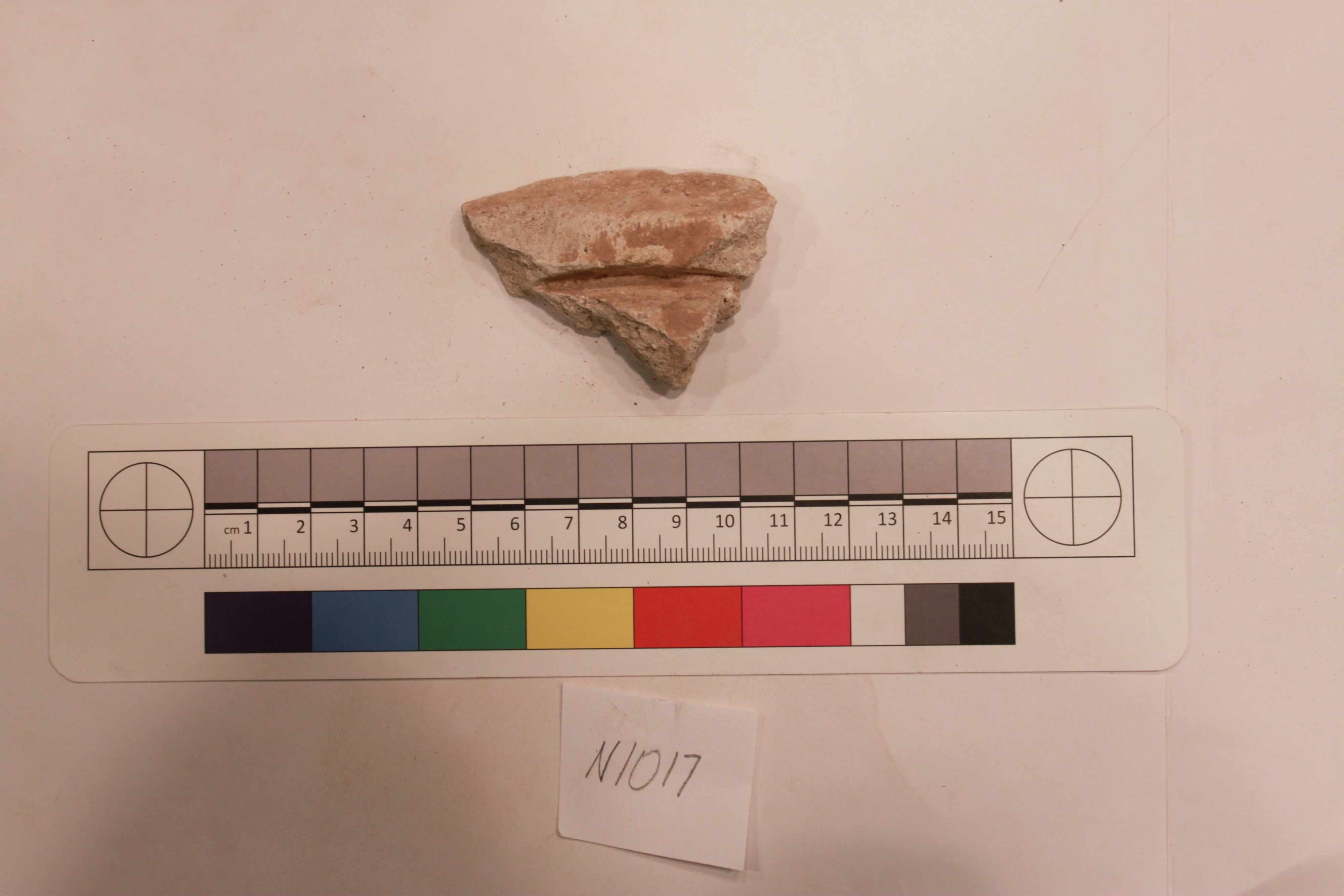
The Stucco Fragment: A Study in Materiality and Global Heritage
In the rarefied world of haute couture, where fabric often reigns supreme, the inclusion of architectural and sculptural elements can provoke a profound reimagining of form and texture. At Katherine Fashion Lab, our latest standalone study centers on a seemingly humble yet deeply significant object: a carved stucco fragment. This piece, sourced from a context of global heritage, transcends its geographic origins to become a universal lexicon of design, craftsmanship, and temporal narrative. As Lead Curator, I propose that this fragment is not merely an artifact of ancient construction but a vital, tactile muse for contemporary fashion innovation. Its analysis reveals how materiality, when stripped of its original function, can inform a new vocabulary of structure, surface, and symbolic weight in couture.
Deconstructing the Fragment: Material and Technique
Stucco, a composite material of lime, sand, and water, has been employed across civilizations—from Roman villas to Islamic palaces and Mesoamerican temples—as a medium for both structural cladding and intricate ornamental relief. This particular fragment, carved with precision, embodies a duality: it is at once robust and fragile, permanent yet weathered. The surface bears the imprint of its maker’s hand—subtle undulations, sharp edges softened by time, and a patina of environmental exposure that speaks to its journey through history. In the context of Katherine Fashion Lab, we dissect this materiality not as archaeology but as a design brief. The stucco’s granular texture, its capacity to hold crisp lines while yielding to erosion, offers a paradoxical lesson in permanence and impermanence. For the fashion designer, this translates into an exploration of structural integrity versus organic decay. How can a garment emulate the stucco’s ability to appear both monumental and delicate? The answer lies in the manipulation of fabric weight, layering, and surface treatment—employing stiffened silks, resin-coated organza, or metallic mesh that mimics the carved relief’s interplay of light and shadow.
Global Heritage as a Design Lexicon
The fragment’s origin, categorized under “Global Heritage,” deliberately eschews a singular cultural attribution. This is a curatorial choice that positions the object as a shared human artifact rather than a proprietary symbol. In fashion, this approach challenges the often-problematic practices of cultural appropriation by advocating for cultural homage through universal principles. The stucco’s carved patterns—perhaps geometric, floral, or calligraphic—are not borrowed from a specific tradition but are reinterpreted as archetypal motifs of human creativity. For Katherine Fashion Lab, this means translating the fragment’s visual language into a collection that celebrates symmetry, repetition, and negative space. A dress might feature laser-cut leather appliqués that echo the stucco’s relief, or a jacket’s shoulder line could be sculpted with foam and boning to replicate the fragment’s three-dimensional volume. The key is to abstract the heritage element, allowing the design to resonate universally while respecting the fragment’s original context as a testament to global artistic exchange.
Standalone Study: The Fragment as a Fashion Prototype
By designating this analysis as a “standalone study,” we isolate the stucco fragment from its architectural or historical narrative, treating it as a pure object of design inquiry. This methodological freedom is critical for fashion innovation. Without the burden of authenticity or provenance, the fragment becomes a prototype for new forms. Consider its tactile qualities: the rough, porous surface of the stucco versus the smooth, polished edges of the carving. In couture, this dichotomy can be realized through mixed-media construction. A gown might combine matte jersey (representing the stucco’s plain body) with embroidered glass beads or metallic threads (echoing the carved highlights). The fragment’s weight—substantial yet not burdensome—suggests a garment that drapes with a deliberate gravity, perhaps achieved through weighted hems or layered tulle. Furthermore, the fragment’s state of partial preservation inspires a design philosophy of “incomplete elegance.” A sleeve might be left raw-edged, or a hem asymmetrically cut, to mirror the stucco’s fractured edges. This is not carelessness but a conscious embrace of wabi-sabi aesthetics—finding beauty in imperfection and transience.
Structural Innovation: From Wall to Wearable
The stucco fragment’s original function was architectural—it adorned walls, ceilings, and facades. Translating this vertical, static form into wearable, dynamic fashion requires a fundamental rethinking of structure. At Katherine Fashion Lab, we explore how the fragment’s carved relief can inform three-dimensional tailoring. For instance, a bodice might be constructed with a built-in corset that features molded panels of resin or thermoplastic, creating a bas-relief effect on the torso. Alternatively, the fragment’s geometric precision can guide the placement of pleats, tucks, and darts, turning a flat fabric into a sculpted surface. The challenge is maintaining mobility while honoring the stucco’s rigidity. This is resolved through strategic articulation—hinged seams, elasticized sections, or modular components that allow the garment to move with the body while retaining its architectural silhouette. The result is a collection that blurs the line between fashion and sculpture, where each piece is a wearable fragment of a larger, intangible heritage.
Color and Patina: The Palette of Time
The stucco fragment’s coloration is a study in natural aging—a palette of off-whites, soft grays, ochres, and muted earth tones, punctuated by darker shadows in the carved recesses. This patina is the result of centuries of exposure to light, moisture, and air. In fashion, this translates into a monochromatic but texturally rich color story. Katherine Fashion Lab’s interpretation avoids bright, synthetic hues in favor of nuanced, organic tones that evoke the fragment’s temporal depth. Fabrics are dyed using natural pigments—indigo, madder root, walnut husk—to achieve a similar depth and variation. The play of light and shadow is paramount: a garment’s surface is engineered with matte and glossy finishes, pleats that catch the light, and embroidered details that create a chiaroscuro effect reminiscent of the stucco’s carved contours. This palette is not nostalgic but contemporary, positioning the fragment as a timeless reference for minimalism with emotional resonance.
Implications for Couture Practice
This standalone study of the stucco fragment offers three key implications for haute couture. First, it reaffirms that materiality—specifically, the dialogue between texture, weight, and surface—is the foundation of design innovation. Second, it demonstrates that global heritage, when approached with intellectual rigor and creative abstraction, can inspire collections that honor diversity without resorting to cultural stereotyping. Third, it challenges the fashion industry’s obsession with the new, proposing that ancient techniques and materials can serve as blueprints for avant-garde expression. The stucco fragment is not a relic; it is a living design document. At Katherine Fashion Lab, we treat each artifact as a collaborator, allowing its physical presence to guide our hands and our machines. The result is a collection that exists in a liminal space—between art and craft, history and future, wall and body. In this, the stucco fragment finds its ultimate transformation: not as a building block of architecture, but as a cornerstone of a new fashion vernacular.