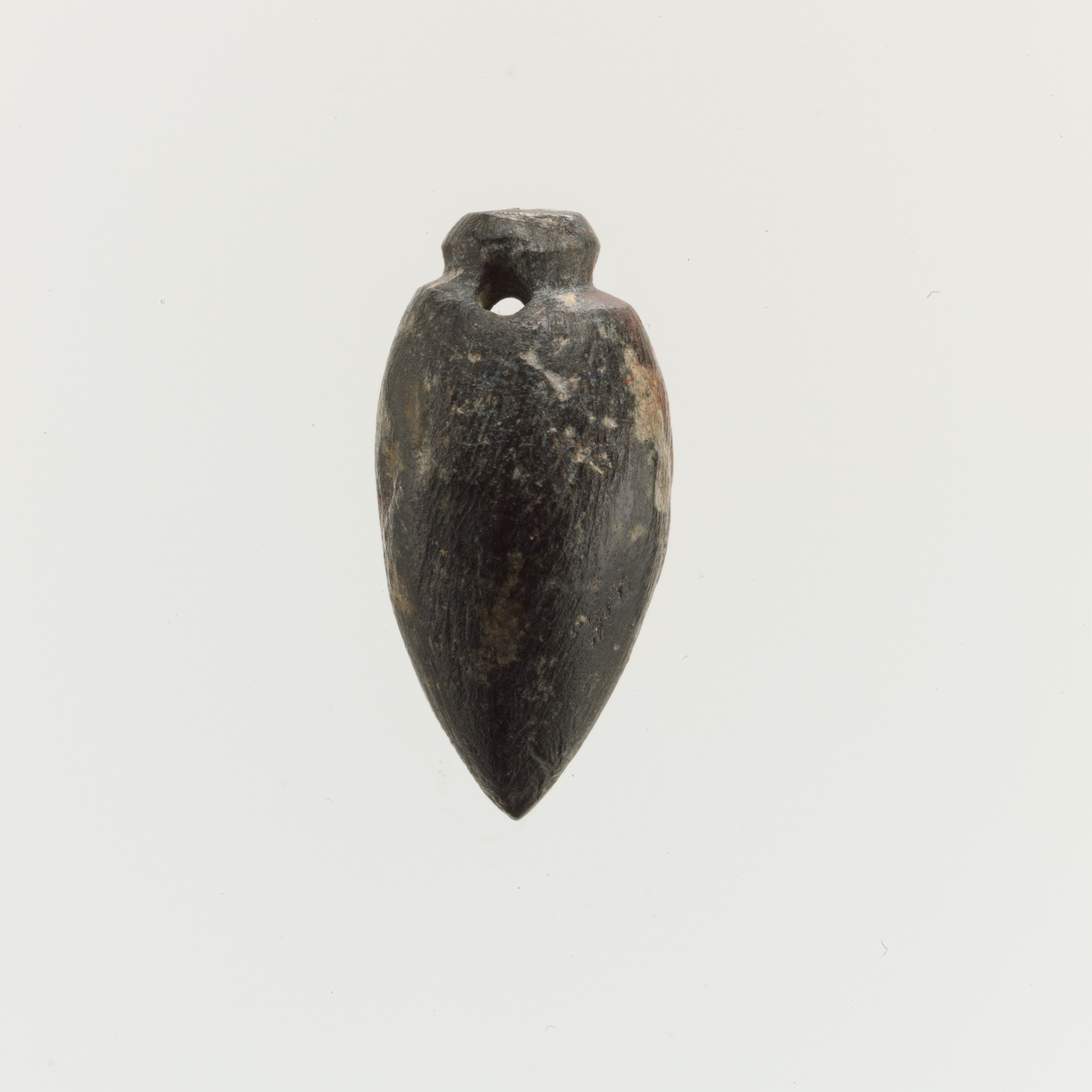
Introduction: The Steatite Pendant as a Testament to Minoan Prestige
The steatite pendant, a hallmark of Minoan material culture, represents far more than a decorative artifact. Carved from a soft, soapstone-like mineral, these pendants were imbued with profound symbolic power, serving as markers of social status, spiritual devotion, and aesthetic sophistication within the Bronze Age Aegean. For Katherine Fashion Lab, the strategic analysis of this pendant offers a compelling foundation for a 2026 high-end luxury strategy that fuses ancient heritage with contemporary exclusivity. By deconstructing the pendant’s historical adornment, spiritual meaning, and material significance, we can extract actionable insights for positioning a luxury brand in a market saturated with transient trends.
Symbolic Power: The Pendant as a Social and Political Emblem
Material as Metaphor
Steatite, while not a precious stone like lapis lazuli or carnelian, was highly valued in Minoan society for its workability and subtle luster. Its softness allowed for intricate carving, enabling artisans to render complex symbols—such as double axes, sacred knots, and marine motifs—that conveyed the wearer’s connection to elite networks. The choice of steatite over more ostentatious materials suggests a refined sensibility: power expressed through craftsmanship rather than raw opulence. In a 2026 luxury context, this translates to a strategy that prioritizes artisanal mastery over flashy branding. Katherine Fashion Lab could leverage steatite’s historical cachet to produce limited-edition pendants that signal discernment and cultural literacy, appealing to clients who value narrative over mass-market recognition.
Iconography and Authority
Minoan steatite pendants often featured motifs tied to the palatial administration and religious hierarchy. For example, the bee pendant from Malia, a famous Minoan artifact, symbolizes royalty and fertility, linking the wearer to divine authority. Such iconography transformed the pendant into a talisman of political legitimacy. For a luxury brand, this underscores the importance of narrative ownership. A 2026 strategy could involve collaborating with archaeologists or historians to create pendants that reference specific Minoan symbols—such as the labrys (double axe) or the serpent—each with a documented history of power. This elevates the product from mere ornament to a conversation piece, aligning with the growing demand for “smart luxury” that educates and inspires.
Historical Adornment: The Pendant in Minoan Daily Life and Ritual
Wearable Identity
In Minoan culture, adornment was not solely aesthetic; it was a language of identity. Steatite pendants were worn by both men and women, often suspended from necklaces or sewn onto garments, to denote clan affiliation, marital status, or participation in sacred rites. The pendant’s placement—close to the heart or at the throat—amplified its role as a protective amulet. This concept of “wearable identity” is directly transferable to modern luxury. Katherine Fashion Lab can develop a line of steatite pendants that function as personalized heirlooms, perhaps incorporating customizable engravings or gemstone inlays. By marketing these as “identity artifacts,” the brand taps into the consumer desire for self-expression through heritage.
Ritual and Daily Integration
Unlike many ancient ornaments reserved for burial or ceremonial use, Minoan steatite pendants were integrated into daily life. Excavations at Knossos and Phaistos reveal pendants found in domestic contexts, suggesting they were worn during work, feasts, and religious processions alike. This versatility is a key lesson for luxury strategy. A 2026 collection should emphasize durability and wearability—steatite’s softness requires careful handling, but modern treatments (e.g., stabilization resins) can preserve its aesthetic while ensuring longevity. The brand can position these pendants as “everyday heirlooms,” bridging the gap between casual luxury and ritual significance. Marketing campaigns might feature imagery of modern women and men wearing the pendants in diverse settings—from boardrooms to galleries—echoing the Minoan integration of adornment into all facets of life.
Spiritual Meaning: The Pendant as a Conduit to the Divine
Animistic and Chthonic Connections
Minoan spirituality was deeply animistic, with nature deities and chthonic forces central to belief systems. Steatite pendants often bore symbols of snakes, birds, and marine life, linking the wearer to the earth’s fertility and the sea’s mystery. The material itself—steatite, sourced from sacred mountains—was thought to possess inherent spiritual properties. This imbues the pendant with a dual function: as a physical object and as a spiritual conduit. For Katherine Fashion Lab, this offers a powerful branding angle. The 2026 strategy can emphasize the “energetic” or “meditative” qualities of steatite, perhaps through partnerships with wellness influencers or spiritual leaders. Limited-edition pendants could be “blessed” or “activated” through rituals inspired by Minoan practices, appealing to consumers seeking meaning beyond materialism.
The Pendant in Funerary Contexts
While steatite pendants were worn in life, they also accompanied the dead into tombs, functioning as guides for the afterlife. This duality—life and death, protection and transition—adds a layer of profundity. Luxury brands often shy away from mortality, but an astute strategy can reframe it as a meditation on legacy. A 2026 collection could include “memorial pendants” designed to honor ancestors or commemorate personal milestones, using steatite’s historical role as a funerary object to create a sense of timelessness. This positions Katherine Fashion Lab not merely as a purveyor of goods but as a curator of existential narratives.
2026 High-End Luxury Strategy: From Artifact to Icon
Material Authenticity and Scarcity
The strategic value of steatite lies in its historical authenticity and contemporary scarcity. While steatite is not rare globally, ethically sourced, high-quality steatite from Crete—or replicas using modern composite materials—can be positioned as a “heritage mineral.” Katherine Fashion Lab should establish a direct supply chain with Greek artisanal cooperatives, ensuring traceability and supporting local economies. This aligns with the 2026 luxury trend toward ethical sourcing and transparent production. Each pendant could be accompanied by a digital certificate detailing its provenance, the artisan’s story, and the symbolic meaning of its design. This transforms the pendant into a collectible asset, akin to a limited-edition watch or fine art piece.
Narrative-Driven Marketing and Experiential Retail
The Minoan steatite pendant offers a rich narrative foundation. A 2026 marketing campaign could be built around the theme “Wear the Myth,” with immersive digital experiences—such as AR try-ons that overlay Minoan frescoes on the wearer’s environment—or physical pop-ups in luxury hotels that recreate Minoan palatial settings. The brand can host private events where clients learn about the pendant’s history while being fitted for bespoke versions. This experiential approach caters to the high-net-worth individual’s desire for exclusive, knowledge-rich encounters. Pricing should reflect the artifact’s cultural capital: a base pendant might retail at $2,500, with custom designs reaching $15,000 or more, positioning it as an investment in heritage.
Collaborations and Cross-Sector Partnerships
To amplify cultural resonance, Katherine Fashion Lab should collaborate with institutions like the Heraklion Archaeological Museum or the British Museum for co-branded collections. Such partnerships lend scholarly credibility and access to exclusive archives. Additionally, limited-edition collaborations with contemporary artists who reinterpret Minoan motifs—such as abstract snake forms or stylized double axes—can bridge ancient and modern aesthetics. These collaborations should be released in micro-drops, creating urgency and collectible value. The 2026 strategy must also include a digital NFT component, where each physical pendant is paired with a unique digital token that unlocks virtual content (e.g., 3D models of the original artifact), appealing to tech-savvy luxury consumers.
Conclusion: The Steatite Pendant as a Blueprint for Timeless Luxury
The Minoan steatite pendant, with its layered symbolism, spiritual depth, and historical versatility, provides Katherine Fashion Lab with a robust blueprint for a 2026 luxury strategy that transcends seasonality. By honoring the pendant’s original functions—social marker, spiritual amulet, and artistic expression—the brand can create products that resonate with discerning clients seeking authenticity and meaning. The key is to balance heritage with innovation: using modern materials and digital tools while preserving the soul of the artifact. In doing so, Katherine Fashion Lab positions itself not as a follower of trends, but as a guardian of cultural memory, crafting objects that will be treasured for generations. This is the essence of strategic luxury: not the consumption of the new, but the curation of the eternal.