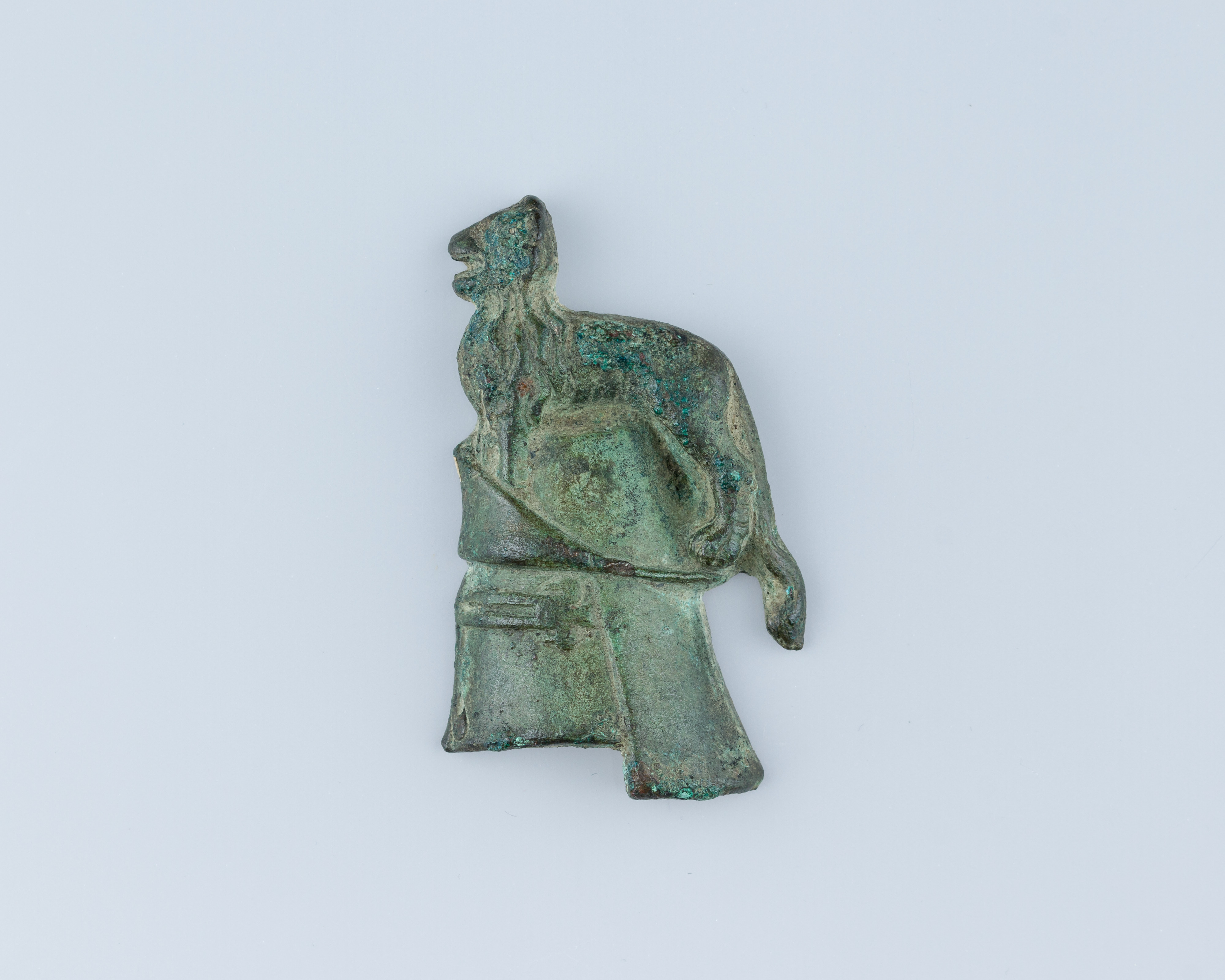
Executive Summary: Bronze Ornament as a Vector of Cultural Capital
For Katherine Fashion Lab, the strategic excavation of heritage is not an exercise in nostalgia but a disciplined methodology for future-facing luxury. This analysis examines the specific vector of Bronze Ornament within the British cultural context, positioning it as a core, yet under-leveraged, component of the Lab's aesthetic and strategic DNA. By correlating this study with our ongoing research into cross-cultural artifacts—such as the Chinese Rock in the form of a fantastic mountain and the Jar in the shape of a bronze container (hu)—we reveal a universal principle: ornament is never mere decoration. It is the physical encoding of authority, cosmology, and societal structure. The British application of bronze, from prehistory through the Industrial zenith, provides a distinct narrative of power, permanence, and patina that directly informs a 2026 luxury strategy predicated on symbolic weight and historical resonance.
Historical and Symbolic Analysis: The Metallurgy of Authority
Bronze, an alloy of copper and tin, arrived in Britain circa 2150 BCE, catalyzing a technological and social revolution. Its immediate adoption for ornament—from the intricate lunulae of the Early Bronze Age to the decorated shields and ceremonial capes of later periods—signaled a profound shift. Unlike ephemeral materials, bronze required sophisticated knowledge, controlled trade routes for its constituents, and specialized labor. Its very possession denoted elite status, while its application as adornment transformed the human body into a site of displayed power and spiritual affiliation.
Ornament as Armor and Amulet
The dual function of British bronze ornament is critical to its symbolic lexicon. The Battersea Shield (c. 300-100 BCE), though likely ceremonial, is a masterclass in this duality. Its complex repoussé decoration of classical motifs and Celtic curvilinear swirls is not superficial; it is integral to the object's identity as a vessel of protective power. The ornamentation served as metaphysical armor, invoking divine favor and intimidating adversaries through a display of consummate craftsmanship and esoteric symbolism. Similarly, the Mold Gold Cape (c. 1900-1600 BCE), though gold, speaks to the bronze-age ornamental tradition—a rigid, sculptural form that constrained the wearer’s movement to signify a role beyond labor, perhaps sacerdotal or royal. The ornament was the garment, and the garment was a statement of immutable, god-given authority.
The Patina of Time and the Industrial Sublime
The British relationship with bronze evolved but retained its core association with permanence and prestige. The Renaissance revival of bronze for portrait busts and the grand doors of public institutions cemented its link to legacy and monumental memory. However, the most potent evolution for our context occurs in the 19th century. The Industrial Revolution, powered by British metallurgical innovation, saw bronze deployed in new, colossal scales—from the lions at the base of Nelson's Column to the monumental statues that populated every city square. This era imbued bronze with a new layer of meaning: the patina of empire, engineering mastery, and institutional endurance. The green-blue verdegris that naturally forms on bronze became not a sign of decay, but a coveted aesthetic—a visual record of time’s passage, a symbol of earned heritage.
Strategic Correlation: Universal Principles of Adornment
Our parallel study of the Chinese scholar’s rock and the bronze hu vessel illuminates a foundational principle that transcends culture: ornament is the interface between the material and the spiritual, the functional and the symbolic. The artificial rock, through its form, represents an entire cosmological landscape; its "ornament" is its shape, inviting contemplation. The bronze hu, a ritual wine vessel, uses intricate taotie masks and zoomorphic motifs not as decoration but as integral, apotropaic elements that sanctify its contents and connect the earthly ritual to the spirit world.
The British bronze tradition operates on the same frequency. The ornament on the Battersea Shield or a Victorian-era bronze frieze is not applied; it is constitutive. It defines the object's purpose and power. For Katherine Fashion Lab, this correlation is vital. It moves our design philosophy beyond superficial stylistic reference into the realm of embedded meaning. Our "ornament" must function as modern-day taotie or Celtic swirl—a designed element that carries narrative, provides symbolic protection (in the form of exclusivity and identity), and elevates the material object into an artifact of personal and cultural significance.
2026 High-End Luxury Strategy: The Bronze Code
Integrating this analysis into a 2026 strategy requires translating historical resonance into contemporary desire. The luxury consumer of 2026 seeks not just product, but patinated legacy and embodied symbolism.
Material Innovation & Symbolic Patina
We must pioneer the use of bronze and its alloys in direct, tactile applications. Imagine clasps, hardware, and structural elements cast in bespoke bronzes, formulated to develop a unique, personal patina over time—a literal record of the wearer’s journey. This creates a living heirloom, directly referencing the British valuation of time-encoded prestige. Furthermore, we can develop textile treatments or leather dyes that replicate the depth and variegation of bronze verdigris, creating a color palette that speaks of antiquity and endurance.
Narrative-Driven Ornamentation
Surface patterns and embroideries should be derived from archaeologically accurate yet abstracted Bronze Age motifs—lunulae curves, shield geometries, the intricate repoussé patterns of the Atlantic Bronze Age. These are not to be used literally, but codified into a new Katherine Fashion Lab ornamental language. Each collection can explore a specific historical artifact (e.g., "The Battersea Collection," "The Cape Line"), providing a rich, discoverable backstory that enhances brand mystique and intellectual engagement.
Spiritual Meaning in Modern Context
The contemporary "spiritual" quest is for authenticity, grounding, and identity. Our interpretation must position Katherine Fashion Lab pieces as talismans for the modern elite. A coat structured with bronze-inspired forms offers not just warmth but a sense of armored confidence. A bag adorned with our coded bronze motifs becomes a vessel for personal legacy, much like the ritual hu. We are not selling clothing; we are offering curated identity, armored in history.
Positioning and Communication
The launch of this strategic direction should be anchored in a high-concept event or installation that physically juxtaposes original British bronze artifacts with our new collection. Collaborations with institutions like the British Museum or the Museum of London are critical for authentication. Marketing language must shift from describing features to decoding symbolism, using a lexicon of metallurgy, archaeology, and symbolic power. The MBA imperative is clear: by owning and re-contextualizing the deep cultural capital of British bronze ornament, Katherine Fashion Lab can architect a unique market position that is defensible, deeply resonant, and precisely calibrated for the future of meaningful luxury.