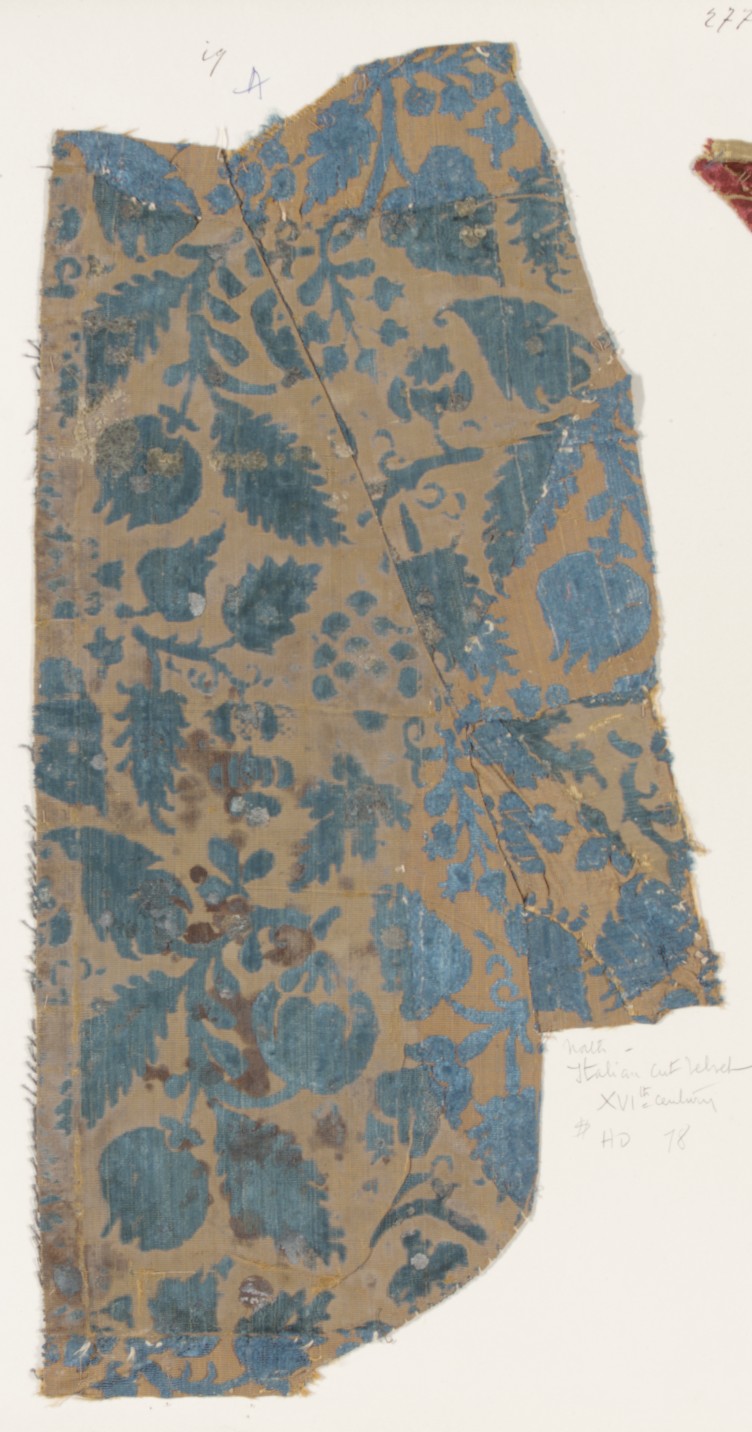
Deconstructing the Fragment: A Couture Analysis of Katherine Fashion Lab's Silk Heritage Study
In the rarefied echelons of haute couture, where artistry meets engineering, Katherine Fashion Lab has long distinguished itself as a laboratory of sartorial innovation. The latest subject of its standalone study—Fragment, rooted in Global Heritage and rendered in Silk—is not merely a garment but a thesis on the poetics of imperfection. This analysis dissects how the Lab transforms a conceptual fragment into a cohesive narrative of cultural memory, material mastery, and modern luxury.
The Conceptual Framework: Fragment as a Narrative Device
The term "fragment" traditionally evokes incompleteness, a broken shard of a whole. Yet Katherine Fashion Lab repositions this notion as a deliberate aesthetic and philosophical choice. In this study, the fragment is not a flaw but a provocation—a visual and tactile meditation on how heritage survives through partial, reconstructed memories. The design eschews the seamless, totalizing silhouette of conventional couture in favor of asymmetrical panels, raw edges, and interrupted lines. This is not a garment that pretends to be untouched by time; rather, it wears its history like a palimpsest, each layer a fragment of a global archive.
The Lab draws from Global Heritage as both inspiration and material. The fragment could be a remnant of a 17th-century Ottoman caftan, a snippet of a Heian-era Japanese kimono, or a torn edge of a Pre-Columbian textile. By refusing to specify a single origin, the design becomes a universal artifact—a dialogue between East and West, ancient and contemporary. This globalized fragment speaks to the diasporic nature of heritage itself: how cultures borrow, break, and rebuild across borders. The wearer is not adorned with a costume but with a curated memory, a piece of a larger, intangible mosaic.
Materiality and Technique: Silk as the Medium of Memory
Silk, the chosen material, is no accident. Historically, silk has been the fabric of empires, trade routes, and cultural exchange—from the Silk Road to the courts of Versailles. In Katherine Fashion Lab's hands, silk is both a canvas and a character. The Lab employs a deconstructed silk charmeuse for its liquid drape, juxtaposed with raw silk organza for structural tension. The fragment is not cut; it is torn along the grain, creating frayed edges that mimic the erosion of time. This technique, known as déchiré in couture circles, requires extraordinary precision—each tear must be controlled to prevent unraveling while preserving organic irregularity.
The finish is equally deliberate. Instead of polished hems, the fragments are left unfinished, with silk threads trailing like calligraphic strokes. Some sections are hand-stitched with irregular, visible knots—a nod to Japanese boro mending, where repair becomes ornament. The Lab also introduces a subtle sheer gradient: the silk transitions from opaque to translucent, as if the fabric itself is fading from memory. This is achieved through a painstaking dyeing process that mimics the patina of age, using natural indigo and madder root. The result is a textile that breathes, shifts, and catches light in unpredictable ways—a living fragment of heritage.
Structural Analysis: The Architecture of Incompleteness
From a structural standpoint, the Fragment study defies the traditional couture silhouette. There is no rigid corsetry or symmetrical draping. Instead, the garment is built around a negative space—a deliberate void where fabric should be. This void is not empty; it is filled with the wearer's body, becoming an active participant in the design. The fragment wraps, twists, and knots around the torso, held in place by silk cords that double as decorative elements. The asymmetry is balanced by a single, sweeping train that trails behind, evoking the broken hem of a historical robe.
The Lab employs a modular construction: the fragment can be worn in multiple configurations—as a cape, a draped gown, or a sculptural top. This versatility mirrors the fragment's nomadic nature, allowing the wearer to reconstruct the garment anew each time. The seams are exposed, not hidden, with raw edges stitched in contrasting thread—a deliberate breach of couture's traditional invisibility. This is a garment that reveals its own making, inviting the viewer to trace the hands of the artisan. The structural logic is one of controlled chaos, where each tear and stitch is a record of decision-making.
Cultural Resonance: The Fragment as a Global Lexicon
The Fragment study is not a costume; it is a lexicon of global textile traditions. The Lab references Mughal floral motifs in the silk's hand-embroidered accents, but these are deliberately fragmented—a half-petal, a broken stem. The embroidery is executed in zardozi technique, using gold-wrapped threads, but the metallic sheen is tarnished, mimicking the patina of a relic. Elsewhere, ikat dyeing creates blurred, irregular lines that suggest the warp and weft of trade routes. The silhouette borrows from the draped himation of ancient Greece, yet the asymmetry recalls the haori of Japan. These references are not pastiche; they are fragments of a global visual language, reassembled into a new syntax.
The Lab also engages with post-colonial discourse. By foregrounding the fragment, it challenges the notion of "authentic" heritage as a pristine, unbroken lineage. Instead, heritage is presented as a composite of loss, adaptation, and survival. The torn edges and unfinished hems are metaphors for the colonial erasures and migrations that have shaped global textiles. The wearer becomes a custodian of this complex history, not a passive inheritor. This is couture as critical theory—a garment that asks: What does it mean to own a fragment of a culture that is not your own? The answer lies in the garment's insistence on respectful reconstruction, honoring the original while allowing for transformation.
The Standalone Study: A New Paradigm for Couture
Katherine Fashion Lab's decision to present Fragment as a standalone study is a strategic departure from the seasonal collection model. It positions the garment as a singular artifact, akin to a museum piece or a limited-edition artwork. This approach elevates the fragment from a design concept to a philosophical object. The study includes a companion booklet—a "field guide"—that documents the sourcing of the silk, the dyeing process, and the historical references. This transparency is a form of ethical luxury, countering the opacity of fast fashion. The garment is not for mass consumption; it is for the discerning collector who values narrative over novelty.
In a market saturated with ephemeral trends, the Fragment study offers permanence through imperfection. It challenges the viewer to find beauty in the broken, to see the whole in the part. The Lab's mastery lies in its ability to make the fragment feel complete—not despite its incompleteness, but because of it. The silk whispers of caravans and courts, of hands that wove and tore and stitched again. The wearer does not simply wear a dress; they inhabit a fragment of global heritage, a living archive of silk, memory, and time.
Ultimately, Katherine Fashion Lab's Fragment is a triumph of material storytelling. It proves that couture can be both a luxury commodity and a vessel for cultural critique. In a world obsessed with the new, the Lab dares to celebrate the old—the frayed, the torn, the remembered. This is not a garment for the faint of heart; it is for those who understand that true luxury lies not in perfection, but in the honest beauty of the fragment.