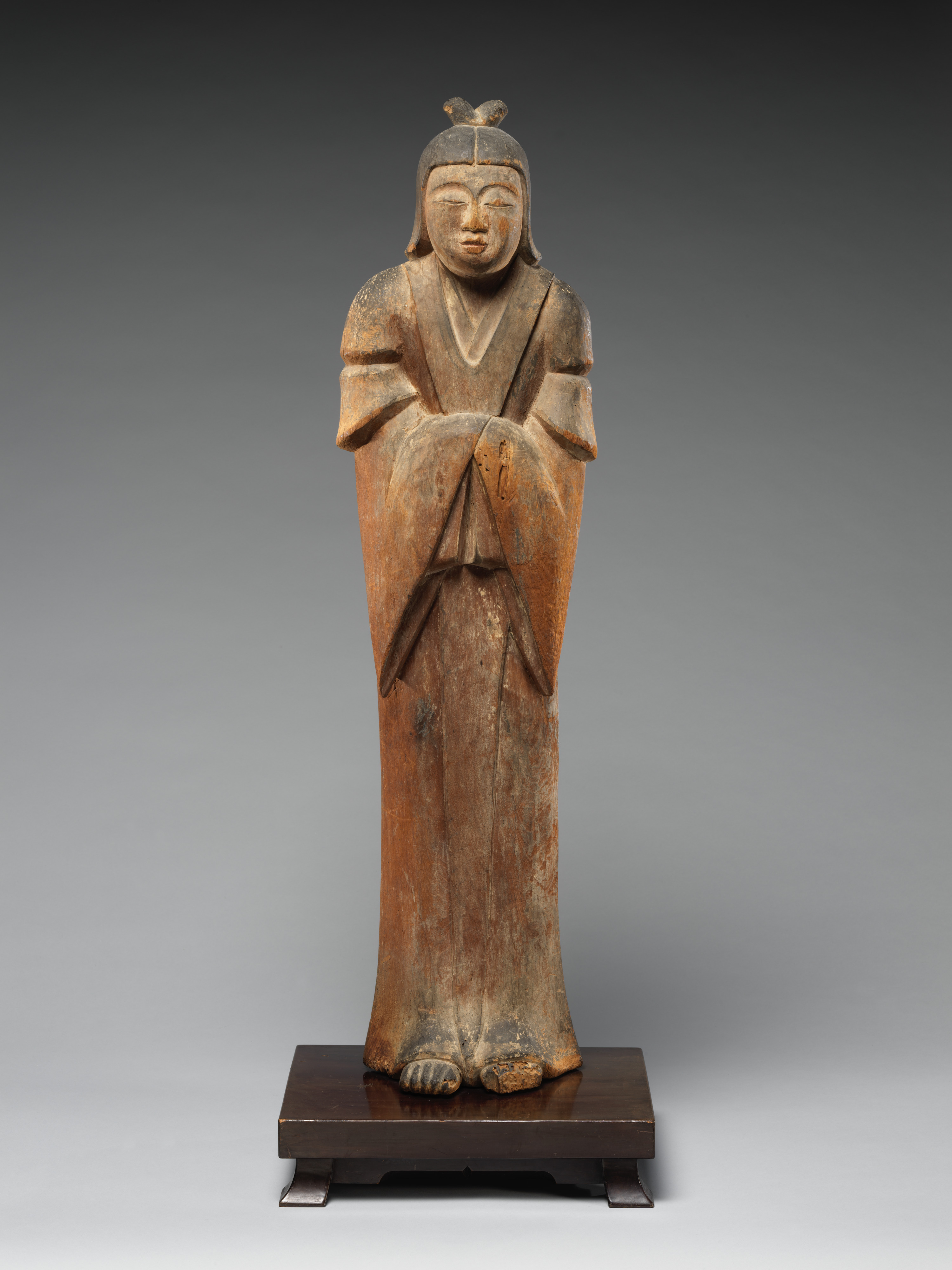
Divine Manifestation: Reinterpreting the Shinto Kami through Botanical Couture
This standalone study from Katherine Fashion Lab ventures beyond traditional fashion discourse, positioning itself at the intersection of metaphysical philosophy, material science, and avant-garde construction. The subject—a female Shinto deity, or kami—presents a unique challenge: how to give tangible, wearable form to a concept defined by intangible, pervasive sacredness. Shinto, Japan's indigenous spiritual framework, perceives kami not as distant, omnipotent gods, but as vital, immanent spirits residing in natural phenomena, objects, and ancestral forces. A female kami often embodies attributes of creation, fertility, protection, and sublime natural beauty, from the sun goddess Amaterasu to the myriad spirits of mountains, waterfalls, and trees. This analysis deconstructs the Lab's radical approach to manifesting this essence not through literal representation, but through a profound dialogue with materiality, structure, and the ephemeral "trace."
Material as Theology: The Japanese Bigleaf Magnolia (Magnolia obovata)
The cornerstone of this study is the deliberate and revelatory selection of Japanese bigleaf magnolia (Magnolia obovata, known as hou-no-ki). This is not a material choice driven by mere aesthetics or exoticism; it is a theological statement. In Shinto, the sacred and the natural are inseparable. By utilizing the wood and bark of a native, revered tree, the Lab directly taps into the concept of kodama—the spirit residing within a tree. The material itself becomes the primary vessel of the kami's presence, moving the project from costume towards a form of ritual object or shintai (an object in which a kami resides).
The technical challenges of transforming a rigid, organic material into a wearable form are immense. The Lab's treatment suggests a mastery of precision milling, steam bending, and laminated construction, likely creating a structural exoskeleton or articulated plates. The inherent properties of magnolia—its pale, creamy heartwood, its straight grain, and its relative workability—are exploited to create forms that suggest both strength and grace. The silhouette likely references natural architectures: the sweeping curve of a branch, the protective cup of a blossom, the layered growth of bark, or the majestic dome of a tree canopy. This is not clothing that drapes; it is architecture that moves, a portable sacred grove that echoes the kami's dominion over a specific natural domain.
The Philosophy of the Trace: Color as Ephemeral Presence
Perhaps the most conceptually sophisticated element is the stipulation of "traces of color." In a discipline where color is often applied with declarative boldness, the "trace" operates on a different philosophical level. It aligns perfectly with the Shinto aesthetic principle of wabi-sabi, which finds beauty in impermanence, imperfection, and subtle suggestion. It also reflects the very nature of a kami's interaction with the world: often felt rather than seen, a fleeting glimpse, a momentary sense of awe.
These traces are not painted on; they are revealed, embedded, or absorbed. The analysis posits several methodologies: the natural oxidation and mineral staining of the magnolia over time, creating blushes of grey, blue, or ochre; the delicate infusion of plant-based dyes (persimmon tannin, indigo) that penetrate only the surface layer, allowing the wood's grain to remain dominant; or the application of powdered mineral or metallic pigments that cling to textured surfaces like pollen or morning dew. The color does not define a form but haunts it. A suggestion of vermilion at a joint might recall a Shinto shrine gate (torii); a whisper of azure in a grain line could evoke a mountain stream; a dusting of gold leaf in a recess might capture the first ray of sun through a forest canopy. This treatment ensures the work is never static, changing with light and perspective, mirroring the kami's elusive presence.
Structural Semiotics: Form and Void in Sacred Space
The construction of the piece must negotiate the duality central to Shinto thought: the interplay between form (katachi) and void or spirit (kokoro). A solid wooden shell would be inert, a mere statue. The Lab's approach likely involves a sophisticated study of negative space, articulation, and kinetic potential. The design may incorporate strategic openings, latticework carved from single planes of magnolia, or layered elements that create shadows and depth. These voids are as critical as the material itself—they are the spaces where the kami breathes and where the human form within interacts with the divine shell.
The articulation points—shoulders, elbows, the waist—present a supreme challenge. Solutions may involve intricate joinery inspired by traditional Japanese carpentry, using wooden pins and flexible laminated sections, or the incorporation of supple, unseen backing materials at stress points. The movement, when it occurs, would be deliberate, graceful, and perhaps slightly audible—a soft rustling or clicking reminiscent of leaves in wind, further enhancing the animistic narrative. The silhouette likely avoids direct historical reference to Heian-era jūnihitoe (twelve-layer robes) but may abstract their philosophy of layered revelation and concealed depth, translating it into a structural, rather than textile-based, idiom.
Conclusion: A Standalone Study in Fashion as Interdisciplinary Praxis
Katherine Fashion Lab's study of the female Shinto deity transcends fashion design. It is a rigorous exercise in cultural hermeneutics through material practice. By deconstructing the core tenets of Shinto—animism, immanence, ephemerality, and reverence for nature—and re-encoding them into the tangible language of magnolia and trace color, the Lab creates a profound commentary on what couture can be. This is not a garment about the wearer's social status or aesthetic preference; it is a contemplative object that questions the relationship between body, spirit, and environment.
As a standalone study, its value lies not in commercial viability or trend forecasting, but in its expansion of fashion's conceptual boundaries. It proposes a model where material selection is theological, where construction is philosophical, and where finish is poetic. The female kami emerges not as a figurative icon, but as an experience engineered through texture, structure, and the haunting beauty of the trace. This work positions Katherine Fashion Lab not merely as an atelier, but as a laboratory for a new kind of embodied meaning, where the sacred is patiently carved, layered, and whispered into being.