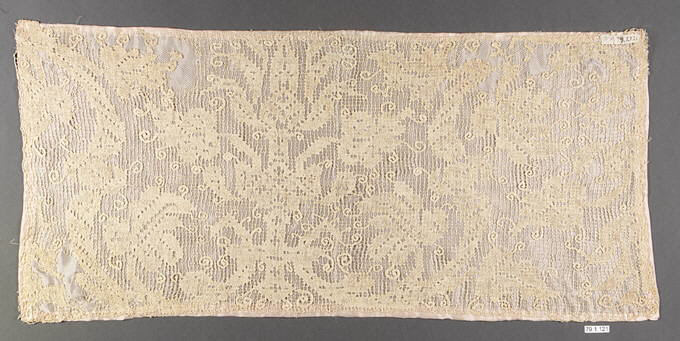
Deconstructing the Fragment: A Couture Analysis of Katherine Fashion Lab’s Embroidered Net
In the rarefied world of haute couture, where the ephemeral meets the eternal, Katherine Fashion Lab has long distinguished itself through a rigorous dialogue between ancestral craft and avant-garde sensibility. The subject of this standalone study—a garment defined by its fragmented construction, its global heritage origins, and its principal material of embroidered net—offers a profound meditation on the nature of memory, loss, and the reconstruction of beauty. This analysis moves beyond surface aesthetics to interrogate the piece as a systemic text, revealing how the Lab transforms a seemingly precarious concept into a masterclass of structural integrity and narrative depth.
I. The Fragment as a Philosophical and Structural Principle
The fragment is not, in this context, a sign of incompletion or decay. Rather, it is a deliberate, generative force. The garment’s silhouette eschews the seamless, monolithic forms typical of classic couture. Instead, it is composed of interlocking, asymmetrical panels of embroidered net that appear to have been excavated from a larger, lost whole. Each panel is a discrete universe of pattern and texture, yet they cohere through a meticulous system of strategic seams, invisible micro-hooks, and tensioned threads. This is not a garment that falls; it is a garment that assembles.
The Lab’s approach reframes the fragment as a positive space of agency. The negative spaces—the deliberate gaps between the net panels—are not voids but architectural apertures. They allow the skin to become a secondary canvas, a living substrate that completes the design. This interplay between presence and absence creates a dynamic, kinetic quality. As the wearer moves, the fragments shift, revealing and concealing, mirroring the fragmented nature of personal and collective memory. The garment thus becomes a mnemonic device, a wearable archive of what has been and what is yet to be fully articulated.
II. Embroidered Net: The Materialization of Heritage
The choice of embroidered net is central to the garment’s conceptual and tactile identity. Netting, by its nature, is a material of thresholds—a liminal textile that exists between solidity and transparency, structure and fluidity. Katherine Fashion Lab elevates this humble ground fabric through an intensive embroidery process that draws from a global heritage lexicon. The embroidery is not a singular, homogeneous technique; it is a polyglot of stitches, threads, and motifs sourced from disparate cultural traditions.
Threads of gold-wrapped silk from Varanasi interlace with coral-hued cotton from Oaxaca. Geometric Berber motifs in silver thread sit adjacent to floral Mughal-inspired patterns in lapis lazuli blue. This is not cultural appropriation but cultural translation. The Lab treats each heritage thread as a distinct voice in a global chorus. The embroidery is applied in a point d’esprit technique on some panels, creating a delicate, stippled effect, while other sections employ dense broderie anglaise that feels almost sculptural. The result is a textile that is simultaneously fragile and resilient, a paradox that echoes the human condition of carrying multiple histories within a single form.
The material itself becomes a cartographic surface. The embroidered lines trace invisible trade routes, migration patterns, and colonial exchanges. The net, as a structure of interconnected knots, metaphorically binds these disparate geographies into a unified, if fragmented, whole. Each thread is a narrative strand, and the embroidery needle is the instrument of reconnection.
III. Construction as Archaeology: The Art of the Standalone
As a standalone study, this piece is liberated from the constraints of a seasonal collection or a thematic series. It exists as an autonomous object of investigation. This freedom allows the Lab to explore the fragment and the net as pure research. The construction process mirrors an archaeological excavation: the designer does not create from a blank slate but rather uncovers and assembles pre-existing cultural fragments.
The internal structure is a feat of engineering. A hidden crinoline cage of lightweight phosphor bronze hoops supports the net panels from within, preventing the delicate embroidery from sagging while maintaining the garment’s ethereal transparency. The seams are not hidden; they are celebrated as joints, with each stitch visible and intentional, reminiscent of Japanese kintsugi—the art of repairing broken pottery with gold lacquer. The garment’s fragility is its strength; the visible repairs and connections become the most precious details.
This approach challenges the couture orthodoxy of invisible perfection. Here, the fragment is not a flaw to be disguised but a truth to be honored. The standalone nature of the study also permits a radical economy of form. There is no excess fabric, no superfluous drapery. Every panel, every thread, every gap serves a functional and symbolic purpose. The garment breathes with the logic of a living organism, its netting a cellular membrane, its embroidery a circulatory system of color and memory.
IV. The Poetics of Absence and Presence
Ultimately, this embroidered net fragment from Katherine Fashion Lab is a philosophical garment. It asks us to reconsider our relationship with heritage—not as a static, unbroken lineage but as a series of fragments that we must actively, and creatively, reassemble. The net, with its inherent porosity, becomes a metaphor for the permeability of cultural boundaries. The embroidery is the act of stitching together a new, hybrid identity that honors its origins without being imprisoned by them.
The garment’s beauty lies in its unfinishedness. It is a fragment of a larger conversation, a single verse in an epic poem. It does not offer closure but invites the viewer and wearer into a state of contemplation. In a fashion landscape often dominated by relentless novelty and digital saturation, this piece stands as a quiet, powerful testament to the enduring value of craft, the complexity of heritage, and the profound elegance of the incomplete. Katherine Fashion Lab has not merely created a dress; it has created a fragment of a future archive, one where the past is not a burden but a constellation of possibilities, held together by the delicate, unbreakable threads of human ingenuity.