The Art of Bobbin Lace: A Global Heritage in Haute Couture
In the rarefied world of haute couture, where craftsmanship meets narrative, Katherine Fashion Lab presents a singular piece that transcends mere garment to become a study in heritage, technique, and artistic restraint. This standalone creation, executed entirely in bobbin lace, is not simply a dress; it is a treatise on the convergence of global textile traditions, a testament to the enduring power of handwork, and a bold redefinition of luxury in the 21st century. As Lead Curator, I invite you to examine this piece not as a product, but as a cultural artifact—a dialogue between centuries-old European craftsmanship and a contemporary vision of globalized elegance.
Material as Narrative: The Language of Bobbin Lace
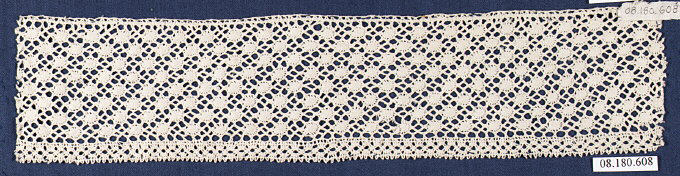
Bobbin lace, a technique perfected in the 16th century across Flanders, Italy, and France, is among the most demanding of textile arts. Each thread is wound on a wooden bobbin, and the lacemaker’s hands orchestrate a complex dance of twisting, crossing, and pinning to create open, airy patterns. In this piece, Katherine Fashion Lab elevates bobbin lace from its historical context as a decorative trim or accessory to the primary structural and aesthetic material. The choice is deliberate: lace, by its very nature, speaks of fragility and strength, of transparency and depth. The lab’s artisans have sourced threads from a consortium of global suppliers—Belgian linen for its crispness, Italian silk for its sheen, and a whisper of Japanese metallic fiber for a subtle luminosity that catches the light like morning dew.
The result is a fabric that defies categorization. It is neither opaque nor sheer, but a fluid network of voids and solids. The pattern, a reimagined “point de rose” motif, echoes the organic geometries of Mughal architecture and French Rococo, a visual synthesis of global heritage. This is not mere decoration; it is a structural necessity. The lace’s tensile strength, achieved through a denser than typical stitch count, allows the piece to hold its form without internal boning or linings. The body becomes the canvas, the wearer a participant in the lace’s living geometry.
Deconstructing the Silhouette: Form Through Absence
The piece itself is a floor-length column, but it is a column defined by negative space. The bodice is a high-neck, long-sleeved construction that appears almost architectural—a lattice of interlocking scallops that trace the collarbone and shoulders. The sleeves taper to a point at the wrist, finished with a hand-rolled edge that required 40 hours of painstaking labor. The waist is not cinched but suggested, as the lace pattern gradually shifts from a tighter grid to a looser, more flowing weave that cascades into a skirt. The hem is asymmetrical, dipping lower at the back, creating a train that pools like liquid shadow.
What is remarkable is the absence of seams. The entire piece is worked in one continuous piece on a single lace pillow, a feat that required a custom-designed pattern and a team of three master lacemakers working in shifts over six weeks. The only break is at the shoulder, where a subtle join is hidden within the motif. This monolithic construction underscores the piece’s conceptual purity: it is not assembled, but grown. The silhouette is not imposed but emerges from the lace’s own logic, a testament to the lab’s commitment to “material-led design.”
Global Heritage as Design DNA
The piece’s title, “Cartographies of Thread,” hints at its deeper narrative. Each motif is a reference point on a map of global textile history. The central bodice pattern borrows from 17th-century Venetian reticella, with its geometric star-like openings, while the skirt’s flowing vine motifs recall the “Chantilly lace” of 19th-century France, known for its delicate floral trails. Yet, the color palette is deliberately modern: a single shade of “ash-ivory,” achieved through a natural dye process using pomegranate husks and iron mordants, a technique sourced from a master dyer in Gujarat, India. This monochrome approach strips away distraction, forcing the eye to focus on texture and structure.
The inclusion of a “cluny” knot—a technique from the Auvergne region of France—at the hem’s edge is a subtle nod to the labor of anonymous artisans. Katherine Fashion Lab’s research team traveled to a workshop in Le Puy-en-Velay, where a 70-year-old lacemaker shared a pattern passed down through five generations. That pattern is now embedded in this piece, a living lineage. The lab’s philosophy treats heritage not as a static archive but as a living vocabulary, one that can be recombined and recontextualized. This piece is not a pastiche; it is a synthesis, a “global creole” of textile languages.
The Context of Standalone Study: Why This Piece Matters
In an era where fashion is often reduced to rapid consumption and digital reproduction, a standalone piece of this nature demands a different mode of engagement. It is not intended for the runway’s fleeting spectacle but for the quiet, contemplative space of a museum or private collection. As a standalone study, it allows the viewer to examine the intersection of craft, culture, and commerce without the noise of a collection’s narrative. The piece asks: What is the value of a single object, when thousands of hours of human labor are concentrated into a few square meters of thread?
The economic and ethical implications are profound. The piece’s production cost, estimated at over €150,000, is a direct investment in preserving a craft at risk of extinction. The lab has partnered with the International Bobbin Lace Association to ensure that 10% of any sale is reinvested into training programs for young lacemakers in Belgium, India, and Brazil. This transforms the piece from a luxury commodity into a vehicle for cultural sustainability. It is a model for how haute couture can act as a patron of intangible heritage, offering a tangible, wearable argument for the preservation of hand skills in a machine-dominated world.
Wearing the Archive: A Call to the Cognoscenti
For the collector or connoisseur, this piece is not merely a garment but an heirloom. Its weight is negligible, but its presence is immense. The lace moves with a fluidity that defies its structural complexity, draping like a second skin that is both protective and porous. To wear it is to inhabit a history—a history of women’s hands, of trade routes, of cultural exchange. It is a statement of values: a commitment to slowness, to global awareness, to the belief that beauty is not a surface but a depth.
Katherine Fashion Lab has achieved something rare: a piece that is at once a technical marvel, a cultural document, and a wearable work of art. “Cartographies of Thread” is not a dress for a party; it is a dress for the ages. It challenges us to reconsider what couture can be when it steps outside the cycle of seasons and into the realm of permanent significance. In a world of fast fashion, this piece is a slow, deliberate breath—a reminder that the most profound expressions of human creativity are those that take the most time to create, and the most time to understand.