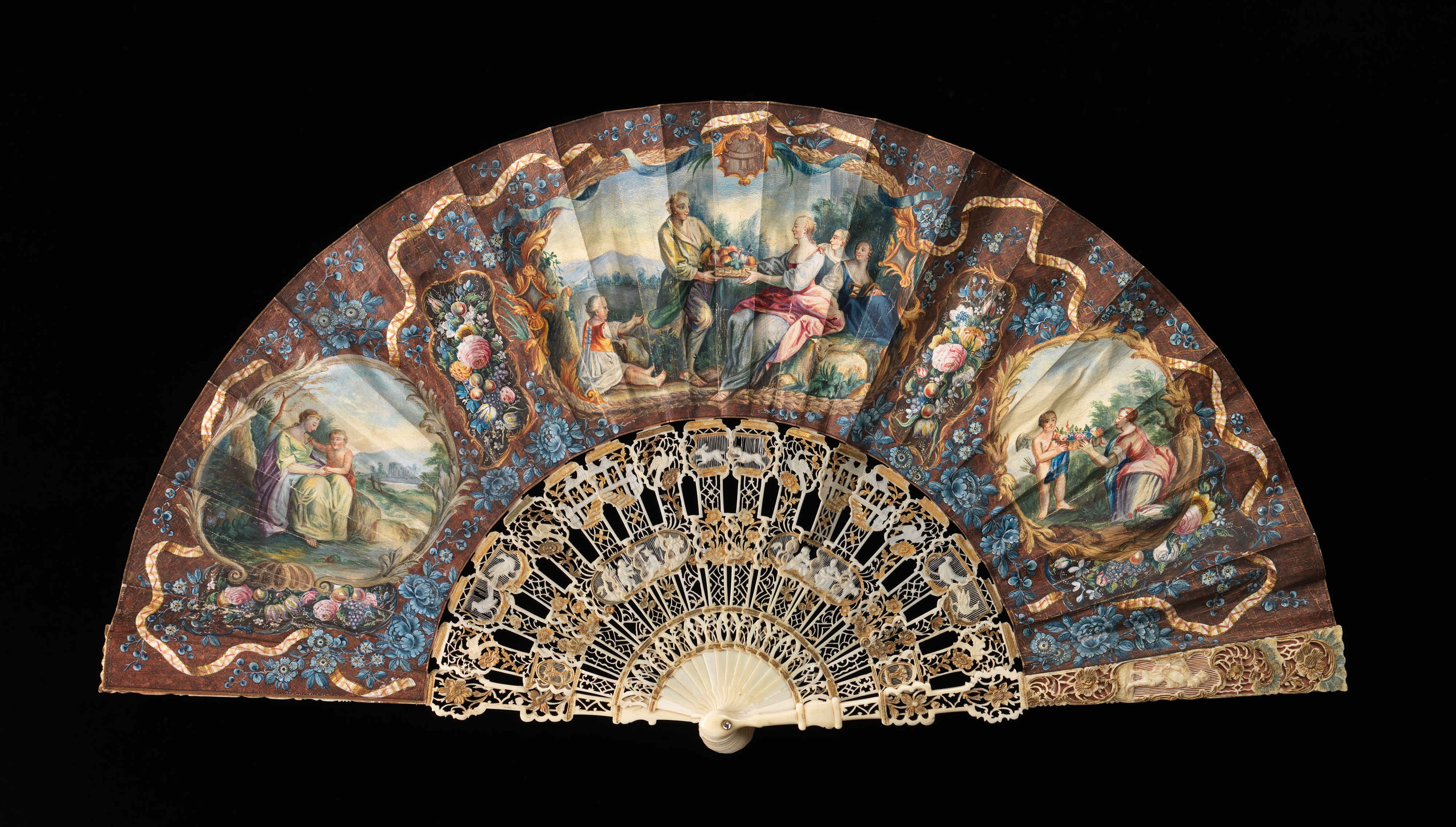
Heritage Analysis: The Dutch Parchment Fan as a Strategic Artifact for 2026 Luxury Positioning
Introduction: The Fan as a Microcosm of Power and Prestige
The object under analysis—a late 17th- to early 18th-century Dutch fan, crafted from ivory, parchment, gouache, and metal—represents far more than a functional cooling device. Within the context of Katherine Fashion Lab’s Strategic Standalone Research, this artifact serves as a critical lens through which to decode symbolic power, historical adornment, and spiritual meaning. For a 2026 high-end luxury strategy, the fan embodies a convergence of material rarity, cultural messaging, and ritualistic display—attributes that align with the emerging demand for objects that communicate status, narrative depth, and experiential exclusivity.
Symbolic Power: The Fan as a Silent Language of Authority
In Dutch Golden Age society, the fan was not merely an accessory but a tool of non-verbal communication. Its deployment in courtship, diplomacy, and social hierarchy was codified through “fan language,” where specific gestures conveyed intent, rejection, or invitation. The ivory sticks and parchment leaves of this artifact would have been painted with gouache scenes—often allegorical or pastoral—that reinforced the owner’s cultural literacy and moral standing. Symbolically, the fan granted its bearer the power to control social temperature, both literally and figuratively. For Katherine Fashion Lab, this translates into a 2026 strategy where accessories are designed to encode brand narratives—pieces that whisper exclusivity through subtle, culturally resonant motifs rather than overt logos. The fan’s historical role as a status differentiator offers a blueprint for creating objects that confer authority upon the wearer, aligning with the luxury consumer’s desire for tangible markers of influence.
Historical Adornment: Materiality and the Craft of Distinction
The medium of this fan—ivory, parchment, gouache, and metal—reveals a deliberate hierarchy of materials. Ivory, sourced from elephant tusks or walrus, signified access to global trade networks and colonial wealth. Parchment, a refined animal skin, was chosen for its durability and smooth surface, ideal for intricate hand-painted designs. The gouache, an opaque watercolor, allowed for vibrant yet delicate imagery, often depicting mythological or botanical themes. Metal hinges and guards, frequently silver or gilt, added structural integrity and a glint of luxury. This combination of rare, perishable, and labor-intensive materials made the fan a portable treasure, often passed down as heirloom or diplomatic gift. For a 2026 luxury strategy, Katherine Fashion Lab can draw from this material storytelling by prioritizing sustainably sourced exotics and artisanal techniques—such as hand-painting on ethically harvested substrates. The historical fan’s emphasis on craftsmanship over mass production resonates with the contemporary shift toward slow luxury, where the value lies in the maker’s touch and the material’s provenance.
Spiritual Meaning: The Fan as a Threshold Object
Beyond its social functions, the Dutch fan carried spiritual and protective connotations. Painted scenes often incorporated symbols of vanitas—skulls, hourglasses, wilting flowers—reminding the bearer of mortality and the transient nature of earthly beauty. This memento mori tradition aligned with Calvinist piety, where adornment was permissible only if it served moral reflection. The fan thus became a threshold object, mediating between the physical and the spiritual, the public and the private. When opened, it created a sacred space for the face, shielding the wearer from unwanted gaze while inviting intimacy with chosen viewers. For Katherine Fashion Lab’s 2026 strategy, this spiritual dimension offers a powerful narrative: luxury products as personal talismans that protect, empower, and remind. Incorporating symbolic motifs—such as protective eyes, celestial patterns, or ephemeral blooms—can imbue accessories with emotional resonance and ritualistic value. The fan’s ability to transform a public act into a private ceremony aligns with the luxury consumer’s search for meaningful objects that transcend mere utility.
2026 High-End Luxury Strategy: Translating Heritage into Market Leadership
Integrating the Dutch fan’s heritage into a forward-looking luxury strategy requires a multilayered approach that respects historical authenticity while appealing to modern sensibilities. Katherine Fashion Lab can leverage the fan’s symbolic power by launching a limited-edition “Silent Language” collection, where each piece—be it a fan, clutch, or scarf—incorporates a coded motif that communicates a specific value (e.g., loyalty, ambition, discretion). This taps into the experiential luxury trend, where consumers seek products that offer hidden narratives and interactive discovery.
The materiality strategy should emphasize provenance and ethics. Collaborations with heritage ateliers in the Netherlands for hand-painted parchment or sustainably sourced ivory alternatives (e.g., tagua nut or recycled bone) can position the brand as a custodian of craft. Metal components could feature recycled silver or gold, with hallmarks that tell a story of circular luxury. This approach not only honors the original medium but also addresses the sustainability imperatives of 2026’s discerning clientele.
Finally, the spiritual meaning can be operationalized through ritual-based marketing. Each purchase could include a “fan language” guide or a meditative unboxing ceremony that mirrors the fan’s historical use as a private ritual. Pop-up experiences in Amsterdam’s historic canal houses or at art fairs could allow clients to co-create their own symbolic motifs, deepening emotional investment. The goal is to transform the fan from a historical curiosity into a living luxury archetype—one that speaks to the 2026 consumer’s desire for authenticity, exclusivity, and spiritual depth.
Conclusion: The Fan as a Strategic Compass
The Dutch parchment fan, with its ivory frame, painted scenes, and metal accents, is a masterclass in symbolic engineering. It demonstrates how material choice, cultural coding, and ritualistic function can converge to create an object of enduring prestige. For Katherine Fashion Lab, this artifact provides a strategic compass for 2026: a luxury strategy that prioritizes silent communication, artisanal integrity, and spiritual resonance. By translating the fan’s heritage into tangible, modern forms, the brand can capture the imagination of a new generation of luxury consumers—those who seek not just beauty, but meaning; not just status, but story. In an era of digital overload, the fan reminds us that the most powerful luxury is often the one that is seen, but not spoken.