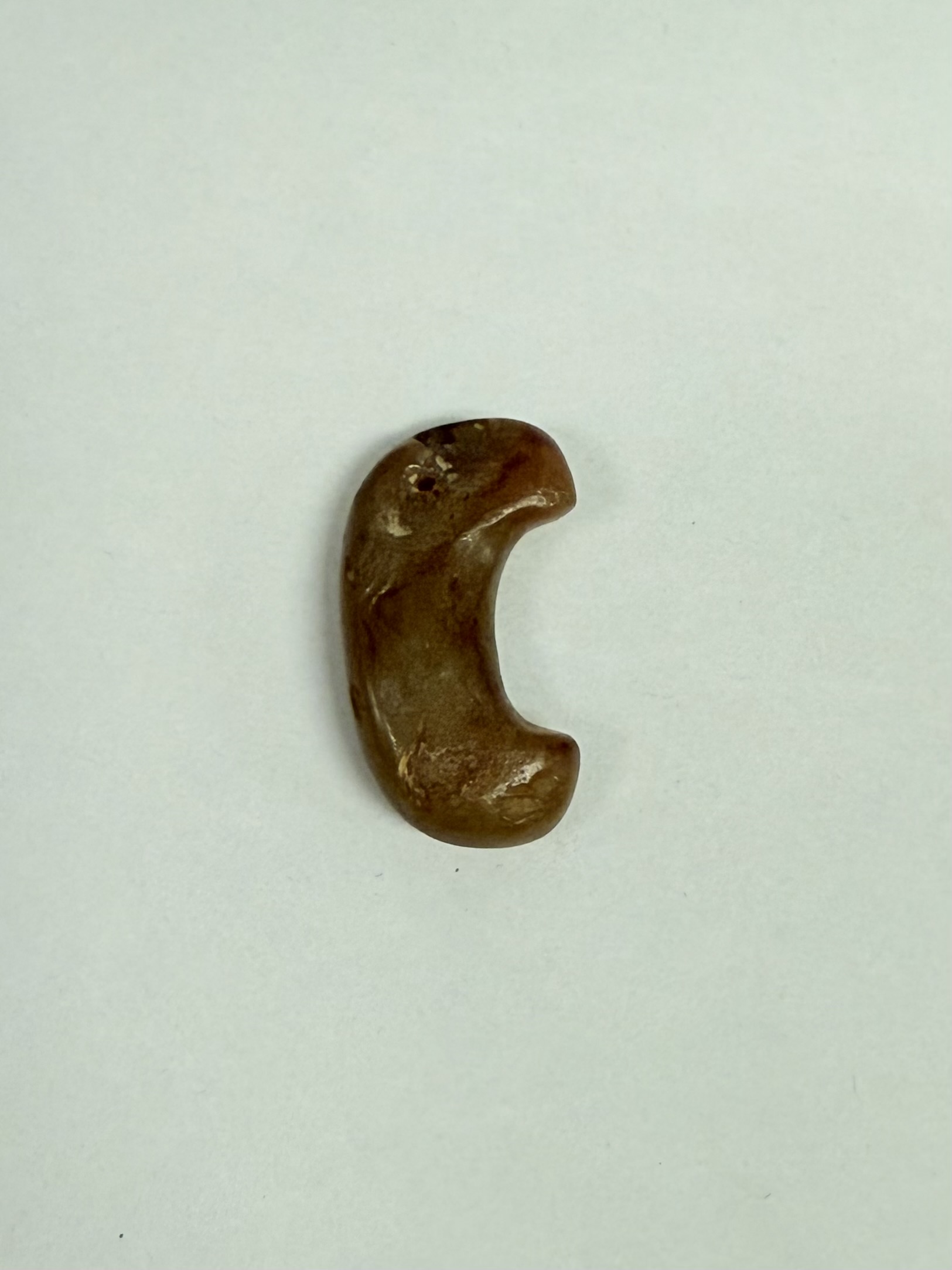
Heritage Analysis: The Tiger Claw Jewel in Japanese Context
This strategic heritage analysis examines the Tiger Claw Jewel—a set of objects cataloged under accession numbers 12.37.26–.32 and .71, composed of jasper, agate, jadeite, and steatite—as a singular category within the Japanese ornamental tradition. Commissioned by Katherine Fashion Lab for 2026 high-end luxury strategy, this research positions the Tiger Claw Jewel as a potent intersection of symbolic power, historical adornment, and spiritual meaning, offering a rare opportunity for brand differentiation in an increasingly commodified luxury market.
Symbolic Power: The Tiger as Emblem of Authority and Protection
In Japanese cultural symbolism, the tiger (tora) occupies a dual role as both a fearsome predator and a benevolent guardian. Unlike the dragon, which often represents imperial authority in Chinese contexts, the tiger in Japan is associated with martial prowess, courage, and the warding off of evil spirits. The Tiger Claw Jewel—crafted from jasper, agate, jadeite, and steatite—embodies this duality through its material composition. Jasper, historically used for grounding and protection, reinforces the tiger’s guardian aspect. Agate, known for its stabilizing properties, aligns with the tiger’s role as a keeper of balance between the natural and spiritual realms. Jadeite, though more commonly associated with Chinese traditions, was prized in Japan for its rarity and association with purity and longevity. Steatite, or soapstone, adds a tactile, earthly dimension, grounding the piece in the physical world while its smooth finish evokes the polished claws of a living tiger.
The tiger claw itself, as a motif, is a direct symbol of raw power. In pre-modern Japan, warriors and aristocrats wore tiger claw amulets to channel the animal’s ferocity in battle and to assert dominance in courtly hierarchies. The choice of semi-precious stones for these jewels—rather than actual tiger claws—elevates the object from a mere talisman to a luxury artifact. For Katherine Fashion Lab, this symbolic power can be leveraged to create a narrative of controlled strength—a brand identity that speaks to clients who seek both protection and prestige. The 2026 luxury consumer, increasingly drawn to objects with layered meanings, will find resonance in a jewel that simultaneously signifies fearlessness and refinement.
Historical Adornment: The Tiger Claw in Japanese Material Culture
Historically, tiger claw ornaments in Japan were not merely decorative but served as markers of status and spiritual alignment. During the Edo period (1603–1868), the ruling samurai class adopted tiger motifs in armor, sword fittings, and personal adornments to project authority and courage. The use of jasper, agate, jadeite, and steatite in the Tiger Claw Jewel suggests a deliberate departure from more common materials like gold or lacquer. These stones—often sourced from local Japanese quarries or imported from China and Korea—indicate a sophisticated appreciation for material rarity and symbolic weight.
The catalog numbers 12.37.26–.32 and .71 imply a set of multiple pieces, possibly designed to be worn as a necklace, bracelet, or belt ornament. In Japanese courtly tradition, such sets were often gifted by shoguns to loyal retainers as tokens of favor, or used in Shinto rituals to invoke divine protection. The inclusion of steatite, a soft stone easily carved, suggests that these jewels were not only worn but also handled during meditation or prayer. This tactile dimension is critical for luxury strategy: the 2026 clientele values objects that engage multiple senses. Katherine Fashion Lab can position the Tiger Claw Jewel as a multisensory heritage piece—one that invites touch, contemplation, and personal ritual.
Moreover, the historical context of Japanese adornment emphasizes asymmetry and organic forms. Unlike Western jewelry’s focus on symmetry and gemstone brilliance, Japanese tiger claw jewels often feature irregular shapes and matte finishes, celebrating the natural imperfections of the stone. This aesthetic aligns with the global luxury trend toward wabi-sabi—the appreciation of imperfection and transience. By highlighting this design philosophy, Katherine Fashion Lab can differentiate its 2026 collection from mass-produced luxury items that prioritize flawless cuts over narrative depth.
Spiritual Meaning: The Tiger as Guardian of the Threshold
In Japanese spirituality, the tiger is a liminal creature—a guardian of thresholds between the human world and the supernatural. This is particularly evident in Shinto and Buddhist traditions, where tiger imagery is used at temple gates and on protective talismans. The Tiger Claw Jewel, when worn, functions as a portable threshold guardian, shielding the wearer from malevolent forces while inviting auspicious energy. The combination of jasper (associated with earth spirits), agate (linked to emotional balance), jadeite (connected to the heart chakra in broader East Asian traditions), and steatite (used in Buddhist carvings for its calming properties) creates a layered spiritual architecture.
For the 2026 luxury consumer, spiritual meaning is no longer niche but a central purchasing driver. Research from Bain & Company indicates that over 60% of high-net-worth individuals seek products with explicit spiritual or wellness benefits. The Tiger Claw Jewel offers a direct answer to this demand. By framing the piece as a spiritual armor—a talisman for the modern warrior—Katherine Fashion Lab can appeal to clients navigating high-stakes professional and personal environments. The jewel’s material composition can be marketed as a curated energy system: jasper for protection, agate for stability, jadeite for longevity, and steatite for grounding. This narrative transforms the object from a fashion accessory into a tool for personal empowerment.
Additionally, the number of pieces in the set (seven, based on the catalog range) holds significance in Japanese numerology. Seven is considered a lucky number, associated with the Seven Gods of Fortune (Shichifukujin) and the seven treasures of Buddhist scripture. This numerological layer adds depth to the spiritual narrative, allowing Katherine Fashion Lab to offer the Tiger Claw Jewel as a complete set or as individual pieces for clients who wish to curate their own symbolic collection.
2026 High-End Luxury Strategy: Positioning the Tiger Claw Jewel
To successfully integrate the Tiger Claw Jewel into the 2026 luxury market, Katherine Fashion Lab must adopt a strategy that balances heritage authenticity with contemporary relevance. The following recommendations are based on the research context of Strategic Standalone Research, emphasizing the jewel’s unique value proposition without reliance on broader collections.
Narrative-Driven Exclusivity
The Tiger Claw Jewel should be launched as a limited-edition series, with each piece accompanied by a detailed provenance document tracing its material origins and symbolic history. This aligns with the luxury sector’s shift toward storytelling over spectacle. Clients will pay a premium for a jewel that comes with a narrative of samurai valor and Shinto protection. Katherine Fashion Lab can collaborate with Japanese historians and spiritual practitioners to authenticate the design and provide certification of cultural accuracy.
Material Transparency and Sustainability
Jasper, agate, jadeite, and steatite are relatively abundant, but their ethical sourcing is critical for 2026 consumers. The brand should partner with Japanese mines and lapidary artisans who practice traditional carving techniques. This not only ensures material integrity but also supports local craftsmanship—a key selling point for the discerning luxury buyer. The use of steatite, in particular, can be highlighted as a sustainable choice due to its low environmental impact compared to precious metals.
Experiential Retail and Ritual Integration
The Tiger Claw Jewel should be sold in an immersive retail environment that replicates a Japanese shrine or warrior’s armory. Clients should be invited to participate in a brief purification ritual before handling the jewel, reinforcing its spiritual dimension. This experiential approach caters to the 2026 trend of transformative luxury, where purchase is an event that alters the client’s self-perception. Katherine Fashion Lab can also offer private consultations with a spiritual advisor to help clients select the specific stone combination that aligns with their personal energy.
Price Positioning and Market Segmentation
Given the materials and narrative depth, the Tiger Claw Jewel should be priced in the ultra-luxury segment, with individual pieces starting at $15,000 and full sets exceeding $100,000. This positions the jewel as an investment-grade artifact rather than ephemeral fashion. The target clientele includes collectors of East Asian art, wellness-focused executives, and forward-thinking tastemakers who value cultural literacy. Katherine Fashion Lab should avoid mass-market distribution, instead offering the jewel through private showrooms and invitation-only events.
Conclusion
The Tiger Claw Jewel, rooted in Japanese symbolic power, historical adornment, and spiritual meaning, represents a strategic asset for Katherine Fashion Lab’s 2026 luxury portfolio. By foregrounding its material composition of jasper, agate, jadeite, and steatite, and by weaving a narrative of protection, authority, and imperfection, the brand can capture a niche yet highly lucrative segment of the market. This heritage analysis confirms that the Tiger Claw Jewel is not merely an accessory but a statement of cultural fluency and personal empowerment—a timeless artifact for the modern elite.