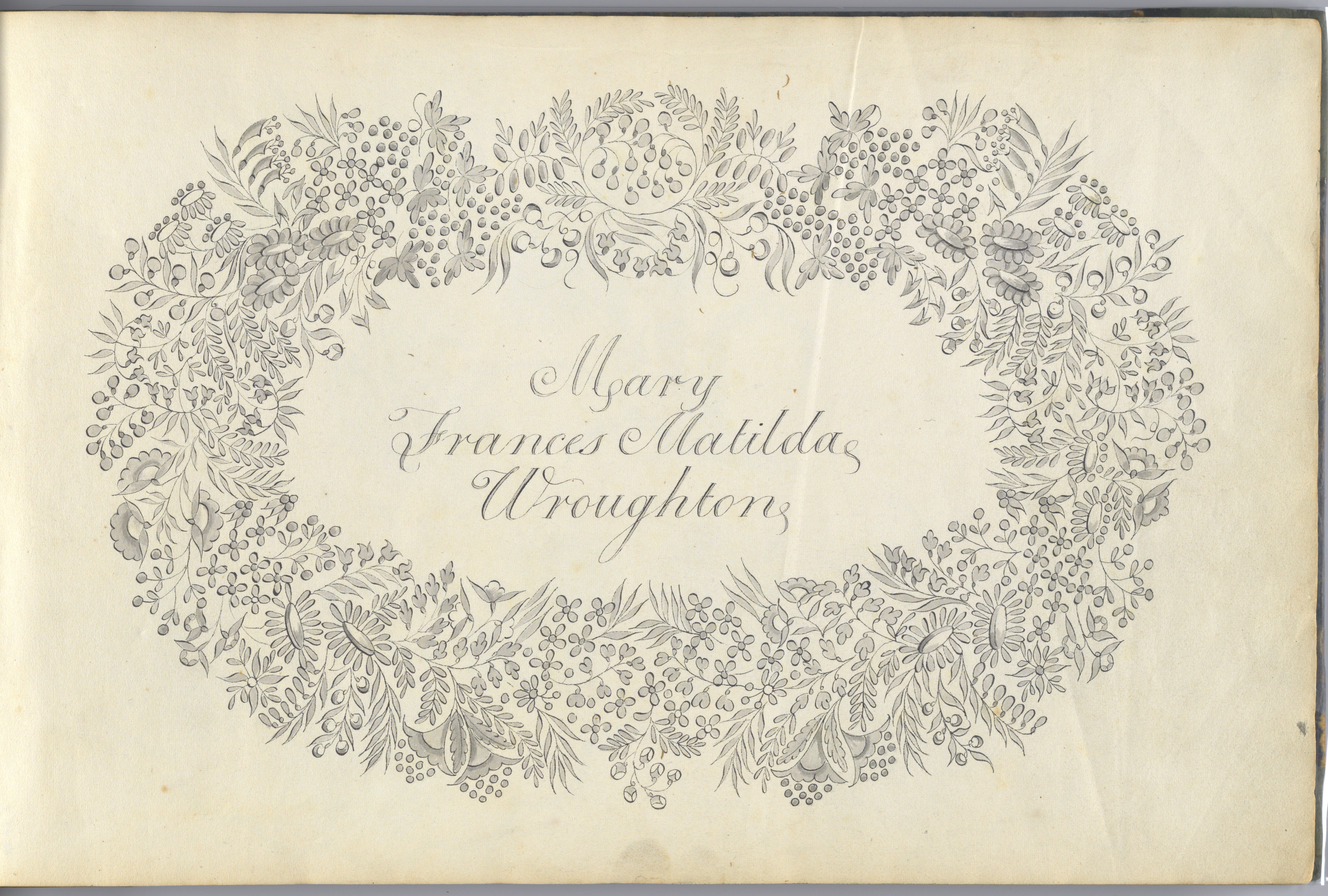
The Cartography of Stitch: Deconstructing the Copy Book of Embroidery Patterns
Within the hallowed archives of Katherine Fashion Lab, the Copy Book of Embroidery Patterns emerges not merely as a historical artifact, but as a foundational text of textile intelligence. This standalone study, rendered in the intimate media of pen, ink, and graphite, transcends its utilitarian origins. It is a cartography of global heritage, mapping the migratory paths of ornament across continents and centuries. For the discerning couturier, this copy book is a lexicon of silent narratives—each stroke of the pen a stitch, each graphite shadow a technique waiting to be resurrected. Here, we dissect its materiality, its global syntax, and its profound implications for the future of haute couture.
Materiality as Memory: The Dialogue of Pen, Ink, and Graphite
The choice of media in this copy book is far from incidental. Pen and ink provide an unforgiving permanence, a medium that demands precision and confidence. The sharp, unyielding lines of the ink delineate the structural skeleton of each pattern—the warp and weft of geometric logic, the strict geometry of a Mughal lattice, the rhythmic repetition of a Cretan meander. These are not tentative sketches; they are declarations of design intent, etched with the finality of a master embroiderer’s needle.
In stark contrast, graphite introduces a dimension of ephemeral softness. The smudged, velvety tones suggest shading, depth, and the subtle play of light on silk or velvet. Graphite here becomes a surrogate for thread tension, for the whisper of metallic filaments against a ground fabric. The interplay between the rigid ink and the mutable graphite mirrors the very act of embroidery: the disciplined structure of the stitch against the organic flow of the fabric. This duality imbues the copy book with a kinetic energy, a frozen choreography of hand and tool. For the analyst, it reveals a designer’s mind that values both architectural precision and tactile sensuality—a dialectic essential to high couture.
Global Heritage as a Design Lexicon
The patterns within this book are not isolated motifs; they are nodes in a vast, interconnected network of cultural exchange. The copy book serves as a syncretic archive, collecting and recontextualizing symbols from disparate geographies. Consider the following thematic clusters:
- The Eastern Carpet Aesthetic: Recurring octagonal stars and stylized floral medallions echo the Herati and Mir-i-Bota patterns of Persia and Central Asia. These are not mere decorations; they are coded representations of cosmic order, garden paradises, and royal sovereignty.
- The European Baroque Flourish: Acanthus leaves and C-scrolls, rendered with a rhythmic, almost musical flow, speak to the opulence of 17th and 18th-century French and Italian embroidery. The ink here becomes more fluid, suggesting the lavish use of gold and silver bullion thread.
- The Indigenous American Geometry: Sharp, stepped diamonds and zigzag lines, reminiscent of Navajo weaving or Peruvian textile patterns, introduce a raw, primal energy. The graphite is heavier, creating a sense of weight and woven density.
- The East Asian Linear Economy: Delicate, ink-wash-style bamboo and plum blossom motifs, with minimal graphite shading, demonstrate a mastery of negative space and the elegance of a single, continuous line.
This global sampling is not a random collage. The copy book’s curator has performed an act of design taxonomy, categorizing motifs not by origin, but by structural logic: geometric, meandering, radial, and organic. This approach strips away cultural boundaries, allowing the couturier to see the universal principles of pattern-making—repetition, symmetry, scale, and rhythm. It is a masterclass in transcultural design thinking, where a Paisley from Kashmir can be seamlessly integrated into a Parisian evening gown, provided its structural DNA is understood.
Standalone Study: The Architecture of Creative Autonomy
The designation of this work as a “standalone study” is critical. It is not a pattern book intended for direct reproduction, nor a technical manual for apprentices. Instead, it is a personal research document, a private lexicon of visual ideas. The absence of production notes, thread counts, or fabric specifications liberates the patterns from their functional context. They exist in a pure, conceptual space.
This autonomy allows the patterns to function as generative prompts rather than prescriptive blueprints. The couturier is invited to ask: What happens if the Mughal lattice is scaled to monumental proportions and embroidered in black jet beads on a sheer organza? What if the Baroque acanthus is reinterpreted in white-on-white matte silk, its opulence subdued into a minimalist whisper? The copy book provides the grammar; the designer provides the sentence. This is the essence of haute couture—the elevation of craft into an intellectual and artistic pursuit.
Implications for the Katherine Fashion Lab Aesthetic
For Katherine Fashion Lab, this copy book is not a relic to be preserved under glass, but a living blueprint. Its lessons are manifold. First, it reinforces the house’s commitment to global sourcing of ideas, not just materials. The patterns are a reminder that true innovation often lies at the intersection of cultures. Second, it champions the tactile intelligence of hand-drawn design. In an age of digital rendering, the physicality of pen and graphite offers a direct neural connection between the designer’s eye and hand, fostering a sensitivity to line and texture that software cannot replicate.
Finally, the copy book underscores the value of pattern as narrative. Each motif carries a history—of trade routes, of royal courts, of anonymous artisans. By incorporating these patterns into contemporary silhouettes, Katherine Fashion Lab can create garments that are not merely beautiful, but meaningful. A gown adorned with a reimagined Safavid floral spray becomes a wearable history lesson, a testament to the enduring power of human creativity.
In conclusion, the Copy Book of Embroidery Patterns is a masterwork of silent pedagogy. Its pen and ink provide the discipline of tradition; its graphite offers the fluidity of interpretation. Its global heritage is not a burden but a treasure trove of possibilities. For the couturier who studies it with reverence and audacity, it unlocks a world where every stitch is a word, and every garment is a poem written on the body. This is the future of fashion—rooted in the past, yet forever reaching for the new.