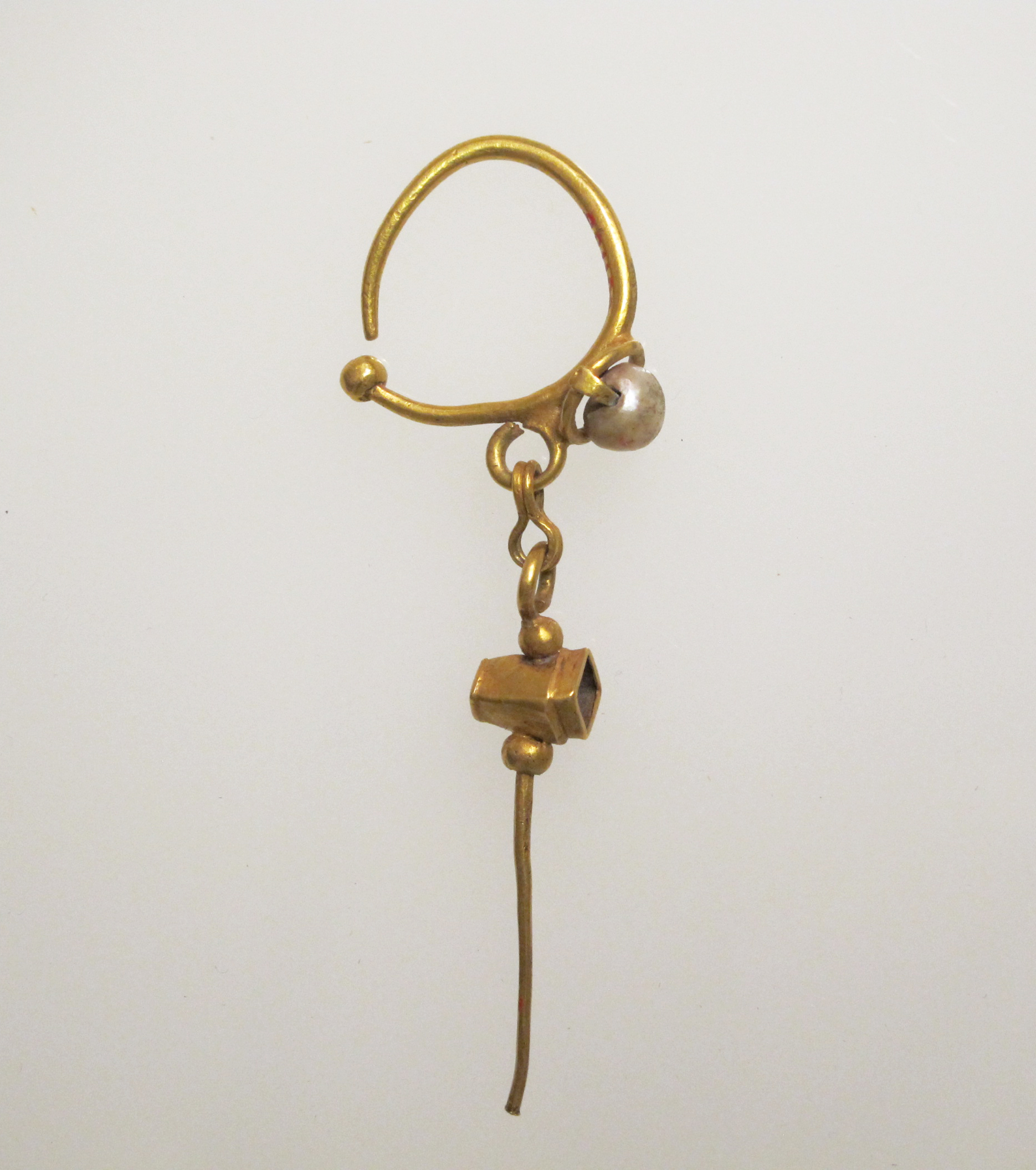
Heritage Analysis: Roman Gold and Pearl Pendant Earring
Introduction: The Artifact as Strategic Asset
This heritage analysis examines a Roman gold earring with pendant and pearl, dating from the 1st to 3rd century CE, as a case study in symbolic power, historical adornment, and spiritual meaning. Commissioned by Katherine Fashion Lab as part of a Strategic Standalone Research initiative, this paper evaluates the artifact’s relevance to high-end luxury brand strategy for 2026. The Roman earring, crafted in gold and pearl, embodies a confluence of material wealth, social signaling, and metaphysical protection—attributes that resonate deeply with contemporary luxury consumers seeking authenticity, narrative depth, and transcendence. By deconstructing its historical and symbolic dimensions, we derive actionable insights for positioning Katherine Fashion Lab’s forthcoming collection.
Historical Adornment: The Roman Context of Jewelry as Identity
Materiality and Social Stratification
In Roman society, jewelry served as a potent marker of status, citizenship, and gender identity. Gold, as the primary medium, signified not only economic capital but also imperial allegiance; the Roman state controlled gold mining and distribution, making its possession a privilege of elite classes. The earring’s pendant form—often a globe, crescent, or figurative motif—amplified visibility, drawing attention to the wearer’s face during public ceremonies, banquets, and religious rites. For Roman women, earrings were particularly significant: they signaled marital status, wealth transfer through dowries, and adherence to matronly virtue. The inclusion of a pearl, imported from the Red Sea or Persian Gulf, further elevated the piece. Pearls were among the most expensive commodities in Rome, often exceeding the value of gold by weight. Pliny the Elder noted that pearls represented the ultimate luxury, reserved for empresses and the highest-ranking patricians. Thus, this earring was not merely decorative; it was a strategic investment in social capital, akin to a modern luxury handbag or haute couture piece.
Craftsmanship and Technological Prestige
Roman goldsmiths employed advanced techniques such as granulation, filigree, and repoussé to create intricate pendant attachments. The earring’s hook-and-pendant design, often featuring a loop for the pearl, required precision soldering and weight distribution to ensure comfort and durability. This craftsmanship was a form of technological prestige, demonstrating the empire’s mastery over materials and its ability to command global trade networks. For Katherine Fashion Lab, this historical emphasis on artisanal excellence offers a blueprint for 2026 luxury strategy: consumers increasingly value handcrafted, limited-edition pieces that tell a story of skill and heritage, countering mass-produced fashion.
Symbolic Power: The Pearl as Imperial and Cosmic Emblem
Imperial Authority and Divine Favor
The pearl in Roman culture carried layered symbolic meanings. It was associated with Venus, the goddess of love and beauty, who was believed to have been born from sea foam—a myth directly linking pearls to divine creation. Emperors such as Nero and Augustus used pearls in ceremonial regalia to project both earthly power and celestial favor. The pearl’s spherical shape, unblemished surface, and iridescent luster evoked the moon, which governed tides and female cycles, reinforcing a connection to fertility and life force. In the context of the earring, the pendant’s movement—swaying with the wearer’s steps—created a kinetic emblem of living power, a visual reminder of the wearer’s agency and divine protection.
Social Signaling and Aspirational Identity
Beyond imperial use, pearls symbolized personal virtue and moral purity. Roman moralists, however, often criticized excessive pearl adornment as decadent, revealing a tension between display and propriety. This duality is crucial for modern luxury branding: the earring represents both aspiration and restraint. For Katherine Fashion Lab, the pearl can be positioned as a symbol of “quiet luxury”—an understated yet unmistakable marker of discernment, aligning with the 2026 trend toward timeless, investment-worthy pieces over logo-heavy ostentation.
Spiritual Meaning: Amuletic and Protective Functions
Apotropaic Properties and the Evil Eye
Roman jewelry frequently served apotropaic functions, warding off evil spirits, misfortune, and the “evil eye.” Gold was considered a sacred metal with purifying properties; its yellow hue was associated with the sun and the divine light of Apollo. Pearls, meanwhile, were believed to hold the essence of the sea, a liminal space between the human and divine realms. Wearing a pearl earring was thought to protect the wearer during travel, childbirth, and political negotiations—moments of vulnerability where spiritual intervention was sought. The pendant’s shape, often resembling a drop or teardrop, also symbolized tears of joy or sorrow, acting as a conduit for emotional release and spiritual cleansing.
Ritual Use and Afterlife Beliefs
Excavations of Roman tombs have yielded earrings identical to this specimen, indicating their use as grave goods. The inclusion of jewelry in burial rites suggests a belief in the continuity of status and protection after death. The pearl, in particular, was seen as a symbol of immortality—its slow formation within an oyster mirrored the soul’s journey toward perfection. For Katherine Fashion Lab, this spiritual dimension offers a profound narrative for 2026: luxury as a talisman, a piece that accompanies the wearer through life’s transitions, conferring both beauty and metaphysical security. This aligns with the growing consumer interest in “meaningful luxury,” where products are purchased for their emotional and spiritual resonance, not just aesthetic appeal.
2026 High-End Luxury Strategy: Translating Heritage into Contemporary Brand Value
Positioning the Roman Earring as a Heritage Archetype
Katherine Fashion Lab can leverage this Roman earring as a foundational archetype for a new collection titled “Aeterna”—Latin for eternal. The collection should emphasize three pillars: Material Integrity (ethically sourced gold and cultured pearls), Artisanal Mastery (partnerships with Italian goldsmiths trained in ancient techniques), and Symbolic Depth (narratives of protection, power, and transcendence). The earring’s pendant-and-pearl silhouette can be reimagined in modular forms, allowing wearers to customize the piece for different occasions—a nod to Roman versatility while addressing modern desire for personalization.
Targeting the “Conscious Connoisseur” Segment
Market research for 2026 identifies a growing segment of high-net-worth individuals aged 30–55 who prioritize heritage, sustainability, and storytelling. These “conscious connoisseurs” reject fast fashion and seek pieces that offer both aesthetic pleasure and cultural continuity. The Roman earring’s provenance—its link to imperial Rome, trade networks, and spiritual practice—provides a rich narrative that can be communicated through digital storytelling, limited-edition releases, and exclusive salon-style presentations. Pricing should reflect the artifact’s historical value: a single piece in the Aeterna collection could retail between $8,000 and $25,000, positioning it as an heirloom investment.
Strategic Collaborations and Experiential Retail
To amplify authenticity, Katherine Fashion Lab should collaborate with archaeological institutes, such as the Museo Nazionale Romano, to license design motifs and host curated exhibitions. Pop-up experiences in Rome, Paris, and New York could include virtual reality reconstructions of Roman banquets, allowing clients to “wear” the earring in historical contexts. Additionally, a limited capsule of 100 pieces, each numbered and accompanied by a certificate of heritage, would create scarcity and desirability. The pearl’s spiritual meaning can be highlighted through partnerships with wellness brands, offering meditation sessions or crystal-infused packaging that reinforces the earring’s protective qualities.
Digital and Social Media Strategy
Content should focus on micro-narratives: a 60-second video on the pearl’s journey from the Red Sea to Rome, an Instagram carousel on Roman goldsmithing techniques, and a podcast episode with a historian discussing the earring’s role in women’s empowerment. User-generated content can be encouraged through a hashtag campaign, #WearAeterna, where clients share how the piece makes them feel empowered or protected. This builds community while reinforcing the symbolic power of the design.
Conclusion: The Eternal Return of Symbolic Luxury
The Roman gold and pearl pendant earring is far more than a decorative artifact; it is a repository of imperial ambition, spiritual belief, and social strategy. For Katherine Fashion Lab, this heritage analysis reveals that the most enduring luxury brands are those that anchor their designs in universal human desires—for status, protection, and transcendence. By translating the earring’s symbolic power into a 2026 collection, the Lab can offer clients not just a product, but a piece of eternity. The pearl, as the Roman poet Martial wrote, “outlasts the empire and the emperor.” Katherine Fashion Lab’s strategic challenge is to ensure its own creations do the same.