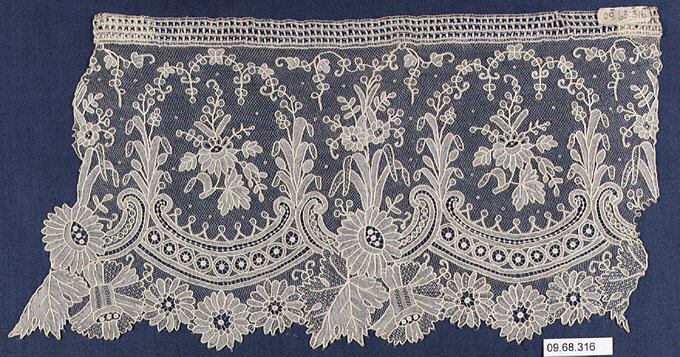
Specimen: A Study in Needle Lace and Global Heritage
Introduction: The Art of the Singular
In the rarefied world of haute couture, where each garment is a testament to artistry and exclusivity, the concept of the "specimen" holds a particular resonance. At Katherine Fashion Lab, our latest standalone study transcends the ephemeral trends of seasonal collections to explore a singular, enduring subject: the specimen as a repository of global heritage, meticulously rendered in the intricate medium of needle lace. This analysis dissects the conceptual, material, and technical dimensions of this piece, positioning it not merely as a garment but as a curatorial artifact that bridges cultures, histories, and the very essence of handcraft.
The Specimen as Conceptual Framework
The term "specimen" in a scientific or natural history context denotes a sample—a representative piece of a larger whole, preserved for study and admiration. Katherine Fashion Lab reinterprets this notion through a couture lens: the garment becomes a singular specimen of human ingenuity, a distilled fragment of global heritage that invites deep contemplation. This is not a dress designed for mass reproduction or even for a runway show’s narrative arc; it is a standalone object, intended to be examined with the same rigor as a rare botanical illustration or an ethnographic artifact. The absence of a broader collection context forces the viewer to engage solely with this piece, its materiality, and the stories it encodes.
The specimen concept also challenges the fast-fashion paradigm by emphasizing permanence over disposability. Needle lace, by its nature, demands time—hundreds of hours of handwork per square inch—making the garment a slow, deliberate act of preservation. It is a specimen of patience, skill, and cultural memory, frozen in thread.
Needle Lace: A Material Dialogue with History
The Craft and Its Lineage
Needle lace, often described as "drawing with a needle," is one of the most labor-intensive textile arts in human history. Originating in 16th-century Italy, it evolved from cutwork and embroidery into a standalone technique where the lace is constructed entirely by hand, using a needle and thread to create intricate patterns on a parchment foundation. Unlike bobbin lace, which is braided, needle lace is built stitch by stitch, allowing for extraordinary precision and organic fluidity. Katherine Fashion Lab has elevated this historic craft to a contemporary couture statement, using it as the sole material for the specimen.
The choice of needle lace is deliberate: it speaks to a global heritage of textile artistry that spans continents. From the reticella of Renaissance Venice to the punto in aria of Flanders, and from the intricate encaje of the Philippines to the renda de bilros of Brazil, needle lace is a universal language of patience and ornament. By selecting this material, the Lab pays homage to the anonymous artisans who have preserved these techniques across generations, often in marginalized communities. The specimen thus becomes a vessel for their legacy, a tangible link to a shared human history of decorative expression.
Material Properties and Couture Application
In this standalone study, needle lace is not merely an embellishment but the structural foundation of the garment. The piece is constructed as a seamless, sculptural form—a bodice and extended train—where the lace itself provides both strength and transparency. The threads are a blend of fine Egyptian cotton and silk, chosen for their luster and durability, and dyed in a palette of ivory, charcoal, and a subtle metallic gold that evokes aging parchment. The patterns are a fusion of botanical motifs (fern fronds, lotus petals) and geometric grids (hexagons, spirals), referencing natural and mathematical specimens alike.
The technical execution is extraordinary: each motif is worked independently on a separate parchment pattern, then joined with invisible stitches to create a continuous, three-dimensional surface. The lace is not flat but dimensional, with raised loops and picots that cast shadows, mimicking the texture of a pressed leaf or a fossilized skeleton. This volumetric approach transforms the lace from a delicate net into a robust, almost architectural material, capable of holding its shape without underlining. The garment weighs less than 200 grams, yet its structural integrity is a testament to the tensile strength of thread when woven with mastery.
Global Heritage: A Tapestry of Influences
Cultural Signifiers in the Design
The specimen’s design is a deliberate synthesis of global heritage motifs, each chosen for its symbolic resonance. The central bodice features a repeating pattern of the Tree of Life, a motif found in Persian, Indian, and West African textiles, representing interconnectedness and ancestry. The train extends into a series of interlocking circles, reminiscent of Celtic knotwork and Islamic geometric art, suggesting infinity and the cyclical nature of time. Along the hem, a border of stylized waves nods to Japanese seigaiha patterns, evoking the ocean as a carrier of cultural exchange.
These elements are not appropriated but respectfully integrated, with the Lab consulting textile historians from the respective regions to ensure accuracy and cultural sensitivity. The result is a garment that reads as a map of human creativity, where each stitch is a coordinate on a global grid of artistry. The specimen does not claim ownership of these traditions; rather, it presents them as a unified study—a curatorial collection of heritage in thread.
Standalone Study: The Curatorial Lens
Presenting this piece as a "standalone study" removes it from the typical fashion ecosystem of seasons, trends, and commercial viability. Instead, it is displayed in a controlled environment—a glass case with controlled humidity and lighting, akin to a museum exhibit. The viewer is invited to walk around it, to inspect the reverse side where the lace’s construction is visible, and to read accompanying notes on the provenance of the techniques used. This curatorial approach elevates the garment to the status of a primary source document, a specimen of cultural and technical knowledge.
The standalone format also allows for a deeper exploration of the tension between preservation and innovation. While the lace techniques are centuries old, the design’s asymmetry and abstract forms are distinctly contemporary. The specimen thus exists in a temporal paradox: it is both ancient and modern, a bridge between the hands of past artisans and the vision of today’s designers. This duality is the core of its intellectual value, prompting questions about how heritage can be revitalized without being diluted.
Conclusion: The Specimen as a Call to Attention
Katherine Fashion Lab’s standalone study of a needle lace specimen is more than a couture garment; it is a manifesto for slow, meaningful creation in an age of speed. By isolating a single piece, crafted from a single material, and imbued with global heritage, the Lab challenges the fashion industry to reconsider its relationship with time, labor, and cultural memory. The specimen is a reminder that true luxury lies not in scarcity alone, but in the stories that thread through every stitch—stories of human hands, of cross-cultural dialogue, and of the enduring power of art to preserve what might otherwise be lost. In this piece, needle lace is not just a material; it is a living archive, and we are all its curators.