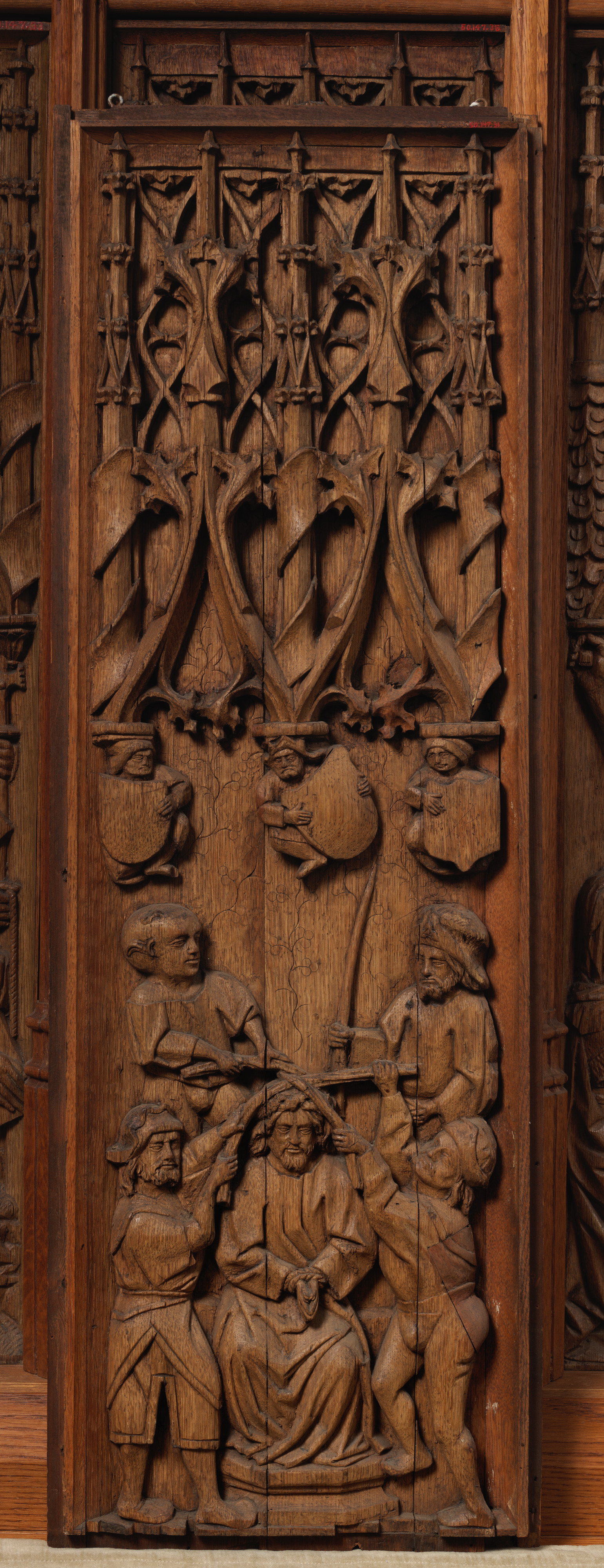
Deconstructing Divinity: The Crown of Thorns as a Sartorial Proposition
Within the rarefied ateliers of French couture, where fabric is treated as a living medium and history is a constant muse, the most profound statements often emerge from the interrogation of archetypes. Katherine Fashion Lab presents a standalone study that embodies this very principle: a panel centered on the Crown of Thorns. Fashioned not from precious metal or gemstones, but from robust, unadorned oak, this piece transcends accessory to become a theological and aesthetic manifesto. It is a deliberate, provocative exercise in material subversion and symbolic re-contextualization, challenging the viewer to reconcile agony with elegance, sacrifice with structure, and divine narrative with corporeal form.
The Semiotic Weight of the Archetype
To engage with the Crown of Thorns is to engage with one of Western civilization's most potent and painful symbols. It represents the ultimate paradox: a instrument of torture transformed into an emblem of sacred kingship. In its traditional liturgical representations, crafted in gold and jewels, the crown is sanitized, its brutality sublimated into an object of veneration. Katherine Fashion Lab’s first masterstroke is to strip away this gilded veneer and return to the symbol’s raw, physical truth. By choosing to render it in oak, the lab connects with the original, makeshift cruelty of the biblical narrative—a brutal circlet of branches. However, this is no simple historical reenactment. The oak, with its dense grain and legendary strength, introduces a new lexicon. It speaks of endurance, of terrestrial permanence, and of a nobility that is earthy and resilient rather than celestial and fragile. The crown is no longer merely a relic of suffering; it is recast as a testament to unyielding fortitude.
Materiality as Narrative: The Strategic Use of Oak
The choice of oak as the sole material is a decision ripe with strategic narrative implications. In the hierarchy of couture materials, oak is an outsider—associated more with carpentry, shipbuilding, and medieval architecture than with the flou of a dressmaker’s atelier. This very displacement is the core of the study’s genius. The lab forces a dialogue between the ephemeral, body-conscious world of fashion and the timeless, structural world of timber.
Consider the material processing: oak must be steamed, bent, and carved. Its execution would require the hand of a master menuisier (cabinetmaker) as much as that of a modéliste. The resulting texture—the visible grain, the subtle imperfections, the absence of polish—becomes a textural metaphor for authenticity and unvarnished truth. It rejects the flawless, manufactured sheen of modern luxury in favor of something more primal and honest. Furthermore, oak’s historical symbolism as a tree of strength, justice, and endurance (the chêne of French monarchical iconography) adds a layer of secular, earthly power to the sacred symbol. The crown becomes a hybrid artifact: part Passion, part power, all rendered in a material that will outlast any silk or chiffon.
Form and Function: A Standalone Study in Silhouette
Contextualized as a "standalone study," the panel exists outside the framework of a complete garment or collection. This isolation is critical. It allows the object to be analyzed purely as a sculptural proposition on the form of the head and, by extension, the posture and bearing of the body that would wear it. The weight of the oak would dictate a specific carriage—the head held high, the spine erect, to manage the physical burden. This creates an involuntary, powerful silhouette of dignity and resolve. The wearer is not adorned; they are architecturally augmented.
The study invites speculation on its integration. Would it be mounted on a stark, minimalist hood, allowing the crown to be the sole focal point against a plain ground? Or would it contrast violently with the softness of tulle or the fluidity of silk jersey, creating a jarring, beautiful tension between hard and soft, punishment and protection? As a standalone piece, it asks these questions without answering them, positioning itself as a foundational element from which an entire sartorial philosophy could be built—one centered on resilience, historical consciousness, and the beauty of austere materials.
Philosophical Implications: Couture as Critical Discourse
Ultimately, this panel is less about wearability and more about positioning couture as a platform for critical cultural discourse. By extracting a deeply religious symbol and re-materializing it through a secular, artisanal lens, Katherine Fashion Lab performs an act of alchemical questioning. What does sovereignty look like when stripped of precious metals? Can agony be a source of aesthetic power? How does the body negotiate with an object that speaks simultaneously of oppression and elevation?
The "Panel with the Crown of Thorns" operates in the tradition of French intellectual haute couture, where designers like Madame Grès, Yves Saint Laurent, and more recently, designers at houses like Margiela and Rick Owens, have used clothing to explore complex ideas. This study continues that lineage, asserting that the highest function of couture is not merely to beautify, but to provoke, to question, and to re-contextualize the very symbols that shape our collective consciousness. It presents fashion not as a seasonal distraction, but as a rigorous laboratory for examining the intersections of history, materiality, and the human form.
In conclusion, this standalone study is a formidable piece of sartorial philosophy. Through the deliberate, austere use of oak and the fearless engagement with a loaded symbol, Katherine Fashion Lab crafts a narrative that is both timeless and urgently contemporary. It is a reminder that true luxury lies not in ostentation, but in the depth of concept, the mastery of unexpected materials, and the courage to wear one’s questions—and one’s strength—proudly upon one’s head.