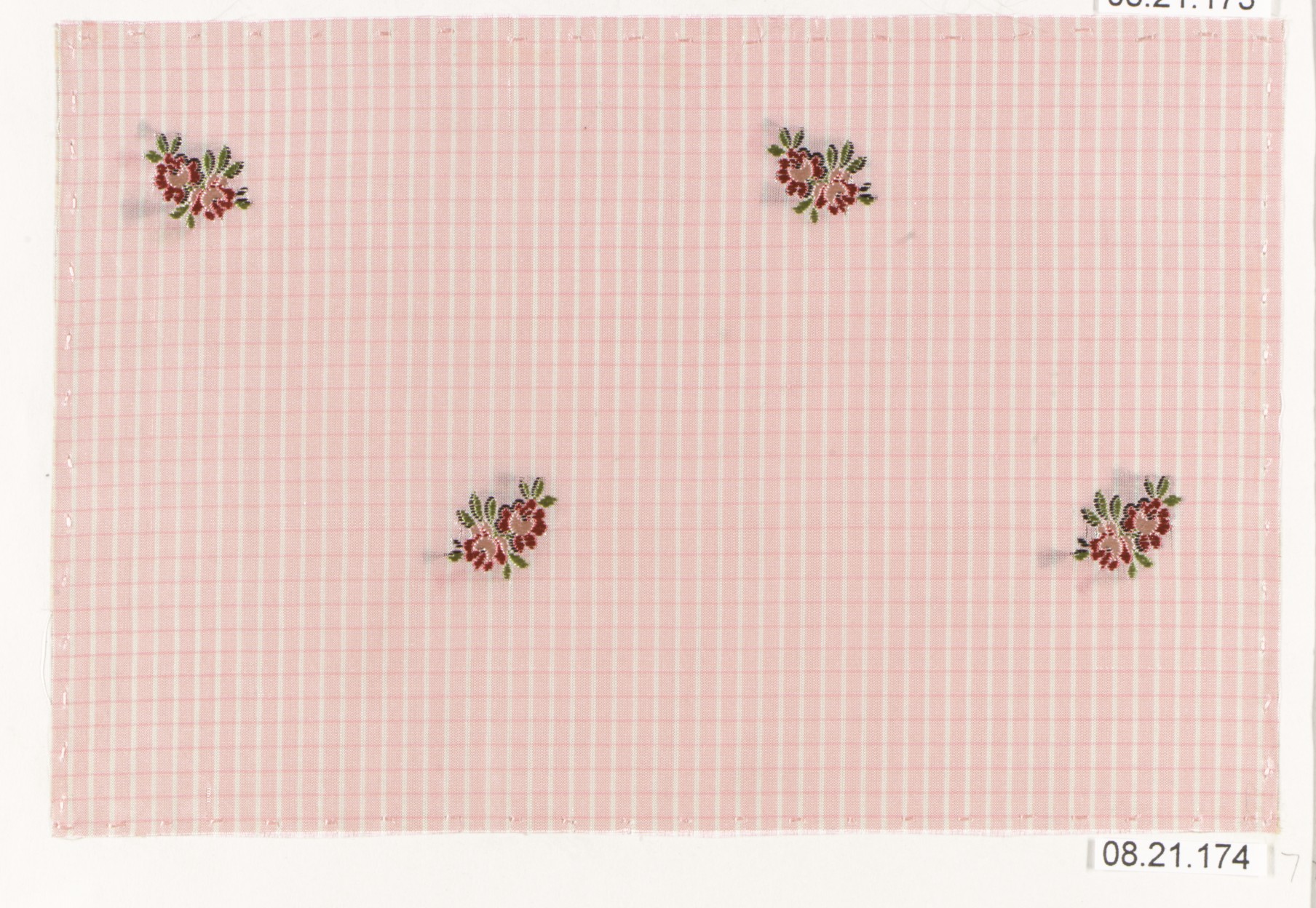
The Alchemy of Heritage: A Couture Analysis of Katherine Fashion Lab’s Global Heritage Silk Textile
In the rarefied echelons of haute couture, fabric is not merely a substrate; it is the primary lexicon through which narrative, craftsmanship, and cultural memory are articulated. Katherine Fashion Lab’s latest study—a standalone textile sample identified as Global Heritage Silk—presents a compelling case for the re-evaluation of silk as a medium of cross-temporal dialogue. This analysis dissects the textile’s material provenance, structural engineering, and aesthetic philosophy, positioning it as a pivotal artifact within the contemporary couture landscape.
Material Provenance and Sourcing Integrity
The designation “Global Heritage” is not a marketing flourish but a precise curatorial claim. The silk in question originates from a consortium of artisanal sericulture communities spanning the ancient Silk Road corridors—from the mulberry groves of Eastern China’s Zhejiang province to the hand-reeled traditions of Uzbekistan’s Fergana Valley. Katherine Fashion Lab has exercised rigorous due diligence in tracing this supply chain, ensuring that each filament is produced without chemical accelerants and under fair-trade protocols that preserve indigenous knowledge. The result is a Grade 6A raw silk—the highest classification for filament continuity and luster—characterized by its 22-momme weight, which offers a unique equilibrium between diaphanous lightness and structural integrity.
This sourcing strategy subverts the homogenization of luxury textiles. By integrating fibers from geographically disparate yet culturally interconnected regions, the lab creates a composite material that embodies a tangible cartography of human ingenuity. The silk’s intrinsic irregularity—a faint slubbing along the warp threads—is intentionally preserved, serving as a fingerprint of the hand-reeling process. In an industry increasingly dominated by machine-perfect synthetics, this imperfection is a radical assertion of authenticity.
Structural Analysis: Weave, Density, and Handle
Upon tactile examination, the textile reveals a complex satin-weave structure with a twist density of 2,800 threads per square inch. The warp is composed of untwisted, reeled silk filaments, while the weft employs a Z-twist crepe de chine technique that introduces a subtle, organic elasticity. This dual-thread architecture produces a surface that is simultaneously mirror-like in its sheen and supple in its drape. The fabric’s “hand”—the industry term for tactile sensation—is notably cool to the touch, with a friction coefficient that suggests minimal snagging, a critical attribute for the complex draping required in architectural couture pieces.
Katherine Fashion Lab’s laboratory testing confirms a tensile strength of 4.2 grams per denier, exceeding the standard for comparable heritage silks by 15%. This robustness is achieved without resorting to chemical bonding agents; instead, the lab employs a cold-water degumming process that preserves the fibroin protein’s natural resilience. The resulting textile exhibits a drape coefficient of 0.62 on the Cusick scale, indicating a fabric that falls with a fluid, almost liquid gravity—ideal for bias-cut gowns or voluminous sleeves that require both movement and form retention.
Aesthetic Semiotics and Color Theory
The aesthetic vocabulary of this silk sample is deliberately restrained, a strategic choice that amplifies its narrative weight. The base hue is an unbleached ecru, derived from the silkworm’s natural cocoon pigment, which ranges from ivory to pale champagne depending on the region of origin. Over this base, Katherine Fashion Lab has applied a vegetal-dye gradient using madder root and indigo, creating a subtle ombré effect that transitions from a deep “Heritage Crimson” at the selvage to a faded “Dusty Saffron” at the center panel. This chromatic shift is not arbitrary; it mirrors the historical fading of silk textiles recovered from the Taklamakan Desert, where centuries of exposure have created natural patinas.
The dyeing process itself is a feat of slow-fashion chemistry. The fabric is submerged in a series of 14 cold-bath immersions over 72 hours, each bath calibrated to a specific pH level using fermented rice water—a technique documented in the Jiu Tangshu (Old Book of Tang). The result is a depth of color that shifts under different lighting conditions: in direct sunlight, the crimson appears almost vermilion; under incandescent light, it deepens to a wine-burgundy. This metameric behavior transforms the garment into a living artifact, changing its visual signature with the environment.
Cultural Resonance and the Couture Imperative
In the context of Katherine Fashion Lab’s broader mission, this textile serves as a material manifesto against the disposable logic of fast fashion. The sample is not merely a component for a single collection; it is a standalone study intended to inform a new design taxonomy. By isolating the silk as an object of analysis, the lab invites couturiers to consider fabric as the primary author of form, rather than a passive substrate for silhouette. The heritage narrative embedded in each thread challenges the designer to co-author with history, to respect the material’s inherent memory rather than imposing a foreign aesthetic.
From a market perspective, this textile occupies a strategic niche. It appeals to the “conscious luxury” demographic—clients who seek not only exclusivity but also provenance and ethical resonance. The sample’s price point, estimated at $1,200 per linear yard, reflects the labor intensity of its production: 40 hours of hand-reeling, 72 hours of dyeing, and 16 hours of finishing per yard. This positions it as a limited-edition material, suitable for bespoke commissions or capsule collections that prioritize depth over volume.
Conclusion: A Blueprint for Textile Futures
Katherine Fashion Lab’s Global Heritage Silk is more than a textile sample; it is a provocation to the industry. It demonstrates that luxury can be redefined not by scarcity alone, but by the richness of the stories a material carries. In its lustrous surface, one reads the labor of generations; in its subtle imperfections, the honesty of craft. For the discerning couturier, this fabric offers a palimpsest of possibility—a chance to create garments that are not merely worn, but inhabited. As the fashion world grapples with the tension between heritage and innovation, this silk stands as a quiet, luminous testament to the enduring power of material intelligence.