The Bes Amulet: A Heritage Analysis for Strategic Luxury Curation
In the pantheon of ancient protective symbols, few figures possess the visceral immediacy and cross-cultural resonance of the Bes amulet. For Katherine Fashion Lab, this artifact—crafted from faience in the crucible of ancient civilization—offers a profound opportunity to bridge the raw spiritual power of antiquity with the refined aspirations of 2026 high-end luxury. This heritage analysis examines the Bes amulet through the lenses of symbolic power, historical adornment, and spiritual meaning, culminating in a strategic framework for its integration into a forward-looking luxury narrative.
Symbolic Power: The Protective Duality of Bes
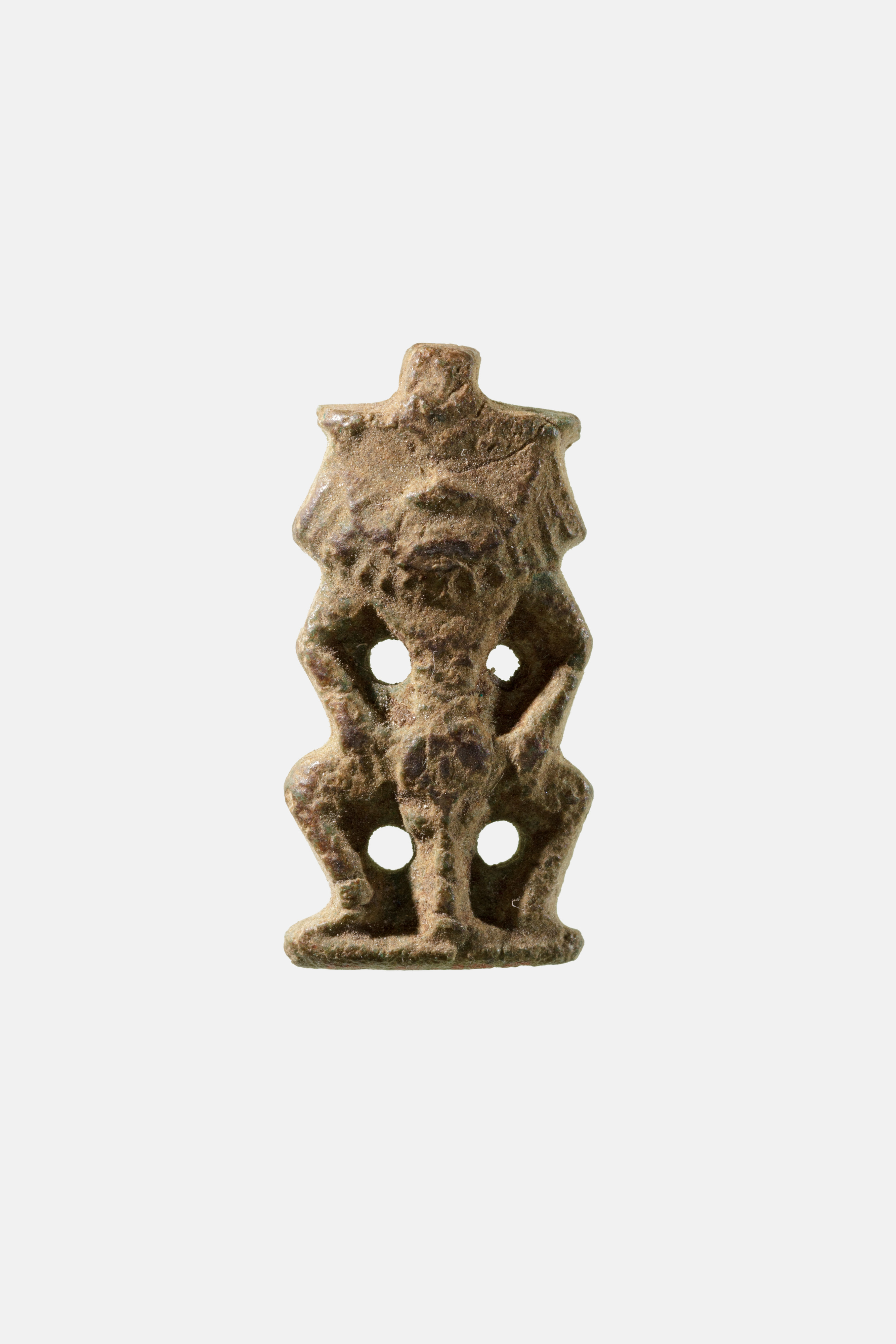
The Bes figure, distinct from the formal, idealized deities of ancient Egyptian cosmology, embodies a deliberate counterpoint of raw energy and benevolent guardianship. Depicted as a dwarfish, leonine figure with a broad face, protruding tongue, and a feathered headdress, Bes was not a god of distant temples but a household deity of immediate, tangible protection. His symbolic power derives from a potent duality: the capacity to ward off malevolent forces through an almost comical ferocity, while simultaneously fostering joy, fertility, and domestic harmony.
From a heritage perspective, this duality is exceptionally rare. Bes was invoked during childbirth, in bedrooms, and at thresholds—liminal spaces where vulnerability and hope converge. His amulets, often worn around the neck or placed in tombs, were not passive talismans but active agents of apotropaic magic. The faience medium, with its brilliant blue-green glaze, was itself symbolic of rebirth, fertility, and the Nile’s life-giving waters. When a wearer donned a Bes amulet, they did not merely accessorize; they activated a protective contract with the chaotic forces of the universe. For the modern luxury consumer, this symbolic power translates into a desire for objects that confer agency, resilience, and a sense of curated safety in an unpredictable world.
Historical Adornment: Faience as the Original Luxury Medium
Faience, a non-clay ceramic material composed primarily of crushed quartz, was one of the earliest synthetic materials created by human hands. Its production required sophisticated knowledge of firing techniques and mineral additives to achieve the characteristic sheen. In ancient Egypt and Nubia, faience was not merely a utilitarian substance; it was a luxury medium, reserved for amulets, jewelry, and ritual objects intended for the elite and the divine. The luminous blue-green color, mimicking turquoise and lapis lazuli, signified a connection to the heavens and the regenerative powers of the sun and water.
Historically, the Bes amulet was a democratized luxury—accessible to a broad social spectrum yet still crafted with artisanal precision. The amulet’s small scale, typically one to three centimeters in height, demanded meticulous carving and glazing. This miniaturization is a hallmark of ancient adornment: the ability to condense immense symbolic weight into a portable, wearable form. For Katherine Fashion Lab, this historical precedent offers a powerful blueprint. The Bes amulet is not a monument but a micro-architecture of meaning, designed to be carried on the body, touched, and animated by the wearer’s movements. This aligns perfectly with the 2026 luxury trend toward intimate, narrative-driven objects that prioritize personal connection over ostentatious display.
Spiritual Meaning: The Bes as a Threshold Guardian
The spiritual resonance of the Bes amulet extends beyond Egyptian borders, finding echoes in protective figures across Mesopotamian, Phoenician, and later Greco-Roman cultures. This cross-cultural adoption underscores a universal human need: the desire to control the invisible forces that govern fate. Bes protected against snakes, scorpions, nightmares, and the evil eye—threats that were both physical and metaphysical. His role as a guardian of thresholds, particularly the threshold of sleep and the threshold of life (childbirth), imbues him with a liminal spiritual authority.
This liminality is crucial for contemporary luxury strategy. The modern consumer increasingly seeks objects that function as spiritual anchors—pieces that provide a sense of grounding, protection, and intentionality. The Bes amulet’s spiritual meaning is not abstract or dogmatic; it is experiential. It is a talisman for the moments when vulnerability is highest: travel, new beginnings, creative ventures, or personal transitions. By positioning the Bes amulet within a luxury context, Katherine Fashion Lab can tap into the growing market for “conscious luxury”—objects that are not only beautiful but also imbued with purpose, history, and a sense of protective energy.
2026 High-End Luxury Strategy: Curating the Bes Narrative
To translate the Bes amulet’s heritage into a compelling 2026 luxury offering, Katherine Fashion Lab must move beyond mere reproduction. The strategy must be one of curated recontextualization, where the ancient artifact becomes a springboard for modern expression. The following strategic pillars are recommended:
1. Material Innovation with Heritage Integrity
Faience remains the foundational medium, but its 2026 iteration must evolve. Collaborate with master ceramicists to develop a proprietary glaze that captures the original luminous quality while introducing subtle, contemporary color variations—perhaps a deep indigo for night protection or a warm ochre for vitality. The amulet’s surface can be textured to evoke the handmade, irregular quality of ancient pieces, countering the sterile perfection of mass production. This creates a tactile, artisanal luxury that resonates with collectors and connoisseurs.
2. Narrative-Driven Product Architecture
Launch the Bes amulet as the centerpiece of a “Threshold Collection.” Each piece should be accompanied by a bespoke narrative card detailing its symbolic meaning, the specific threat it guards against, and a historical anecdote from its ancient use. For example, a “Birth Amulet” could reference Bes’s role in protecting mothers and newborns, while a “Travel Amulet” could invoke his guardianship over journeys. This narrative architecture transforms the amulet from a decorative object into a personalized spiritual tool, increasing its perceived value and emotional resonance.
3. Ritualized Unboxing and Wearability
Luxury in 2026 is about experience. The unboxing of a Bes amulet should be a ritual: a hand-finished pouch of raw linen, a small scroll with activation instructions (e.g., “Hold the amulet at sunrise and speak your intention”), and a miniature pedestal for display when not worn. The amulet itself should be designed for versatility—worn as a pendant, attached to a bag, or placed in a home altar. This flexibility aligns with the modern consumer’s desire for objects that adapt to their lifestyle rather than dictating it.
4. Limited Edition and Collaborative Prestige
Produce the Bes amulet in strictly limited editions, each numbered and authenticated with a blockchain certificate that traces the provenance of the faience and the artisan’s lineage. Collaborate with contemporary artists, archaeologists, or spiritual guides to create exclusive interpretations. For instance, a partnership with a noted Egyptologist could yield a “Scholar’s Edition” with historical annotations, while a collaboration with a modern mystic could produce a “Dream Guardian” version with added symbolic engravings. Scarcity and collaboration elevate the amulet to the realm of collectible luxury.
5. Digital and Experiential Integration
Develop a digital companion—an augmented reality (AR) experience that, when the amulet is scanned, reveals the ancient myths of Bes in an immersive, 3D-rendered environment. This bridges the physical and digital realms, appealing to the tech-savvy luxury consumer. Additionally, host intimate “Threshold Ceremonies” at flagship stores or exclusive retreats, where clients can learn about the amulet’s history, set personal intentions, and receive a blessing from a heritage curator. This transforms the purchase into a membership in an exclusive cultural community.
Conclusion: The Bes Amulet as a Luxury Archetype
The Bes amulet is not a relic; it is a living archetype of protection, joy, and resilience. For Katherine Fashion Lab, it offers a rare opportunity to create a luxury object that is simultaneously ancient and avant-garde, spiritual and strategic. By honoring the faience medium, amplifying the symbolic power of the Bes figure, and recontextualizing its spiritual meaning for the 2026 consumer, the amulet can become a signature piece that defines a new category of heritage-driven luxury. In a market saturated with ephemeral trends, the Bes amulet stands as a testament to the enduring human need for beauty that protects, and protection that is beautiful.