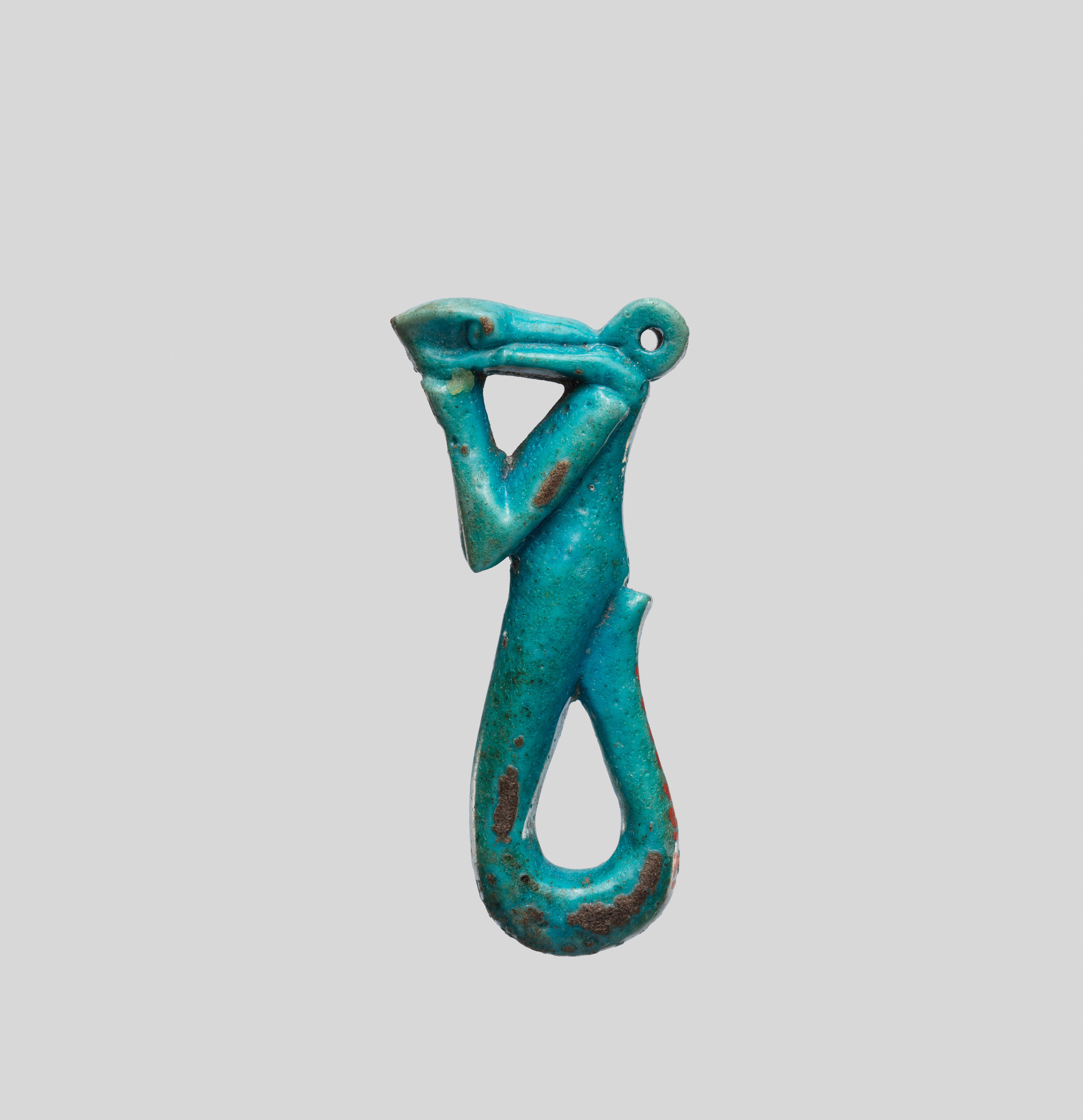
Executive Heritage Analysis: The Serpent Decan Amulet
This report presents a strategic heritage analysis of the Amulet in the form of a serpent decan with raised arms, crafted from faience in an Ancient Civilization context. As Lead Heritage Curator for Katherine Fashion Lab, I examine this artifact through the intersecting lenses of symbolic power, historical adornment, spiritual meaning, and its potential application within a 2026 high-end luxury strategy. The serpent decan amulet represents a convergence of celestial authority, protective magic, and artistic sophistication—elements that offer profound resonance for contemporary luxury positioning.
Symbolic Power: The Serpent as Cosmic Guardian
Decanic Authority and the Serpentine Form
The serpent decan amulet embodies a dual symbolic identity: the serpent, a universal archetype of transformation, rebirth, and chthonic power, and the decan, a subdivision of the zodiac representing a thirty-six-part celestial calendar. In ancient Egyptian cosmology, decans were both star groups and protective deities who governed the night sky. The raised arms of this serpent figure indicate an active, commanding posture—not merely a passive talisman but a guardian wielding authority over time and fate. The serpent’s raised arms mimic the ka gesture, symbolizing the life force and the power to repel malevolent forces. This amulet thus served as a portable nexus of cosmic protection, worn by elites to align their personal destiny with the celestial order.
Faience as a Medium of Immortality
Faience, a glazed non-clay ceramic, was revered in ancient civilizations for its luminous, glass-like finish that mimicked turquoise and lapis lazuli—stones associated with the sky, water, and rebirth. The material’s ability to reflect light was believed to capture the sun’s regenerative energy. For the serpent decan amulet, faience’s shimmering surface amplified the serpent’s symbolic connection to the sun god Ra and the cyclical renewal of the Nile. In a strategic context, this medium underscores the amulet’s role as a statement of eternal power, a concept that luxury brands now leverage through sustainable, artisanal craftsmanship.
Historical Adornment: Worn Sovereignty
The Amulet as a Status Marker
In ancient civilizations, amulets were not mere accessories but essential components of elite identity. The serpent decan amulet would have been worn by priests, pharaohs, or high-ranking nobles as a pectoral, bracelet element, or headdress component. Its placement on the body was deliberate: near the heart to protect the soul, or on the forehead to channel divine sight. Historical records from tomb paintings and funerary texts indicate that such amulets were often included in burial regalia to ensure safe passage through the underworld. For Katherine Fashion Lab, this historical practice of adornment as armor offers a powerful narrative: luxury as a shield against the chaos of modern life, a talisman of personal authority.
Materiality and Craftsmanship
The production of faience amulets required extraordinary skill: molding, glazing, and firing at controlled temperatures to achieve the characteristic blue-green hue. Each amulet was unique, bearing the fingerprints of its maker. This artisanal singularity aligns with the 2026 luxury trend toward hyper-craftsmanship and limited-edition pieces. The serpent decan amulet’s small scale (typically 2–4 cm) belies its immense cultural weight, a lesson in how luxury items can achieve maximum impact through precision and symbolism rather than size.
Spiritual Meaning: The Decan as a Personal Deity
Protection and Prophecy
The spiritual function of the serpent decan amulet was twofold: apotropaic protection against evil spirits and astrological guidance. Each decan was associated with a specific deity or demon, and the serpent form invoked the goddess Wadjet, the cobra protector of Lower Egypt, or the serpentine decan Hery-ib-wer (“He who is on his belly”). Raised arms signified the act of warding off chaos (Isfet) and welcoming order (Ma’at). For the wearer, this amulet was a daily ritual object—a physical prayer for alignment with cosmic rhythms. In a modern context, this spiritual dimension resonates with the luxury consumer’s search for meaning, authenticity, and connection to heritage.
Ritual Use and Personal Transformation
Beyond static protection, the amulet was active in rites of passage: birth, coming of age, marriage, and death. The serpent’s shedding of skin symbolized personal transformation, while the decan’s celestial cycle represented the inevitability of change. This dual narrative of protection through transformation offers a compelling framework for luxury branding in 2026, where consumers seek products that facilitate personal evolution, not just status display.
2026 High-End Luxury Strategy: The Decan as Design Archetype
Positioning the Serpent Decan as a Heritage Icon
For Katherine Fashion Lab, the serpent decan amulet can be strategically repositioned as a design archetype for a 2026 capsule collection. The amulet’s symbolic power—cosmic authority, protective magic, and material transcendence—aligns with the luxury industry’s shift toward storytelling, rarity, and spiritual resonance. Key strategic recommendations include:
- Limited-Edition Replicas: Produce handcrafted faience amulets using traditional methods, each accompanied by a “decanal certificate” detailing its astrological significance. Price positioning: $5,000–$15,000 per piece, targeting collectors and connoisseurs.
- Digital Augmentation: Embed NFC chips in each amulet to unlock an augmented reality experience showing the decan’s celestial movement and protective rites. This merges ancient spirituality with 2026 tech-luxury.
- Collaborative Curation: Partner with Egyptologists and astrologers to co-create a “Decan Wardrobe” of ready-to-wear and accessories inspired by the thirty-six decans, each garment featuring serpentine motifs and raised-arm silhouettes.
Material and Sustainability Synergies
Faience’s natural composition (quartz, alkali, copper) makes it a sustainable alternative to modern plastics and synthetic gemstones. For 2026, Katherine Fashion Lab can position faience as the heritage material of the future, emphasizing its low environmental impact and artisanal revival. The amulet’s blue-green palette—evoking the Nile, the sky, and the sea—aligns with the luxury trend toward “earth-conscious chromaticism.”
Narrative Marketing and Consumer Engagement
The serpent decan amulet’s story is inherently viral: a celestial guardian worn by ancient elites, now reimagined for the modern power-bearer. Marketing campaigns should focus on ritual unboxing experiences, where consumers receive their amulet during a private astrological consultation. Social media content can highlight the amulet’s “raised arms” as a symbol of empowerment, appealing to Gen Z and Millennial luxury buyers who prioritize self-expression and spiritual wellness.
Conclusion: The Amulet as a Strategic Asset
The serpent decan amulet with raised arms is not merely an artifact but a blueprint for luxury innovation. Its fusion of symbolic power, historical adornment, and spiritual meaning offers Katherine Fashion Lab a unique opportunity to lead the 2026 market through heritage-driven exclusivity. By honoring the amulet’s ancient origins while reimagining its relevance, the Lab can create a collection that transcends fashion, becoming a talisman of identity for the discerning few. The serpent, forever shedding its skin, reminds us that true luxury is not static—it is a continuous cycle of rebirth, protection, and power.