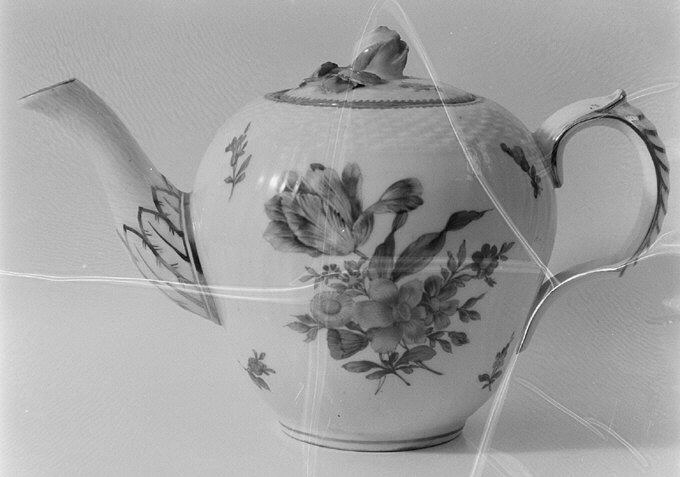
Heritage Analysis: The Teapot as a Vessel of Symbolic Power and Spiritual Meaning
In the annals of material culture, few objects bridge the mundane and the sacred as profoundly as the teapot. For Katherine Fashion Lab, this seemingly utilitarian vessel—crafted from hard-paste porcelain in an ancient civilization—offers a strategic reservoir of symbolic power, historical adornment, and spiritual meaning. This analysis deconstructs the teapot as a heritage artifact, revealing its capacity to inform a 2026 high-end luxury strategy rooted in authenticity, ritual, and transcendence.
Symbolic Power: The Teapot as a Microcosm of Authority
The teapot, particularly in ancient Chinese, Persian, and Japanese civilizations, was never merely a container for liquid. It was a symbol of hospitality, status, and cosmic order. In Ming Dynasty China (1368–1644), hard-paste porcelain teapots were reserved for the imperial court, their forms echoing the roundness of heaven and the stability of earth. The spout, handle, and lid formed a trinity of functionality and philosophy: the spout directed the flow of life (tea), the handle provided balance, and the lid sealed the essence of the brew, much like a ruler contained the essence of the state.
For luxury strategy, this symbolic power translates into narrative authority. A 2026 Katherine Fashion Lab collection inspired by the teapot can leverage the imperial vessel archetype—an object that commands attention not through overt branding but through an inherent sense of governance over its domain. By embedding motifs of celestial geometry (circular forms, cloud-like handles) into accessories or ready-to-wear, the brand signals a quiet sovereignty. The teapot’s symbolic power is not loud; it is resonant, inviting the wearer to participate in a legacy of refined control.
Historical Adornment: Porcelain as a Canvas of Craftsmanship
Hard-paste porcelain, first perfected in China during the Tang Dynasty (618–907 CE) and later in Europe after the Meissen breakthrough (1708), represents the pinnacle of ceramic technology. Its translucency, strength, and capacity for intricate decoration made it a medium of historical adornment. Ancient teapots were adorned with underglaze cobalt blue, overglaze enamels, and gilding, depicting dragons, phoenixes, lotus blossoms, and landscapes. These motifs were not arbitrary; they served as talismans of prosperity, longevity, and harmony.
From a heritage curation perspective, the teapot’s adornment offers a lexicon of micro-narratives for luxury design. The dragon, for instance, symbolizes imperial power and protection; the lotus, purity and rebirth. For Katherine Fashion Lab, these motifs can be abstracted into textural patterns on silk scarves, embroidery on evening gowns, or laser-cut leather appliqués on handbags. The key is to honor the original craftsmanship while translating it into a contemporary language of luxury. In 2026, high-end consumers seek objects that tell stories of provenance and skill—the teapot’s history of being hand-painted by master artisans in Jingdezhen or Kyoto provides a verifiable lineage that aligns with the growing demand for artisanal transparency.
Spiritual Meaning: The Teapot as a Ritual Vessel
Beyond its material and social functions, the ancient teapot was a conduit for spiritual meaning. In the Chinese tea ceremony (gongfu cha), the teapot is not merely a tool but a co-creator of the experience. Its shape influences the flavor, its heat retention affects the brew, and its aesthetic presence anchors the meditative act. Similarly, in Japanese chanoyu (the Way of Tea), the teapot (often a kyusu) is treated with reverence, its imperfections celebrated through wabi-sabi—the beauty of impermanence and incompleteness.
This spiritual dimension is crucial for a 2026 luxury strategy. The post-pandemic consumer increasingly values mindfulness, ritual, and emotional resonance over conspicuous consumption. A teapot-inspired collection can evoke these values through sensory design: the weight of a porcelain-like metal clasp, the curve of a handle that mimics the ergonomic grace of a teapot’s spout, or the use of matte glazes that invite touch. Katherine Fashion Lab can position its products as anchors for daily rituals—a dress that transforms the act of dressing into a ceremony, a necklace that becomes a talisman for reflection. The spiritual meaning is thus not decorative but transformative, aligning the brand with a higher purpose.
2026 High-End Luxury Strategy: The Teapot as a Strategic Blueprint
To translate the teapot’s heritage into a cohesive 2026 strategy, Katherine Fashion Lab must adopt a multidimensional approach that integrates symbolic power, historical adornment, and spiritual meaning into product development, storytelling, and consumer experience.
1. Product as Artifact: Limited-edition handbags and jewelry should be designed with porcelain-inspired finishes—glossy, translucent enamel coatings on metal hardware, or ceramic-like resin beads. Each piece should be numbered and accompanied by a certificate of heritage detailing the teapot’s original dynasty and motif, creating a bridge between ancient craft and modern luxury.
2. Narrative as Currency: Marketing campaigns should foreground the teapot’s spiritual and symbolic dimensions. For example, a campaign titled “The Vessel Within” could feature a series of short films showing the teapot’s creation, its role in a tea ceremony, and its translation into a fashion piece. This vertical storytelling positions Katherine Fashion Lab as a guardian of cultural memory, not just a purveyor of goods.
3. Experiential Retail: Flagship stores can incorporate tea ritual spaces where clients are invited to participate in a guided tea ceremony before viewing the collection. This sensory immersion—the aroma of tea, the feel of porcelain, the sound of water—deepens the emotional connection to the brand. In 2026, luxury is defined by experience over possession, and the teapot offers a ready-made framework for such engagement.
4. Sustainability Through Heritage: Hard-paste porcelain is durable and timeless, resisting trends. Katherine Fashion Lab can leverage this by emphasizing longevity in its design philosophy—pieces that are not seasonal but generational. This aligns with the growing luxury consumer’s preference for investment pieces that transcend fast fashion. The teapot’s ancient origins remind us that true luxury is permanent, not ephemeral.
Conclusion: The Teapot as a Living Heritage
The teapot of ancient civilization is far more than a historical curiosity. It is a repository of symbolic power, a canvas for historical adornment, and a vessel of spiritual meaning. For Katherine Fashion Lab, this heritage analysis reveals that the teapot’s essence—its ability to contain, transform, and bestow—is directly applicable to high-end luxury strategy in 2026. By treating the teapot as a strategic standalone research subject, the brand can craft collections that resonate with depth, authenticity, and timelessness. In a market saturated with ephemeral trends, the teapot reminds us that the most powerful luxury is that which holds meaning—and that meaning, once brewed, can be shared for generations.