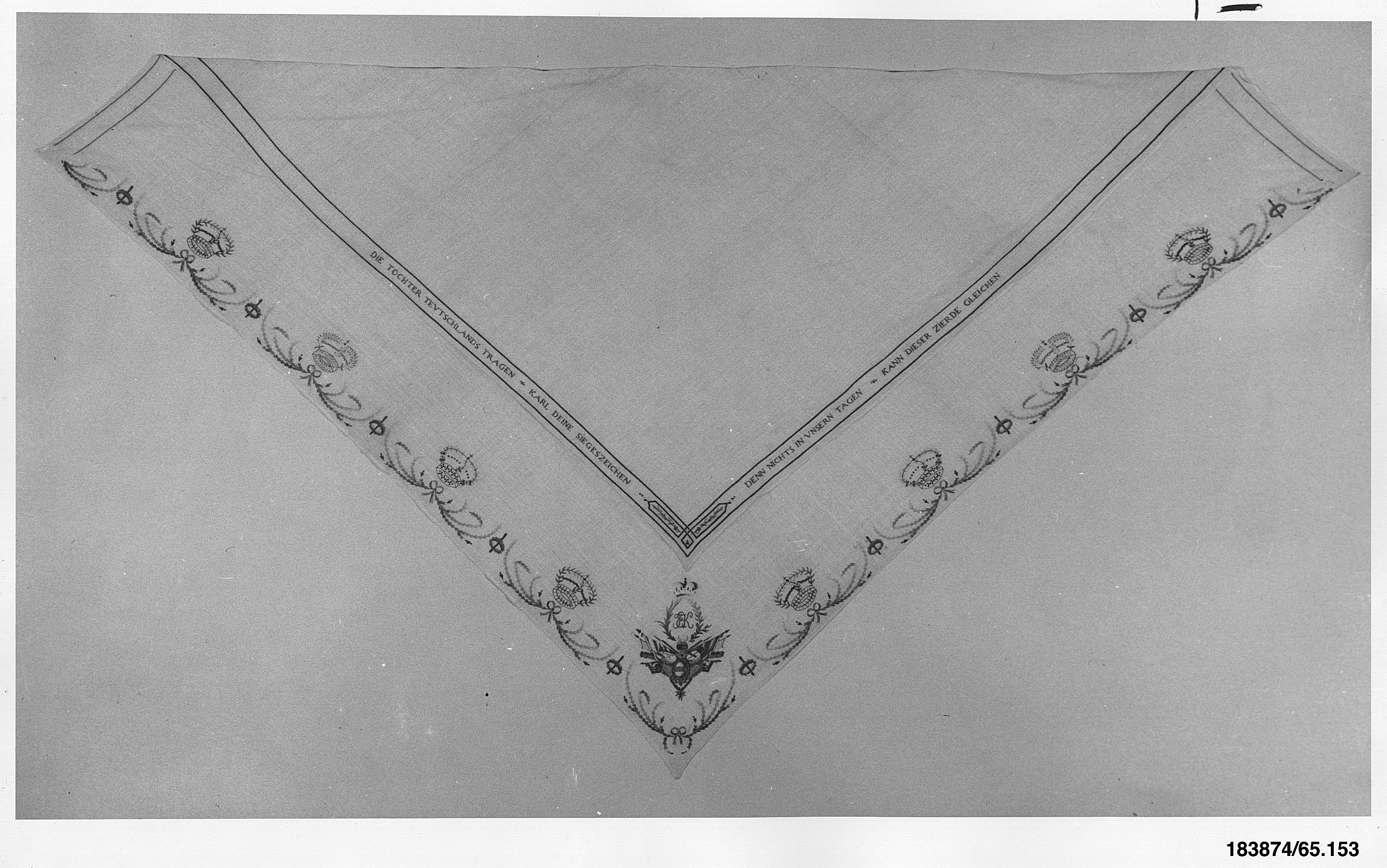
The Global Heritage Scarf: A Study in Textural Alchemy
In the rarefied world of haute couture, where garments are often celebrated for their architectural ambition or their ephemeral beauty, the scarf occupies a unique and paradoxical space. It is at once the most intimate and the most expressive of accessories—a whisper of fabric that can speak volumes about lineage, luxury, and personal narrative. At Katherine Fashion Lab, we have dedicated a standalone study to a singular piece that transcends the scarf’s traditional role as a mere accessory. This analysis deconstructs a creation woven from a triumvirate of materials—linen, silk, and metal thread—whose origins are drawn from a global heritage, yet whose expression is entirely contemporary. This is not merely a scarf; it is a cartographic artifact of material mastery.
Material Dialectics: The Triad of Linen, Silk, and Metal
The genius of this piece lies in the deliberate, almost alchemical, tension between its constituent materials. Each fiber is chosen not for its conformity, but for its distinct voice in a complex dialogue. Linen, the foundational element, provides the structural and historical anchor. Sourced from the flax fields of Northern France and Belgium, its long, irregular fibers are spun into a yarn that possesses a unique, almost architectural rigidity. In the context of this scarf, linen does not drape; it holds. Its natural, matte finish and subtle slubs—imperfections that are, in fact, signatures of authenticity—ground the piece in a tactile reality. Linen speaks of the earth, of heritage, and of a pre-industrial sensibility. It is the canvas upon which the other materials perform.
In stark contrast, silk is introduced as the agent of fluidity and light. Mulberry silk, reeled from cocoons harvested along the ancient trade routes of the Yangtze River Delta, is woven into the linen matrix. Where linen feels like a crisp morning, silk is a warm, liquid dusk. Its presence introduces a dynamic interplay of opacity and translucency. As the scarf is folded or draped against the skin, the silk catches ambient light, creating a subtle, shifting luminosity that the linen cannot replicate. This is not a simple blend; it is a strategic juxtaposition. The linen provides the silhouette, while the silk provides the soul.
The final, and most arresting, component is the metal thread. This is not the heavy, gilded bullion of ecclesiastical vestments, but rather a gossamer-thin, flexible alloy—often a blend of fine copper, silver, or gold with a protective coating—that is woven into the weft at precise, irregular intervals. The metal thread acts as a structural and visual exclamation point. It introduces a third dimension: the dimension of weight and memory. When the scarf moves, the metal thread does not merely shimmer; it sounds—a faint, crystalline whisper against the linen and silk. This auditory dimension, often overlooked in fashion, is a hallmark of Katherine Fashion Lab’s commitment to multi-sensory design. The metal thread also serves as a narrative thread, connecting the piece to a global history of textile trade, from the silk routes of Central Asia to the damask weavers of Damascus.
Global Heritage as a Design Lexicon
The term “global heritage” is not a mere marketing label; it is a rigorous design philosophy embedded in the scarf’s very construction. The weave structure itself is a composite of cross-cultural techniques. The base weave is a variation of the balance weave, reminiscent of ancient Egyptian linens, which provides the structural stability. However, the introduction of the silk and metal threads employs a lampas weave, a technique perfected in the Byzantine and later Ottoman empires, where a supplementary weft (the silk and metal) is floated over the ground weave (linen) to create intricate, raised patterns. The result is a fabric that is simultaneously flat and sculptural, humble and opulent.
The pattern, when viewed under magnification, reveals a geometric abstraction of the Tree of Life motif—a symbol found across Persian, Indian, and Celtic traditions. The branches are rendered in silk, while the roots are traced in the faint, metallic glint of the metal thread. This is not a literal representation; it is a deconstruction, a modern interpretation of a universal archetype. The scarf thus becomes a wearable artifact of global connectivity, a silent testament to the idea that luxury is not born in isolation, but in the cross-pollination of cultures. It honors the Japanese aesthetic of wabi-sabi—the beauty of imperfection—through the linen’s natural slubs, while simultaneously celebrating the Indian tradition of zardozi—the art of metal embroidery—through the deliberate placement of the metallic threads.
Standalone Study: The Scarf as a Self-Contained System
In positioning this piece as a “standalone study,” Katherine Fashion Lab invites a departure from conventional fashion analysis. This scarf is not designed to complement a garment; it is the garment. Its construction allows it to function as a transformative architectural system. When worn as a traditional neck scarf, the linen’s rigidity creates a sculptural collar that stands away from the body, framing the face. When draped over the shoulders as a shawl, the weight of the metal threads encourages a natural, asymmetric fold, creating a silhouette that shifts with every movement. When laid flat, it becomes a two-dimensional textile artwork, a study in texture and light.
The scarf’s dimensions—approximately 60 by 180 centimeters—are calculated to maximize this versatility. The length allows for multiple wraps, each revealing a different interplay of the three materials. The edges are finished with a hand-rolled hem, a technique requiring hours of meticulous labor, where the linen is rolled into a tight tube and stitched with a silk thread that is nearly invisible. This detail, invisible to the casual observer, is a hallmark of haute couture construction. It ensures that the scarf’s integrity is maintained, preventing fraying while allowing the fabric to move freely.
Conclusion: The Silent Narrative of Fiber
This scarf from Katherine Fashion Lab is a masterclass in textural storytelling. It refuses the easy path of pure ornamentation, instead demanding a deeper engagement from its wearer. The linen speaks of earth and endurance; the silk speaks of luxury and light; the metal thread speaks of trade, time, and the transformative power of human hands. Together, they form a coherent, yet complex, narrative of global heritage. In a fashion landscape often dominated by the ephemeral, this piece stands as a durable, thoughtful, and profoundly beautiful object of study. It is a reminder that true luxury is not about the volume of material, but the intelligence of its arrangement. The scarf is not an accessory; it is a declaration—a quiet, powerful assertion that the most profound stories are often written in fiber, thread, and light.