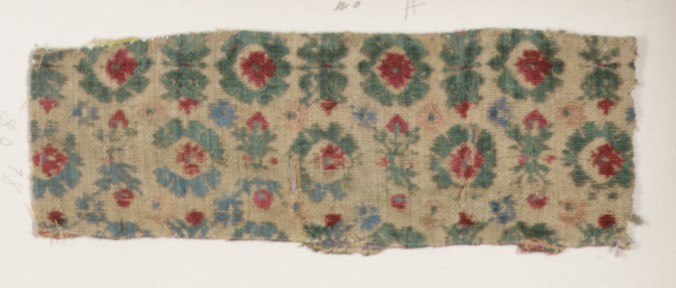
The Fragment as a Complete Narrative: A Couture Analysis of Katherine Fashion Lab's Global Heritage Study
In the rarefied world of haute couture, the concept of "fragment" traditionally evokes notions of incompleteness, a mere glimpse of a larger whole. Yet, in Katherine Fashion Lab's latest standalone study, the fragment is elevated to a sovereign entity—a complete narrative unto itself. This analysis dissects how the lab deconstructs and recontextualizes global heritage through a singular, meticulously crafted piece that marries silk and metal thread. The result is not a garment in the conventional sense, but a wearable artifact that challenges the boundaries of couture, heritage, and materiality.
Deconstructing the Fragment: From Rupture to Revelation
The term "fragment" in this context is deliberately paradoxical. In post-modern discourse, the fragment often symbolizes loss, diaspora, or the erosion of cultural continuity. Katherine Fashion Lab, however, inverts this meaning. The standalone study—a sculptural bodice constructed from hand-dyed silk panels and intricate metal thread embroidery—presents the fragment as a site of concentrated meaning. Rather than a broken piece of a larger costume, this fragment is a microcosm of global textile traditions, a deliberate excision that amplifies rather than diminishes its cultural resonance.
The piece draws from a Global Heritage lexicon: the silk’s provenance traces to mulberry cultivation in East Asia, while the metal thread techniques echo the zardozi of South Asia and the goldwork of European ecclesiastical vestments. The fragment, therefore, is not a random shard but a curated distillation. It asks the viewer to consider how heritage is not a monolithic narrative but a series of interconnected fragments, each carrying the weight of centuries of trade, migration, and artistry. The bodice’s asymmetrical form—one sleeve fully embroidered, the other bare—visually articulates this tension between wholeness and absence, inviting a dialogue on what is preserved and what is lost in cultural transmission.
Material Dialogues: Silk, Metal Thread, and the Politics of Luxury
The choice of silk and metal thread is far from arbitrary. In the hierarchy of couture materials, silk represents fluidity, sensuality, and organic life, while metal thread signifies permanence, light, and the artifice of human craft. Katherine Fashion Lab exploits this dichotomy to create a tactile and visual tension. The silk base—a deep, undulating indigo—is achieved through a labor-intensive resist-dyeing process that references Japanese shibori and West African indigo traditions. This foundation is then overlaid with a lattice of silver-gilt metal thread, hand-stitched in a pattern that mimics the veining of ancient manuscripts or the fractured geometry of shattered ceramics.
This material dialogue is not merely aesthetic but political. Silk, historically a commodity of the Silk Road, and metal thread, often associated with imperial wealth and religious iconography, are recontextualized here as equal partners in a post-colonial conversation. The lab’s decision to source the metal thread from a family-run atelier in Jaipur, India, and the silk from a cooperative in Kyoto, Japan, underscores a commitment to ethical provenance. The fragment becomes a testament to the fact that luxury in the 21st century must acknowledge its global supply chains, not as a footnote, but as a central narrative thread.
Standalone Study: The Fragment as a Complete System
Perhaps the most radical aspect of this work is its designation as a standalone study. In traditional couture, a fragment would be a component—a sleeve, a collar, a train—destined for assembly into a complete silhouette. Here, the fragment rejects subordination. It is exhibited on a minimalist armature, suspended in a vitrine, allowing the viewer to orbit it as one would a sculpture. This curatorial choice reframes the piece as a self-contained object of contemplation, not a garment awaiting a wearer.
The absence of a full garment challenges the very ontology of couture. By isolating the fragment, Katherine Fashion Lab forces a re-evaluation of what constitutes "completeness." The bodice’s intricate embroidery—each stitch a deliberate act of preservation—becomes a metaphor for the way heritage is itself a fragmentary construct. We do not inherit a seamless past; we inherit shards, and it is the couturier’s role to weave those shards into a coherent, though never fully resolved, whole. The standalone study, therefore, is not a lack but an assertion: that meaning can be concentrated, that a single piece can hold the weight of a world.
Technique as Testament: The Embroidery of Memory
The technical execution of the metal thread embroidery deserves particular scrutiny. The lab employs a hybrid technique: the core structure uses a foundation of silk organza, onto which the metal thread is couched using a fine silk filament. This method, drawn from both kantha and broderie d’art, creates a raised, almost architectural relief. The pattern is not floral or geometric in a conventional sense; rather, it follows a "fractal" logic, with each cluster of stitches referencing a different cultural motif—a Mughal lotus, a Byzantine cross, a Celtic knot—yet never fully replicating any one tradition. This deliberate ambiguity is the lab’s signature: heritage is not reproduced but reimagined, fragmented, and reassembled.
The labor involved is staggering. A single square inch of the embroidery contains over 200 individual stitches, each requiring the artisan to pierce the silk precisely to avoid fraying. The piece, measuring approximately 24 by 18 inches, represents over 400 hours of handwork. This investment of time and skill transforms the fragment into a relic, a testament to the value of slow, embodied knowledge in an era of fast fashion and digital reproduction. The metal thread, catching light at different angles, creates a shimmering effect that mimics the play of candlelight on ancient textiles, evoking a sense of timelessness.
Conclusion: The Fragment as Future Heritage
Katherine Fashion Lab’s standalone study on the fragment is a masterclass in couture as critical practice. By isolating a single element from the vast tapestry of global heritage, the lab demonstrates that the fragment is not a diminishment but an intensification. The silk and metal thread are not mere materials but carriers of memory, technique, and cultural exchange. This piece does not aspire to completeness; it finds its power in the deliberate, curated absence. It asks us to consider that in a world of overwhelming cultural complexity, perhaps the most honest way to honor heritage is not to reconstruct it whole, but to present its most potent fragments—and let them speak for themselves.
In doing so, Katherine Fashion Lab redefines what couture can be: not just a garment, but a philosophical object; not just a product of luxury, but a vessel for global dialogue. The fragment, in this context, is anything but broken. It is complete.