Deconstructing the Liturgical Garment: A Couture Analysis of the Orphrey and Hood
Introduction: The Cope as a Canvas of Craft and Power
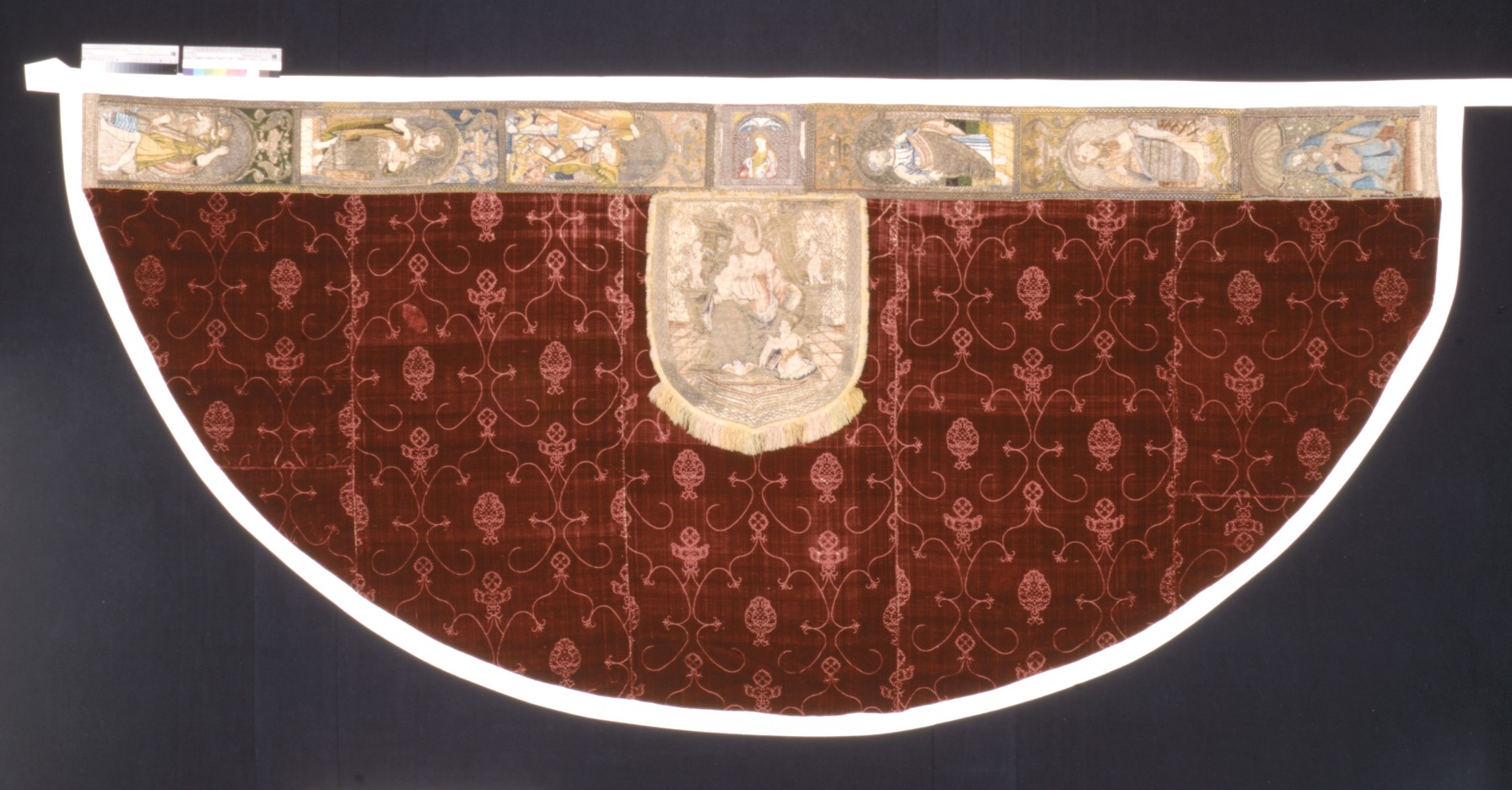
The ecclesiastical cope, a semicircular mantle fastened at the chest, represents a pinnacle of medieval textile artistry. At Katherine Fashion Lab, we approach this garment not merely as a religious artifact but as a sophisticated system of design, material hierarchy, and symbolic communication. This standalone study examines a cope fragment—specifically its orphrey (the decorative band) and hood—originating from the 15th or early 16th century, with provenance suggesting Italian, Spanish, or German workshops. The materials reveal a deliberate stratification: the cope body in silk, the linings in linen and cotton weave, and the embroidery executed with gilt-animal-substrate-wrapped linen and gilt-metal-strip-wrapped linen. This analysis unpacks the technical ingenuity and aesthetic logic embedded in these components, demonstrating how liturgical vestments functioned as a nexus of luxury, labor, and liturgy.
Material Stratigraphy: Silk, Linen, and the Gilt Imperative
The cope’s primary fabric—silk—immediately signals its ceremonial importance. Silk, imported from the Eastern Mediterranean or China via Venetian or Genoese trade networks, was a medium of opulence. Its natural luster and drape provided a luminous backdrop for the embroidered orphrey. The choice of silk for the cope body, versus linen for the lining, creates a deliberate material dialectic: the exterior addresses the congregation with splendor, while the interior (linen) prioritizes tactile comfort against the wearer’s alb. The cotton weave in the lining is a pragmatic addition, offering breathability and structural stability, preventing the silk from sagging under the weight of embroidery.
The orphrey, executed on a linen plain-weave ground, exemplifies the medieval embroiderer’s mastery of mixed media. The use of gilt-animal-substrate-wrapped linen—where gold leaf was applied to an animal membrane (often vellum or gut) and then cut into strips to wrap around linen threads—created a lightweight yet radiant metallic thread. This technique, known as or nué (shaded gold) in its most refined form, allowed for subtle tonal variations. The addition of gilt-metal-strip-wrapped linen, where the metal strip was hammered from silver or brass and gilded, provided a denser, more reflective surface. Together, these threads produced a shimmering interplay of light, transforming the orphrey into a visual hymn.
The Orphrey: Narrative Structure and Spatial Logic
The orphrey, typically running vertically down the front edges or horizontally across the lower hem, functions as the cope’s narrative spine. In this fragment, the orphrey’s design likely depicted saints, biblical scenes, or geometric motifs, though the absence of a specific iconography in the prompt invites a focus on structural principles. The embroidery is not mere decoration; it is a liturgical map. The vertical orientation of the orphrey aligns with the wearer’s body, guiding the congregation’s gaze upward during processions. The use of silk and gilt threads against the linen ground creates a high-contrast focal point, ensuring legibility even in candlelit cathedrals.
From a couture perspective, the orphrey’s placement demonstrates an understanding of ergonomic weight distribution. The embroidered band, denser than the silk body, is positioned to avoid straining the shoulders. The linen ground of the orphrey, while sturdy, is also flexible, allowing the cope to drape gracefully. The integration of gilt threads required meticulous planning: each stitch had to be short and secure to prevent snagging, a constraint that paradoxically enabled intricate geometric patterns. The resulting texture—raised, tactile, and reflective—invites touch, yet the garment’s sacred context forbids it, creating a tension between sensory desire and spiritual reverence.
The Hood: Appliqué as Architectural Accent
The hood, a triangular or shield-shaped appendage at the back of the neck, is arguably the most technically sophisticated element. In this cope, the hood is constructed from linen plain weave appliquéd with additional linen plain weave and embroidered with silk and gilt-metal-strip-wrapped silk. The use of appliqué—layering one fabric atop another—introduces a three-dimensional relief. The base linen provides a matte foundation, while the appliquéd linen shapes (perhaps scalloped or stepped) create shadow lines that animate the surface. The embroidery threads, particularly the gilt-metal-strip-wrapped silk, add a metallic sheen that catches light from multiple angles.
The hood’s iconographic function is distinct from the orphrey’s. While the orphrey narrates, the hood signals status. In medieval vestments, the hood often featured the patron’s coat of arms or a Marian monogram. The choice of linen for both the base and appliqué suggests a deliberate restraint—a counterpoint to the silk cope body. This material humility may reflect the hood’s proximity to the wearer’s head, a zone of personal devotion. The gilt embroidery, however, elevates it, ensuring that even this secondary element participates in the garment’s overall grandeur.
Comparative Workshop Traditions: Italian, Spanish, and German Approaches
The provenance ambiguity—Italian, Spanish, or German—invites a comparative analysis of regional techniques. Italian workshops, particularly in Florence and Venice, excelled in ricamo a rilievo (raised embroidery), using padded linen under the gilt threads to create sculptural effects. The orphrey’s gilt-animal-substrate-wrapped linen aligns with this tradition, as Italian artisans prized the luminous, almost enamel-like quality of such threads. Spanish copes, from centers like Toledo or Seville, often featured bold, stylized patterns influenced by Islamic art, with geometric interlacing and large-scale floral motifs. The use of gilt-metal-strip-wrapped linen, more rigid than the animal-substrate variety, would suit such angular designs. German workshops, particularly in Cologne or Nuremberg, favored intricate, narrative-driven embroidery with a dense, almost architectural layering of threads. The hood’s appliqué technique, with its precise cutwork, echoes German Bildstickerei (picture embroidery), where scenes were built from fabric fragments.
Regardless of origin, the cope demonstrates a trans-European language of luxury. The materials—silk from the East, linen from the North, gilt threads from specialized urban workshops—represent a supply chain that spanned continents. The garment’s construction required collaboration between weavers, embroiderers, and tailors, each contributing specialized knowledge. This division of labor, documented in guild records, parallels the structure of a modern couture atelier, where artisans work in concert under a master designer.
Conclusion: The Cope as a Blueprint for Contemporary Couture
For Katherine Fashion Lab, this cope fragment offers enduring lessons in material storytelling. The deliberate contrast between silk and linen, the strategic use of gilt threads to direct light, and the integration of appliqué for structural and visual depth all inform our approach to modern garment construction. The orphrey and hood are not relics but prototypes—proof that textile artistry can transcend function to become a form of devotion, whether religious or aesthetic. In an era of fast fashion, this cope reminds us that true luxury lies in the invisible labor: the thousands of stitches, the sourcing of rare materials, and the centuries of knowledge embedded in every thread. To wear such a garment is to enter a dialogue with history, a conversation that Katherine Fashion Lab seeks to continue.