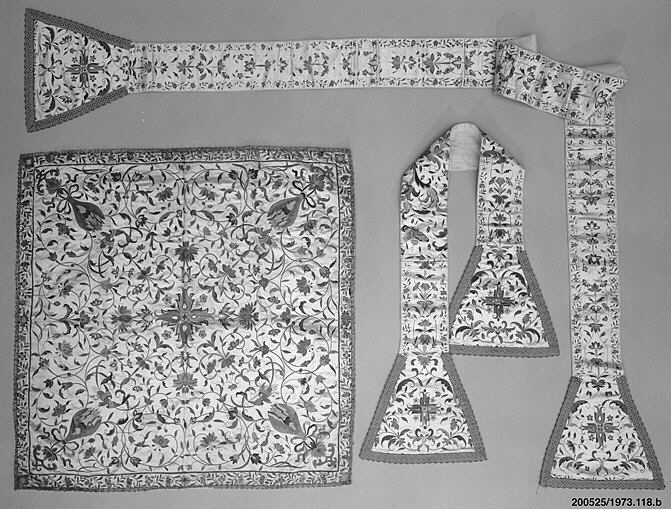
The Maniple: A Heritage Analysis for Katherine Fashion Lab
Introduction: Reclaiming the Maniple as a Symbol of Power
The maniple, a liturgical vestment historically worn over the left forearm by clergy during the Eucharist, represents a profound intersection of spiritual authority, historical adornment, and symbolic power. For Katherine Fashion Lab, this ancient artifact—crafted from silk in civilizations spanning from the Roman Empire to medieval Christendom—offers a strategic opportunity to recontextualize a sacred object within the 2026 high-end luxury landscape. This analysis examines the maniple's origins, its symbolic weight, and its potential as a standalone heritage piece that bridges sacred history with contemporary luxury strategy.
Historical Adornment: The Maniple in Ancient Civilization
The maniple’s earliest iterations trace back to the Roman Empire, where it functioned as a practical cloth—a mappa or napkin—used by consuls and patricians to wipe their hands or signal the start of games. By the 4th century CE, this utilitarian object transformed into a liturgical vestment within the Christian Church, evolving from a simple strip of fabric to an elaborately embroidered silk band. Its placement on the left forearm, near the heart, signified the wearer’s role as a mediator between the divine and the mortal. The shift from wool to silk, particularly during the Byzantine era, elevated the maniple from a functional item to a status symbol. Silk, imported along the Silk Road, was a rare and costly commodity, reserved for the highest echelons of power—emperors, bishops, and aristocrats. This material choice imbued the maniple with an aura of exclusivity and transcendence, linking the wearer to both earthly authority and celestial grace.
In ancient civilizations, adornment was never merely decorative; it was a language of hierarchy and identity. The maniple’s embroidery often depicted religious iconography—crosses, saints, or geometric patterns—that reinforced the wearer’s spiritual lineage. For Katherine Fashion Lab, this historical context underscores the maniple’s potential as a narrative device. By reviving its silk medium and ceremonial silhouette, the brand can tap into a lineage of power that resonates with today’s luxury consumers, who increasingly seek objects with deep cultural roots.
Symbolic Power: The Maniple as a Marker of Authority
The maniple’s symbolic power lies in its dual role as a signifier of both humility and dominion. In liturgical practice, it represented the yoke of Christ—a burden borne willingly by the clergy. Yet its placement on the arm, a limb associated with action and gesture, also conveyed agency. The bishop or priest wearing the maniple was not merely a servant but a leader, anointed to guide his flock. This paradox—simultaneously a symbol of submission and command—makes the maniple a compelling object for high-end luxury strategy. In a market where brands compete to articulate values of authenticity and purpose, the maniple offers a ready-made narrative of sacred duty and worldly influence.
Historically, the maniple’s color and material further amplified its symbolic charge. Purple silk, for instance, denoted imperial or penitential power, while white symbolized purity and resurrection. Gold thread embroidery signaled divine light and eternal wealth. For Katherine Fashion Lab, these chromatic and textural codes can be adapted to create a collection that speaks to modern power dynamics—where the wearer’s choice of a maniple-inspired accessory communicates not just status but a conscious alignment with heritage and spirituality. The 2026 luxury consumer, shaped by a post-pandemic search for meaning, will gravitate toward objects that embody such layered symbolism.
Spiritual Meaning: The Maniple in Ritual and Transcendence
The maniple’s spiritual meaning extends beyond its liturgical use. In ancient civilizations, silk itself was considered a material of the soul—light, luminous, and almost ethereal. When woven into a maniple, silk became a conduit for prayer, its folds absorbing the sweat and incense of ritual. The vestment was blessed before use, transforming it from a textile into a relic. This sacralization process, where an object becomes imbued with divine presence, is a cornerstone of luxury branding. Katherine Fashion Lab can leverage this by positioning the maniple as a talismanic piece—an accessory that carries the weight of centuries of devotion and ceremony.
For the 2026 high-end market, spirituality is not a retreat from modernity but an integration of it. The maniple’s spiritual resonance aligns with the growing trend of “conscious luxury,” where consumers invest in items that offer meditative or ritualistic value. A silk maniple, worn as a statement cuff or draped over the arm in a contemporary silhouette, can serve as a daily reminder of intention and grace. This reinterpretation respects the original context while opening new avenues for personal expression. Katherine Fashion Lab’s strategy should emphasize the maniple’s role as a bridge between the sacred and the secular, appealing to clients who seek beauty with depth.
2026 High-End Luxury Strategy: Strategic Standalone Integration
To position the maniple as a standalone heritage piece for 2026, Katherine Fashion Lab must adopt a multi-faceted strategy that balances reverence with innovation. First, the brand should commission limited-edition maniples crafted from ethically sourced silk, using traditional techniques such as hand-embroidery and natural dyes. Each piece would include a certificate of authenticity detailing its historical inspiration and craftsmanship, appealing to collectors and connoisseurs. The price point should reflect the exclusivity of the material and the labor involved—positioning the maniple as an investment piece, akin to a fine watch or bespoke jewelry.
Second, the marketing narrative must foreground the maniple’s symbolic and spiritual dimensions. Campaigns could feature imagery that juxtaposes ancient ritual with modern elegance—a maniple draped over a minimalist suit, or worn by a figure of authority in a contemporary setting. Collaborations with art historians, liturgists, or even contemporary artists who reinterpret sacred symbols could further legitimize the piece’s cultural cachet. The 2026 luxury consumer values education and storytelling; Katherine Fashion Lab should offer immersive experiences, such as private exhibitions or digital archives, that trace the maniple’s journey from Roman consuls to modern ateliers.
Third, the brand should explore the maniple’s potential as a modular accessory. While the traditional form is a strip of fabric, Katherine Fashion Lab could design variations—arm cuffs, belt-like wraps, or detachable sleeves—that allow for versatile wear. This adaptability ensures the maniple remains relevant across occasions, from formal ceremonies to everyday elegance. The silk medium, with its fluidity and luster, lends itself to such transformations, making the maniple a dynamic addition to any wardrobe.
Conclusion: The Maniple as a Heritage Asset
The maniple is far more than a historical artifact; it is a repository of power, spirituality, and artistry. For Katherine Fashion Lab, this ancient vestment offers a unique opportunity to lead the 2026 luxury market by redefining heritage as a living, breathing element of modern design. By honoring its origins in silk and symbolism, and by crafting a strategy that emphasizes exclusivity, narrative, and adaptability, the brand can transform the maniple into a standalone statement piece—one that resonates with the discerning client’s desire for meaning, beauty, and authority. In doing so, Katherine Fashion Lab not only preserves a piece of history but reimagines it for a new era of luxury.