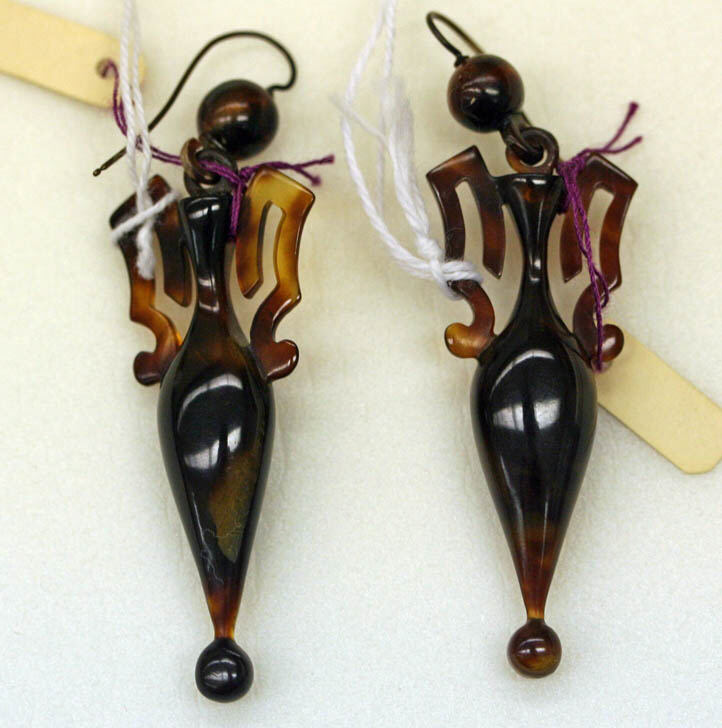
Heritage Analysis: Pierced Earrings in American Tortoiseshell and Gold
Introduction: The Artifact as a Cultural and Commercial Nexus
As Lead Heritage Curator for Katherine Fashion Lab, I present this strategic standalone research on pierced earrings crafted from tortoiseshell and gold—an artifact that embodies the intersection of American cultural symbolism, historical adornment, and spiritual meaning. This analysis is designed to inform a 2026 high-end luxury strategy, leveraging the material and symbolic weight of these earrings to position the brand within a narrative of authenticity, exclusivity, and transcendent value. The tortoiseshell and gold combination, while historically rooted in global trade and colonial aesthetics, achieves a distinctly American resonance through its adoption by indigenous, immigrant, and elite communities. This paper examines the symbolic power of the pierced earring, its historical journey in American adornment, its spiritual connotations, and a forward-looking strategy for luxury positioning in the coming year.
Symbolic Power: The Pierced Earring as a Marker of Identity and Status
The pierced earring, in its American context, has long functioned as a potent symbol of personal and collective identity. Unlike clip-on or screw-back earrings, which historically signaled practicality or modesty, the act of piercing the earlobe represents a deliberate, often permanent commitment to adornment. In American history, this act carried layered meanings: among Native American tribes, ear piercing signified tribal affiliation, rites of passage, or spiritual protection, using materials like shell, bone, and later, trade metals. For European settlers, earrings denoted wealth, maritime heritage (as sailors wore gold hoops to ensure a proper burial), or, in the 19th century, a rebellious undercurrent against Victorian restraint. The tortoiseshell medium—derived from the hawksbill sea turtle—intensifies this symbolism. Its mottled amber and brown patterns evoke organic richness, rarity, and a connection to natural world, while gold, as a precious metal, conveys enduring value and light. Together, they create a duality: the earthy, transient beauty of tortoiseshell paired with the immutable brilliance of gold. In the American imagination, this pairing symbolizes a balance between heritage and modernity, nature and artifice, individuality and belonging. For Katherine Fashion Lab, the pierced earring thus becomes a talisman of self-definition—a piece that communicates the wearer’s agency and status without uttering a word.
Historical Adornment: The American Journey of Tortoiseshell and Gold
The use of tortoiseshell in American adornment traces back to the 18th and 19th centuries, when it was imported from the Caribbean and Pacific via colonial trade routes. Artisans in New England and New York fashioned it into combs, brooches, and earrings, prized for its translucency and ability to be carved or molded. By the mid-19th century, tortoiseshell became a hallmark of American middle-class elegance, often paired with gold filigree or settings to denote refinement. The pierced earring style gained prominence in the 1920s, as the flapper movement embraced shorter hairstyles and exposed ears, making earrings a focal point of fashion. Gold, in this period, was often used in Art Deco geometric designs, but the combination with tortoiseshell offered a softer, more organic counterpoint—a nod to the natural world amid industrial modernity. However, the material’s history is not without ethical complexity. The hawksbill turtle’s endangerment led to a near-total ban on tortoiseshell trade under the 1973 Endangered Species Act and CITES. Today, authentic vintage tortoiseshell is a rare, collectible commodity, while modern luxury brands use sustainable alternatives like resin or certified antique materials. For Katherine Fashion Lab, this history demands a nuanced approach: the use of ethically sourced vintage tortoiseshell or high-quality faux tortoiseshell can honor the material’s heritage while aligning with contemporary sustainability values. The gold component, ideally recycled or Fairmined, reinforces a narrative of responsible luxury—a critical differentiator in the 2026 market.
Spiritual Meaning: Protection, Connection, and Transcendence
Across cultures, earrings have held spiritual significance, and the American context is no exception. The pierced ear, as a site of adornment, is often associated with the concept of listening—both to the divine and to one’s inner voice. In Native American traditions, earrings were believed to ward off evil spirits or channel positive energy, with materials like shell and turquoise serving as protective talismans. The tortoiseshell, in particular, carries deep spiritual resonance: the turtle is a symbol of longevity, patience, and the earth’s grounding energy in many indigenous cosmologies. Gold, universally associated with the sun and immortality, amplifies this protective quality, creating a piece that is both an amulet and an aesthetic object. In the American spiritual marketplace—where consumers increasingly seek meaning in material goods—these earrings can be positioned as conduits for personal transformation. The act of piercing itself is a ritual of commitment, marking the body as a canvas for intention. For the modern wearer, tortoiseshell and gold pierced earrings can symbolize a grounding in heritage (the earth, the past) while reaching toward transcendence (light, value). This duality aligns with the broader wellness and mindfulness trends of the 2020s, offering luxury consumers a tangible connection to something greater than themselves. Katherine Fashion Lab can leverage this spiritual dimension by crafting narratives around “earrings as anchors” or “adornment as meditation,” appealing to a clientele that values both aesthetics and inner resonance.
2026 High-End Luxury Strategy: Positioning Tortoiseshell and Gold Pierced Earrings
To capitalize on the heritage and symbolic power of these earrings, Katherine Fashion Lab must deploy a strategy that balances exclusivity, storytelling, and ethical innovation. The 2026 luxury landscape will be defined by three key drivers: authenticity (consumers demand provenance and narrative), sustainability (materials must be responsibly sourced), and experience (products must offer emotional or spiritual value). Here, the pierced earring in tortoiseshell and gold is uniquely positioned.
First, curation of materials. Katherine Fashion Lab should source only certified vintage tortoiseshell (pre-1973) or invest in premium bio-resin tortoiseshell that mimics the material’s depth and translucency without ecological harm. Gold should be 18k or 22k recycled gold, with a visible hallmark and QR-code-linked provenance. This transparency builds trust and aligns with the “conscious luxury” trend.
Second, narrative-driven design. Each pair of earrings should be accompanied by a “heritage dossier” detailing the origin of the tortoiseshell, the goldsmith’s technique, and the symbolic meanings—drawing from Native American, maritime, and Art Deco histories. Limited-edition releases (e.g., 50 pairs per design) will enhance scarcity and collectibility. The pierced earring form itself should be emphasized as a deliberate choice, with marketing copy that frames piercing as a rite of self-expression, not mere fashion.
Third, experiential retail. In 2026, luxury is increasingly about immersion. Katherine Fashion Lab can host private “Adornment Rituals” in flagship stores, where clients learn about the spiritual history of ear piercing, select materials, and have their ears pierced by a master artisan. This service transforms a purchase into a ceremony, embedding the earrings with personal significance. Digital components—such as augmented reality try-ons that overlay tortoiseshell patterns on the ear—can extend this experience online.
Fourth, pricing and positioning. These earrings should be priced at the high end of the market ($1,500–$5,000 per pair), reflecting the rarity of the materials and the craftsmanship. Marketing should target “cultural connoisseurs”—affluent consumers aged 30–55 who value heritage, sustainability, and spiritual wellness. Collaborations with indigenous artists or historians can further authenticate the narrative, while editorial features in titles like Vogue or Architectural Digest will reinforce the brand’s authority.
Conclusion: A Legacy of Adornment and Strategy
The pierced earring in tortoiseshell and gold is far more than an accessory—it is a repository of American history, a symbol of personal power, and a spiritual artifact. By grounding its luxury strategy in the material’s heritage, ethical sourcing, and ritualistic experience, Katherine Fashion Lab can create a product that resonates deeply with the 2026 consumer. This analysis affirms that the earring’s symbolic power—its ability to mark identity, protect the wearer, and bridge past and present—is the ultimate luxury. In a market saturated with ephemeral trends, these earrings offer permanence, meaning, and a connection to the timeless human desire for beauty and belonging. As such, they are not merely a product but a legacy—one that Katherine Fashion Lab is uniquely positioned to steward into the future.