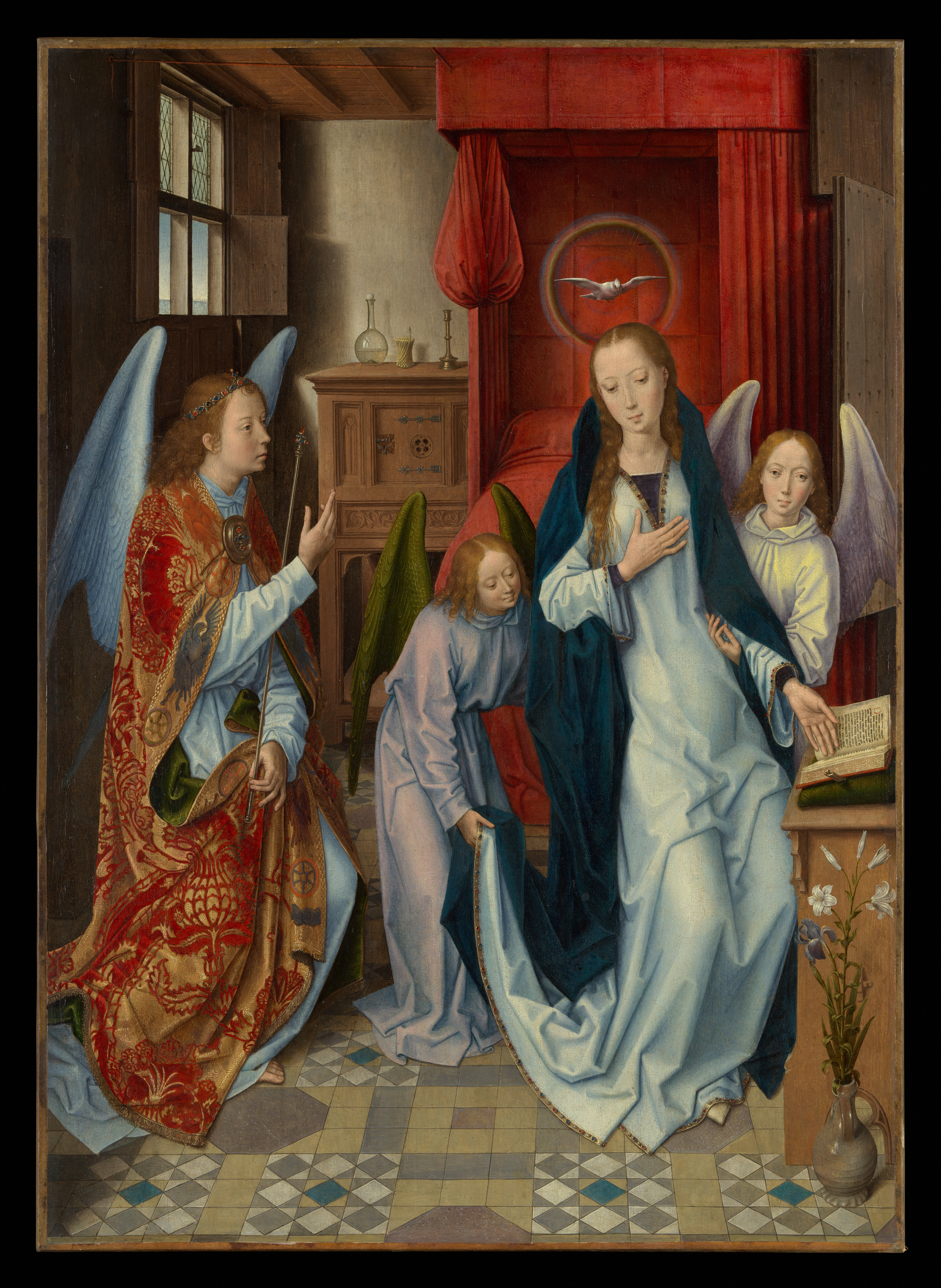
The Annunciation: A Couture Analysis of Divine Encounter
As a standalone study, the subject of The Annunciation presents a profound sartorial paradox. It depicts a moment of cataclysmic spiritual revelation—the divine interrupting the mundane—yet its visual language is one of exquisite restraint, symbolic materiality, and calibrated tension. For Katherine Fashion Lab, this scene is not merely a religious icon but a masterclass in narrative construction through fabric, silhouette, and the potent space between garments. The archetypal composition, with the Virgin Mary and the Archangel Gabriel, establishes a dialogue of textures, volumes, and lines that speaks directly to the core principles of haute couture: transformation, intention, and the embodiment of an idea.
Deconstructing the Silhouette: Virginity as a Structural Concept
The Virgin’s attire is the cornerstone of this analysis. It is rarely about flamboyance; rather, it is architecture. The typical depiction involves a layered system: a foundational undergarment or tunic, often in a muted, earthly tone like deep red, symbolizing her humanity, overlaid by a mantle of blue—ultramarine, a pigment historically more precious than gold. This is not a casual throw; it is a meticulously arranged drapery. The blue mantle envelops her form, creating a columnar silhouette that signifies both modesty and monumental dignity. The folds are not random; they are a topographic map of her reaction. Some artists render them in sharp, geometric angles, suggesting the startling, almost physical impact of the divine message. Others use soft, flowing curves, indicating serene acceptance. The neckline is high, the sleeves are ample, and the fabric cascades to the ground, obscuring the human form to elevate the spiritual persona. This is the ultimate expression of couture where the garment deliberately deflects the male gaze, instead directing attention to the face and hands—the sites of expressiveness and receipt.
Conversely, Gabriel’s silhouette introduces dynamism and otherworldly texture. He is often in motion, one knee bent, wings still vibrant with celestial travel. His garments are typically lighter—silks, linens, gilded brocades—catching a different light. The contrast in fabric weight and luminosity between his attire and Mary’s establishes a visual hierarchy and a dialogue between the eternal (his splendor) and the temporal (her humble setting). His belt may float, defying gravity, a detail that is pure couture fantasy, emphasizing his non-terrestrial nature.
The Semiotics of Color and Embellishment
Color here is a direct communicator of theology and status, a principle directly analogous to a couture house’s signature palette. Mary’s blue, derived from lapis lazuli, is the first and most crucial branding element. It signifies purity, heaven, and eternal truth. Its application is strategic; it often covers her, a protective, defining shell. The red of her undergarment speaks of passion, humanity, and the bloodline of Christ—a hidden, intimate layer with profound public consequence. This layered color strategy is a narrative device: the human (red) is the foundation, the divine calling (blue) is the visible mantle.
Embellishment is sparing but critical. Gabriel’s robes may feature clavi (vertical stripes), segmenta (roundels), or intricate gold-thread embroidery, motifs borrowed from Byzantine imperial attire. This positions him as an ambassador from the highest court imaginable. Mary’s embellishment, if present, is often a single gold hemline, a subtle border, or the delicate transparency of a veil. This restraint speaks volumes. It indicates that her sanctity is intrinsic, not adorned. The book she often holds—a symbol of wisdom and the Old Testament prophecies—acts as her ultimate accessory, an object that defines her character more than any jewel ever could.
The Third Space: The Architecture of the Encounter
Couture is not created in a vacuum; it is presented within a space that amplifies its message. The Annunciation’s setting, whether a spartan loggia, a Gothic chamber, or a paradisiacal garden, is its runway. This space is charged with the tension of the "in-between"—the moment after the message is delivered but before it is fully comprehended. This is mirrored in the spatial relationship between the figures. The gap between Gabriel and Mary is the most important "fabric" in the scene. It is often bridged by a beam of divine light, sometimes solidifying into a shaft of gold connecting heaven to earth. This beam is the ultimate avant-garde element: immaterial, yet it tailors the very space, cutting through the domestic atmosphere with metaphysical precision.
The objects in the room—a lily for purity, a spindle for domesticity, a prayer bench—are like carefully chosen set pieces in a couture presentation. They ground the ethereal in the tangible, providing contrast that makes the divine intrusion more palpable. The management of this space, its perspective and its symbolic clutter or emptiness, directly affects the perceived volume and impact of the garments within it.
Conclusion: A Legacy of Transformative Drape
For the modern couturier, The Annunciation offers timeless lessons. It demonstrates how fabric manipulation can articulate psychological and spiritual states. The Virgin’s draped mantle is a shield, a cocoon, and a throne all at once. It shows the power of a limited, symbolic color palette to convey complex brand identity. Most importantly, it masterfully employs contrast: the static versus the dynamic, the matte versus the luminous, the heavy versus the light, the human versus the divine.
This standalone study transcends its specific religious context to become a universal treatise on dressed communication. It reminds us that the most powerful fashion statements are often those of profound interiority, where the garment becomes the interface between the self and a world-altering force. At Katherine Fashion Lab, we interpret this not as a historical artifact but as a living blueprint: the Annunciation moment is, in essence, the moment a garment transforms the wearer, announcing a new identity to the world. The cut, the color, and the drape are the message, and the body within is both the recipient and the vessel of its revolutionary potential.