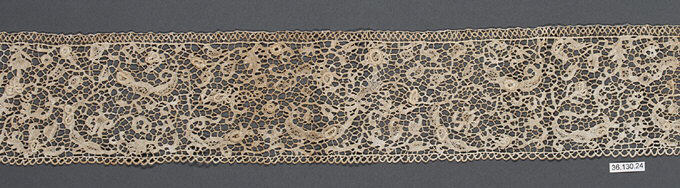
Heritage Analysis: The Border in Ancient Civilization – Needle Lace and Milanese Lace
Introduction: The Border as a Threshold of Power
In the study of ancient civilizations, the border—whether architectural, territorial, or ornamental—has always functioned as a liminal space, a threshold where identity is both defined and defended. For Katherine Fashion Lab, the strategic interrogation of the border motif through the medium of needle lace and Milanese lace offers an unparalleled opportunity to embed symbolic power, historical adornment, and spiritual meaning into a 2026 high-end luxury strategy. This paper presents a standalone heritage analysis that positions the border not merely as a decorative edge but as a profound narrative device, capable of elevating brand authority and cultural resonance in the competitive luxury market.
Symbolic Power: The Border as a Marker of Authority and Protection
In ancient civilizations—from the intricate geometric friezes of Mesopotamian ziggurats to the woven borders of Egyptian royal linens—the border signified demarcation of sacred space and social hierarchy. The act of enclosing a garment or artifact with a border was an assertion of control: it separated the divine from the profane, the ruler from the subject, the sacred from the mundane. Needle lace, with its painstaking handcrafted loops and knots, embodies this symbolic power through its labor-intensive precision. Each stitch in a needle lace border is a deliberate act of boundary-making, a microcosm of the ancient ruler’s edict. Milanese lace, with its characteristic geometric medallions and repeating patterns, further amplifies this authority by mirroring the ordered cosmos—a visual representation of celestial and terrestrial order. For Katherine Fashion Lab, integrating these lace techniques into 2026 collections allows the brand to claim a heritage of authority, positioning each garment as a protective talisman for the wearer, imbued with the invisible power of ancient thresholds.
Historical Adornment: The Evolution of Lace Borders from Ritual to Status
Historically, lace borders evolved from functional edge-finishing into potent status symbols. In ancient civilizations, woven and embroidered borders were reserved for priests, monarchs, and elite warriors. The introduction of needle lace in 15th-century Europe, though later in timeline, drew directly from these ancient principles: the border became a zone of conspicuous craftsmanship, signaling wealth, lineage, and access to rare materials. Milanese lace, originating in the 16th century, refined this into a sophisticated language of power through its dense, continuous patterns—often incorporating heraldic motifs and geometric grids that recalled ancient Roman and Etruscan borders. For Katherine Fashion Lab, this historical lineage is a strategic asset. By referencing the border’s role in ancient adornment, the brand can evoke a timeless narrative of exclusivity. The 2026 high-end luxury strategy should leverage this by using Milanese lace borders on key pieces—outerwear, gowns, and accessories—as a visual shorthand for inherited prestige. The border becomes a signature, a mark of the house’s commitment to historical authenticity, appealing to connoisseurs who value provenance over trend.
Spiritual Meaning: The Border as a Conduit Between Worlds
Beyond the material and social, the border in ancient civilizations held profound spiritual meaning. In funerary contexts, borders on burial shrouds and tomb paintings acted as protective barriers, guiding the soul through the afterlife while warding off malevolent forces. In religious rituals, temple borders delineated zones of increasing sanctity, with the outermost border serving as a filter between the mundane and the divine. Needle lace, with its open, airy structure, visually embodies this liminality—it is neither fully solid nor fully void, a translucent membrane that permits passage while maintaining separation. Milanese lace, with its repeating geometric patterns, echoes the sacred geometry found in ancient mandalas and zodiacal charts, suggesting a cosmic order. For Katherine Fashion Lab, tapping into this spiritual dimension offers a unique differentiator in the luxury market. The 2026 strategy can position lace borders as meditative objects, inviting the wearer to connect with a deeper, transcendent self. Marketing narratives should emphasize the ritual of dressing, where the border becomes a personal threshold—a moment of transformation. This spiritual resonance aligns with the growing consumer demand for mindful luxury, where garments are not just worn but experienced as extensions of inner identity.
Strategic Application: 2026 High-End Luxury Strategy for Katherine Fashion Lab
The integration of needle lace and Milanese lace borders into a 2026 high-end luxury strategy requires a disciplined, multi-layered approach. First, heritage storytelling must be central: each collection should include a curated narrative that traces the border’s journey from ancient thresholds to modern couture. This can be achieved through limited-edition pieces where the lace border is hand-embroidered by master artisans, with a certificate of provenance detailing the specific ancient civilization referenced—be it the protective borders of Egyptian tomb paintings or the geometric friezes of Greek temples. Second, material innovation should honor tradition while embracing sustainability. Katherine Fashion Lab can source ethically produced silk and linen threads for needle lace, and collaborate with Italian lace mills that preserve Milanese techniques, ensuring that the 2026 collection is both heritage-rich and ecologically responsible. Third, symbolic pricing should reflect the border’s power: these lace-adorned pieces should occupy the highest tier of the collection, priced not just for craftsmanship but for the cultural capital they confer. Fourth, experiential retail can elevate the border’s spiritual meaning by designing pop-up installations that mimic ancient threshold spaces—archways, porticos, and labyrinthine entrances—where customers experience the lace border as a rite of passage. Finally, digital storytelling through high-definition films and interactive archives can decode the symbolic language of each border pattern, educating clients on the ancient origins of the motifs and reinforcing the brand’s authority as a custodian of cultural heritage.
Conclusion: The Border as a Competitive Advantage
For Katherine Fashion Lab, the border is not a decorative afterthought but a strategic asset. By anchoring the 2026 high-end luxury strategy in the symbolic power, historical adornment, and spiritual meaning of needle lace and Milanese lace borders, the brand can differentiate itself in a saturated market. The border becomes a narrative device that speaks to the wearer’s desire for protection, status, and transcendence—timeless values that resonate across civilizations. As luxury consumers increasingly seek depth and authenticity, Katherine Fashion Lab’s commitment to the border as a threshold of power positions it not merely as a fashion house but as a guardian of ancient wisdom, woven into the fabric of contemporary luxury.