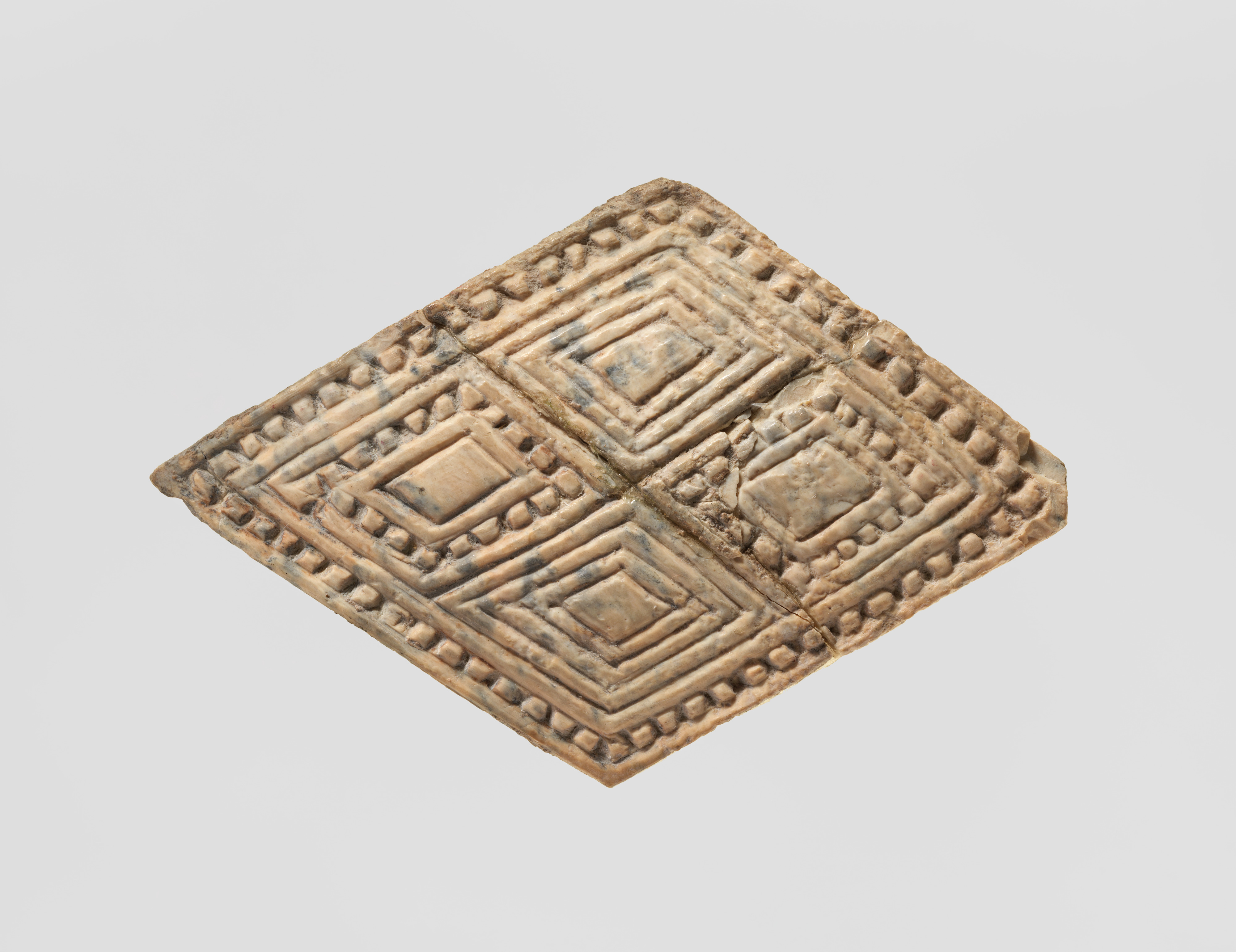
Heritage Analysis: The Assyrian Ivory Plaque
Cultural Provenance and Material Significance
The Assyrian ivory plaque, a fragment of a once-magnificent decorative scheme from the palaces of Nimrud or Khorsabad (circa 9th–7th century BCE), represents a pinnacle of ancient Near Eastern craftsmanship. Carved from hippopotamus or elephant tusk, the medium itself was a luxury commodity—imported from the Levant or Egypt, often as tribute or war booty. For the Assyrian elite, ivory was not merely decorative; it was a tangible symbol of imperial reach, economic dominance, and divine favor. The material’s rarity and luminous quality, when polished, evoked the purity of sacred space, often adorning thrones, beds, and ceremonial furniture within palace sanctuaries.
From a heritage curatorial perspective, the plaque’s survival underscores the Assyrian practice of systematic accumulation. These objects were not isolated artworks but components of a larger narrative of power, where every surface proclaimed the king’s role as the earthly agent of the god Ashur. The ivory’s fragility also speaks to the transience of earthly glory—a poignant counterpoint to the empire’s ambition for eternal dominance.
Symbolic Power and Iconographic Language
The plaque’s iconography—typically featuring a winged deity, a sacred tree, or a royal figure in ritual pose—operated as a visual manifesto of Assyrian cosmology. The winged genie, often depicted holding a pine cone and a bucket, performed a purifying gesture, symbolically cleansing the king and the palace of malevolent forces. This act of apotropaic protection was central to Assyrian statecraft: the king’s legitimacy depended on maintaining cosmic order, and every ritual image reinforced his unique access to divine power.
The sacred tree, frequently shown with stylized palmettes and interlocking branches, represented the axis mundi—the connection between heaven, earth, and the underworld. By flanking this tree with guardian figures, the plaque asserted the king’s role as the mediator of life, fertility, and stability. For the Assyrian court, such imagery was not symbolic in the modern sense but was believed to possess operative efficacy; the image itself participated in the reality it depicted. This belief system imbued the plaque with a spiritual charge that transcended mere ornamentation.
Historical Adornment and Courtly Function
Within the Assyrian court, ivory plaques were integrated into furniture and architectural elements that defined hierarchical space. Thrones inlaid with ivory, for example, were reserved for the king and his highest officials, while beds and couches featuring such plaques signified the owner’s participation in royal luxury networks. The plaques were often dyed with precious pigments—lapis lazuli blue, cinnabar red, and gold leaf—creating a polychromatic effect that dazzled visitors and reinforced the palace’s reputation as a “house of splendor.”
This practice of adornment as political theater is a critical lesson for modern luxury strategy. The Assyrians understood that material opulence, when layered with narrative meaning, becomes a tool of persuasion. The plaque was not merely a status marker; it was a declaration of cosmic alignment. In the context of 2026 high-end luxury, this principle translates into a demand for objects that are not just beautiful but imbued with intentional symbolism—pieces that tell a story of heritage, protection, or transcendence.
Spiritual Meaning and Ritual Context
The spiritual dimension of the Assyrian ivory plaque cannot be overstated. These objects were often consecrated through rituals that involved libations, incense, and incantations. The act of carving the ivory was itself a sacred process, as the craftsman was believed to channel divine patterns into the material. The finished plaque, when placed in the royal context, became a threshold object—a boundary between the mundane and the sacred, the human and the divine.
This spiritual function resonates deeply with contemporary luxury consumers who seek meaningful objects in an era of mass production. The 2026 luxury market will increasingly value artifacts that offer a sense of protection, continuity, or ritual significance. The Assyrian plaque, with its explicit apotropaic purpose, provides a powerful archetype for brands seeking to create pieces that are not just accessories but talismans—objects that confer a sense of order and safety in a chaotic world.
Strategic Implications for 2026 High-End Luxury
For Katherine Fashion Lab, the Assyrian ivory plaque offers a rich repository of strategic insights that can be translated into a 2026 luxury collection. The following principles emerge from this heritage analysis:
1. Material as Narrative. Just as ivory symbolized imperial reach and divine favor, contemporary luxury must select materials that inherently tell a story. Sustainable, rare, or ethically sourced materials—such as responsibly harvested mother-of-pearl, fossilized resin, or hand-veined marble—can evoke a similar sense of rarity and purpose. The material should not be passive but active in communicating the brand’s values of heritage, preservation, and transcendence.
2. Iconography as Protection. The Assyrian use of apotropaic imagery suggests that modern luxury can incorporate symbolic motifs that offer psychological comfort. Patterns inspired by ancient protective symbols—such as the Eye of Horus, the Hamsa, or the Assyrian winged disk—can be reinterpreted in minimalist, high-end forms. These motifs should be integrated into jewelry, hardware, or textile designs, creating pieces that function as modern talismans for discerning clients.
3. Ritualized Experience. The consecration rituals of Assyrian plaques point to the power of ritual in luxury consumption. For 2026, Katherine Fashion Lab could develop a “ceremonial unboxing” experience that mimics ancient rites—using scent, sound, and tactile elements to transform a purchase into a meaningful event. This deepens brand loyalty and positions each piece as a sacred object rather than a commodity.
4. Hierarchical Storytelling. Assyrian art was never democratic; it was designed for a specific elite. For 2026 luxury, this suggests a return to exclusivity through storytelling. Limited editions with documented provenance, detailed artisan narratives, and references to specific historical periods (e.g., “Neo-Assyrian Revival”) can create a sense of belonging to an ancient lineage of power and taste.
5. The Axis Mundi Principle. The sacred tree motif, as a connector of worlds, can inspire collections that emphasize verticality and connection—tall, sculptural jewelry; layered textiles; or architectural accessories that evoke a bridge between earth and sky. This aligns with the 2026 trend toward spiritual luxury, where consumers seek objects that elevate their daily experience.
Conclusion: From Fragment to Future
The Assyrian ivory plaque, though a fragment of a lost empire, offers a complete blueprint for how luxury can operate at the intersection of power, spirituality, and material mastery. For Katherine Fashion Lab, this heritage analysis is not merely academic—it is a strategic tool for designing a 2026 collection that resonates with depth, intention, and timeless authority. By channeling the Assyrian understanding of adornment as cosmic statement, the brand can create objects that transcend fashion and become artifacts of personal and cultural significance. In a market saturated with fleeting trends, the plaque’s lesson is clear: true luxury endures because it is anchored in meaning.