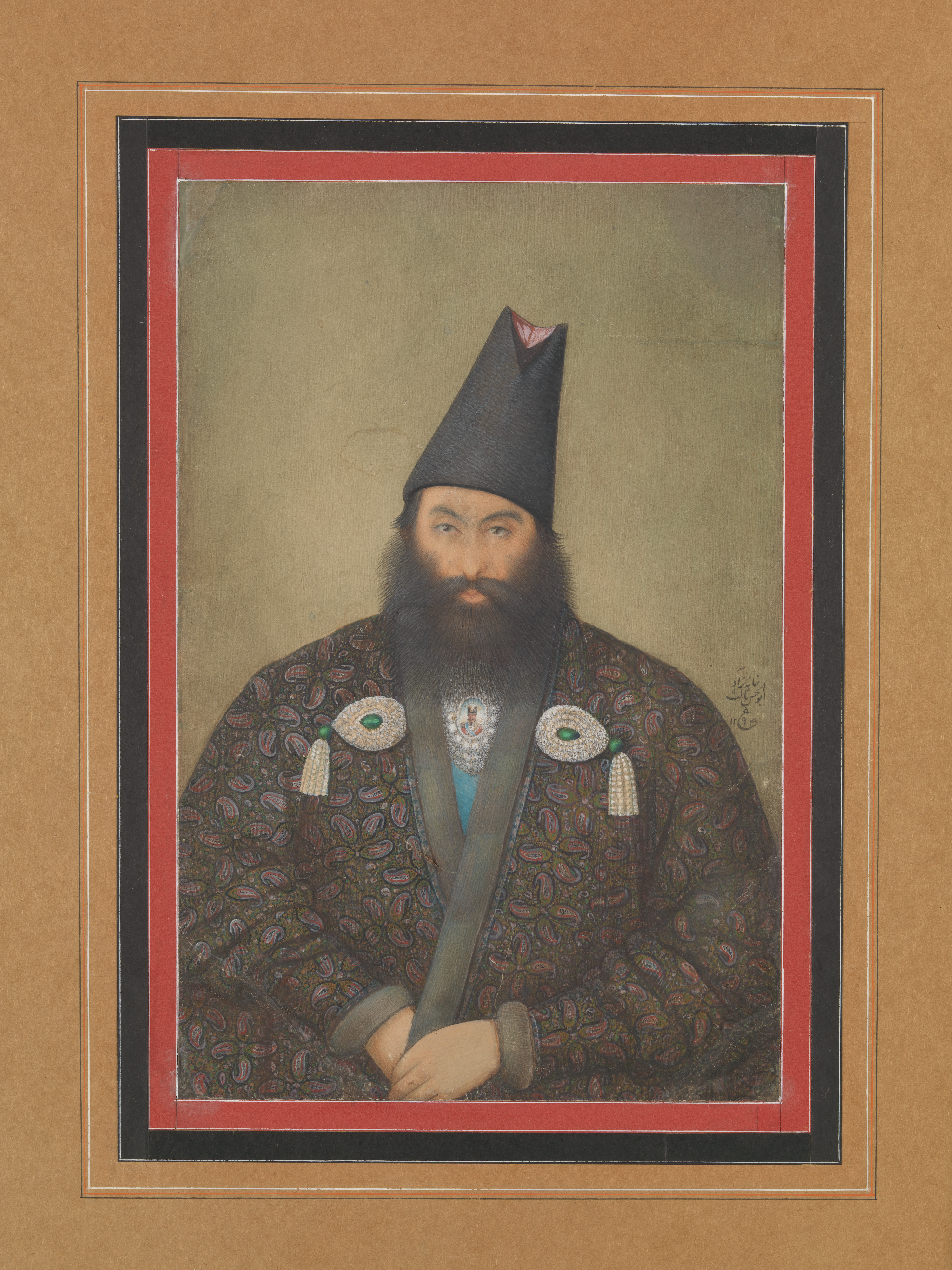
A Portrait of a Statesman: A Masterclass in Material and Metaphor
In the rarefied world of haute couture, where fabric and form converge to tell stories of power, identity, and legacy, Katherine Fashion Lab presents a singular study that transcends the conventional boundaries of fashion illustration. “A Portrait of a Statesman,” executed in opaque watercolor and ink on paper, is not merely a preparatory sketch or a decorative accessory. It is a standalone thesis on the visual language of authority, rendered with the precision of a diplomat’s signature and the fluidity of a master calligrapher’s brush. As Lead Curator, I invite you to examine this work not as a preliminary study, but as a finished artifact that speaks to the intersection of global heritage, political symbolism, and artistic discipline.
The Material Lexicon: Opaque Watercolor and Ink as Couture Elements
The choice of medium in this piece is deliberate and deeply symbolic. Opaque watercolor, known for its ability to layer density without sacrificing luminosity, mirrors the complex persona of a statesman. Each wash builds upon the last, creating a surface that is both opaque and translucent—much like the public and private selves of a leader. The ink, applied with decisive strokes, provides the structural armature, akin to the boning in a tailored jacket or the seams of a bespoke suit. Together, they forge a material dialogue that is both fragile and formidable.
In the context of Katherine Fashion Lab, material is never neutral. Here, the paper becomes a canvas for global heritage. The opaque watercolor, with its origins in ancient manuscript illumination from Persia to Europe, evokes the weight of historical diplomacy. The ink, reminiscent of East Asian brushwork, introduces a calligraphic rhythm that suggests the cadence of statecraft. This fusion of techniques is not eclectic but intentional: it asserts that the modern statesman is a composite of cultures, a figure who navigates diverse traditions to build consensus. The materiality of the piece thus functions as a sartorial code, where every pigment and line is a thread in the fabric of leadership.
Deconstructing the Statesman: Form, Line, and the Architecture of Authority
The composition of this study is spare yet commanding. The figure is centered, shoulders squared, gaze directed slightly off-axis—a posture that communicates both engagement and strategic distance. The opaque watercolor defines the flesh tones with a muted palette: ochres, umbers, and a hint of cerulean in the shadows. This restraint avoids the trap of realism, instead opting for a psychological portrait where color conveys temperament. The ink, used for the eyes and the line of the jaw, is black but not flat; it varies in thickness, suggesting the nuance of decision-making. The eyes, in particular, are rendered with a single, unbroken stroke—a testament to the artist’s control and the subject’s unwavering focus.
The clothing is suggested rather than detailed: a collar, a lapel, the faint outline of a tie. This deliberate ambiguity allows the viewer to project their own understanding of political attire. Is it a Western suit? A dashiki? A sherwani? The absence of specific tailoring invites global heritage into the frame. The statesman is not bound by geography; he is a universal archetype, yet his identity is rooted in the particularities of his culture. This is a masterful curatorial choice, for it aligns with Katherine Fashion Lab’s ethos of celebrating diversity without flattening it into homogeneity.
Standalone Study as a Couture Statement
In the fashion world, studies are often relegated to the status of preparatory work—sketches that precede the garment. But “A Portrait of a Statesman” asserts its autonomy. As a standalone study, it demands to be considered as a finished piece, complete in its incompleteness. This mirrors the nature of statesmanship itself: a leader is never fully formed, always in the process of negotiation and refinement. The visible brushstrokes and ink splatters are not errors but deliberate marks of process, akin to the raw seams and exposed zippers in deconstructed couture. They remind us that authority is constructed, not innate.
From a curatorial perspective, this study functions as a capsule collection of ideas. It condenses themes of power, heritage, and materiality into a single image. In a gallery setting, it would command attention not despite its modesty but because of it. The absence of color excess or hyper-detailed rendering forces the viewer to engage with the essence of the subject. This is a lesson in restraint—a quality often undervalued in an era of maximalist fashion. Katherine Fashion Lab champions this approach, positioning the study as a counterpoint to the noise of fast fashion and disposable trends.
Global Heritage as a Unifying Thread
The phrase “global heritage” is not merely a descriptor; it is a methodology. In this portrait, heritage is not a decorative motif but a structural principle. The ink technique borrows from Japanese sumi-e, where economy of line conveys maximum meaning. The watercolor layering recalls the Mughal miniature tradition, where depth is achieved through translucent washes. The overall composition references the formal portraiture of European statecraft, from Holbein to Sargent. Yet none of these influences dominate. Instead, they coexist in a state of creative equilibrium, much like the diplomatic balance a statesman must maintain among competing interests.
This synthesis is particularly relevant for Katherine Fashion Lab, which operates at the nexus of global markets and local artisanship. The study serves as a reminder that true luxury is not about exclusivity but about integration—the ability to weave together disparate threads into a cohesive narrative. The statesman, as depicted here, is a curator of cultures. His portrait is a testament to the power of dialogue, both visual and political.
Implications for Couture and Leadership
As a curator, I see this study as a provocation to the fashion industry. It challenges the notion that couture must be three-dimensional, wearable, or commercial. Instead, it posits that the idea of couture can reside in a two-dimensional work on paper. The statesman’s portrait is a garment of the mind—a tailored concept that dresses the viewer in a new understanding of authority. For designers, this is a call to embrace drawing as a primary mode of expression, not merely a step toward production. For leaders, it is a mirror reflecting the art of presence.
In conclusion, “A Portrait of a Statesman” is a masterful study that encapsulates Katherine Fashion Lab’s commitment to depth, heritage, and material intelligence. It is a work that rewards slow looking, inviting us to contemplate the weight of leadership and the textures of our shared history. As a standalone piece, it stands as a testament to the enduring power of ink and watercolor—and to the statesman who, like this portrait, is both a product of his time and a timeless symbol.