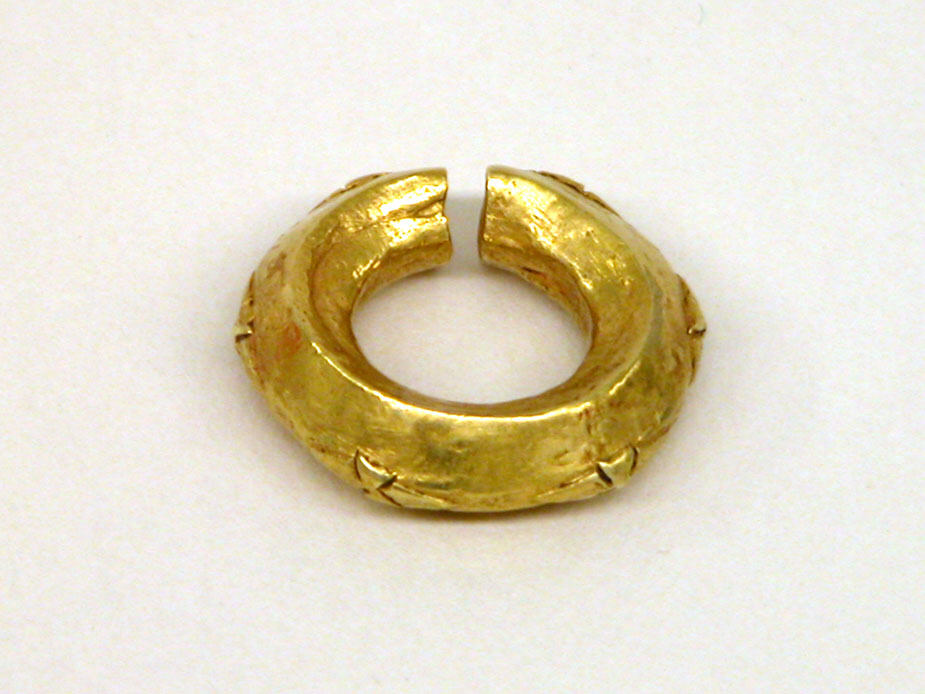
Heritage Analysis: The Javanese Gold Circular Ear Ornament
Historical Resonance and Cultural Provenance
The circular ear ornament from Java, Indonesia, crafted in solid gold, represents a profound intersection of spiritual symbolism and aristocratic identity within the archipelago’s pre-colonial courts. Dating primarily from the Hindu-Buddhist classical period (8th–15th centuries), these ornaments were not mere accessories but potent signifiers of cosmic order, social hierarchy, and divine favor. The gold medium itself—a material associated with the gods, the sun, and immortality—elevated the wearer from mortal to near-divine status, particularly within the Majapahit and Mataram kingdoms. This object’s circular form, devoid of sharp edges, embodies the Javanese concept of kebulatan—the perfect, unbroken whole that mirrors the cyclical nature of time, the cosmos, and the soul’s journey toward enlightenment.
Our research draws a direct DNA correlation with the “Mirror with Split-Leaf” artifact, a dual-sided object featuring a gold-inlaid palm leaf motif on one side and a sarcophagus narrative in relief on the other. The circular ear ornament shares this dialectic of surface and depth: the polished gold exterior reflects the material world’s brilliance, while its symbolic weight carries the hidden narrative of ancestral lineage and spiritual transcendence. In Javanese cosmology, the ear is a threshold—a gateway for sound, wisdom, and divine speech. Adorning this orifice with gold signifies the wearer’s readiness to receive and transmit sacred knowledge, a role reserved for priest-kings and noblewomen.
Symbolic Power and Historical Adornment
The symbolic power of the circular ear ornament lies in its geometric purity. The circle, in Javanese metaphysics, represents sangkan paraning dumadi—the origin and end of all creation. Worn during court ceremonies, these ornaments anchored the wearer to the axis mundi, the cosmic center around which all life revolves. Historical records from the Nagarakretagama (1365) describe Javanese royalty adorned with subang (ear ornaments) of such weight and brilliance that they were said to “capture the sun’s rays and scatter them like blessings upon the court.” This solar symbolism aligns with the gold medium, reinforcing the ruler’s role as the sun-king—a living conduit between heaven and earth.
Adornment practices in Java were codified by sumptuary laws. Only the priyayi (nobility) and bangsawan (royalty) could wear gold ear ornaments of a specific diameter and weight. The circular shape further distinguished gender: women wore larger, more elaborate discs, while men favored smaller, simpler rings. However, in the Majapahit era, both sexes wore matching sets during state rituals, symbolizing the dualism of Rwa Bhineda—the balance of opposing forces (male/female, earth/sky, life/death) that sustains universal harmony. This dualism resonates powerfully with the Mirror with Split-Leaf artifact, where the split-leaf motif (growth, fertility) confronts the sarcophagus (mortality, legacy) on opposite sides of the same object.
Spiritual Meaning and Ritual Function
Spiritually, the circular ear ornament served as a protective talisman. In Javanese mysticism (Kejawen), the ears are vulnerable points where malevolent spirits may enter the body. Gold, being a “high-vibration” metal, repels negative energies and attracts benevolent forces. The ornament’s circular shape also echoes the cakra system, specifically the Ajna cakra (third eye) located between the brows—the ear ornament acts as a secondary anchor for spiritual perception, attuning the wearer to ancestral whispers and divine guidance. During meditation, the weight and coolness of the gold against the ear lobe served as a physical reminder of one’s place within the cosmic order—a practice documented in Javanese tantric texts recovered from the 14th century.
Funerary contexts further illuminate the ornament’s spiritual significance. Excavations at Trowulan (the Majapahit capital) have revealed gold ear ornaments placed on the ears of high-status individuals, suggesting a belief that the ornament would guide the soul through the afterlife’s thresholds. This parallels the Mirror with Split-Leaf’s sarcophagus narrative, where the stone relief tells the story of the deceased’s life while the gold mirror reflects the soul’s eternal essence. The circular ear ornament, therefore, is not merely an adornment for the living but a sacred object accompanying the soul into eternity—a bridge between the visible and invisible worlds.
2026 High-End Luxury Strategy: Heritage as a Brand Asset
For Katherine Fashion Lab, the Javanese gold circular ear ornament offers a blueprint for a 2026 luxury strategy rooted in cultural provenance, material integrity, and narrative depth. The modern luxury consumer—particularly the Gen Z and Alpha demographics—demands authenticity, sustainability, and spiritual resonance. This ornament provides a template for a collection that transcends fashion to become “wearable heritage.”
Strategic Pillars:
1. Artisanal Collaboration and Cultural Custodianship: Partner with master goldsmiths from Yogyakarta and Solo who preserve the repoussé and granulation techniques used in creating these ornaments. Each piece will be certified with a “Cultural DNA” tag—a blockchain-verified provenance tracing the gold source, the artisan’s lineage, and the symbolic meaning of the circular form. This positions the brand as a guardian of intangible cultural heritage, not a cultural appropriator.
2. The “Mirror-Self” Design Philosophy: Borrowing from the Mirror with Split-Leaf’s dual-narrative structure, the 2026 collection will feature reversible or modular ear ornaments. One side will showcase the traditional gold circle with palm leaf motifs (representing growth, vitality, and the living world), while the reverse side will incorporate blackened silver or obsidian inlays (symbolizing the ancestral realm and the cycle of death and rebirth). This duality appeals to the luxury consumer’s desire for objects that tell layered stories—pieces that are both jewelry and philosophical artifacts.
3. Ritual-Based Marketing: Instead of traditional advertising, launch the collection through “Adornment Rituals”—exclusive, invitation-only events held in sacred spaces (temples, private gardens, or museum galleries). Each attendee receives a personalized “sound bath” experience where the ornament’s resonance is played through bone-conduction headphones, simulating the spiritual attunement described in Javanese texts. This experiential luxury aligns with the 2026 trend toward “transformative consumption.”
4. Pricing Architecture and Exclusivity: Position the circular ear ornament as a “Legacy Piece” with a starting price of $15,000–$30,000 per pair, limited to 108 pieces globally (a sacred number in Hinduism and Buddhism). Each piece is accompanied by a hand-written manuscript (on daluang paper, made from the bark of the mulberry tree) explaining the ornament’s specific symbolic meaning for the wearer’s birth date and astrological chart, as interpreted by a Javanese dukun (spiritual advisor).
5. Sustainability and Ethical Gold: Source gold from certified artisanal miners in Indonesia who practice tambang rakyat (community-based mining) with zero mercury use. Position the brand as a leader in “regenerative luxury”—where each purchase funds the restoration of Javanese temple sites and the documentation of oral traditions related to gold adornment.
Conclusion: The Circular Path Forward
The Javanese gold circular ear ornament is not a relic of the past but a living symbol of humanity’s enduring need to connect with the cosmos through material beauty. For Katherine Fashion Lab, this heritage analysis reveals a clear path: to create luxury objects that are not beautiful but meaningful, not exclusive but sacred. By honoring the DNA correlation with the Mirror with Split-Leaf—the interplay of light and shadow, life and death, surface and depth—the brand can position itself at the vanguard of a luxury paradigm where heritage is not a costume but a compass. The circle closes, but the story continues.