The Art of Absence: Deconstructing the Strip Through Needle Lace at Katherine Fashion Lab
In the rarefied world of haute couture, where fabric often serves as a canvas for excess, Katherine Fashion Lab’s latest standalone study presents a radical counterpoint: the Strip. This is not a mere design theme but a philosophical inquiry into the very nature of presence and absence. By anchoring the collection in Needle Lace—a material born of patience, thread, and negative space—and drawing from a Global Heritage of textile traditions, the Lab redefines the strip as a medium of architectural restraint and narrative depth. This analysis dissects how the interplay of material, technique, and cultural memory elevates the strip from a simple linear motif to a profound statement on the couture body.
Needle Lace: The Architecture of the Void
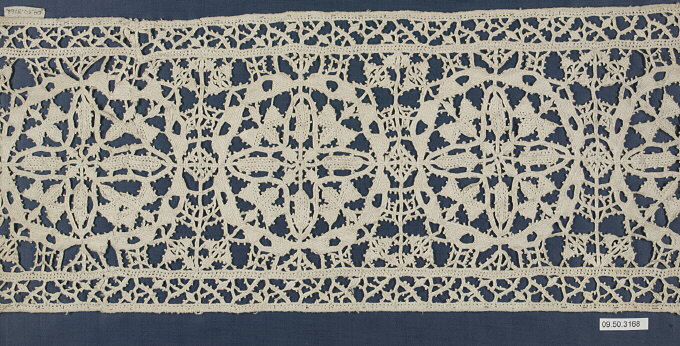
At its core, needle lace is a study in controlled emptiness. Unlike woven textiles, which rely on a continuous warp and weft, needle lace is built stitch by stitch over a parchment foundation, creating a fabric that is as much defined by its holes as by its threads. In the context of Strip, this technique becomes a metaphor for the modern condition: a body that is simultaneously exposed and protected, fragmented yet whole. Katherine Fashion Lab’s artisans employ a rigorous methodology, using a single needle and linen thread to construct strips of lace that vary from delicate, gossamer bands to dense, sculptural ribbons.
The materiality of needle lace in this study is deliberately austere. There is no sequin, no bead, no metallic thread to distract from the purity of the form. Instead, the lace is left in its natural state—often in ecru, ivory, or deep black—allowing the interplay of light and shadow to animate the surface. Each strip is a micro-architecture: a series of picots, brides, and filled stitches that create rhythm and tension. The result is a fabric that breathes, that moves with the wearer rather than against them, embodying a couture philosophy of negative capability—the ability to exist in uncertainty without reaching for ornament.
Global Heritage: The Strip as a Universal Language
The strip is not a Western invention. Across cultures, the linear motif has served as a fundamental unit of textile expression. Katherine Fashion Lab’s research draws from a Global Heritage that spans continents and centuries, reinterpreting the strip as a connective thread between disparate traditions. From the ribbon-like sashes of the Andean Andes, woven with symbolic geometric patterns, to the strip-woven kente cloth of Ghana, where each band of color carries a proverb, the strip is a universal syntax of identity and status.
In this study, the Lab synthesizes these influences with a distinctly contemporary sensibility. The needle lace strips are not merely decorative; they are structural. They wrap, bind, and suspend the body in ways that echo the Japanese obi—a stiff, belt-like sash that defines the silhouette—while also referencing the South Asian patka, a long cloth belt worn as a symbol of honor. The result is a garment that speaks multiple dialects of heritage without resorting to pastiche. The strips are arranged in parallel grids, diagonal sweeps, or asymmetrical cascades, creating a visual dialogue between order and chaos, tradition and innovation.
The Strip as a Couture Statement: From Line to Volume
In traditional couture, the strip is often relegated to trim—a border, a hem, a belt. Katherine Fashion Lab elevates it to the primary architectural element. The collection features garments where the strip is the garment: a gown constructed entirely from parallel bands of needle lace, spaced to reveal glimpses of skin, or a bodice where strips are twisted and knotted to form a second skin of pure line. This approach challenges the conventional hierarchy of couture, where volume is typically achieved through draping or cutting. Here, volume is a byproduct of repetition and spacing.
The technical execution is formidable. Each strip must be precisely calibrated in width, tension, and curve to ensure that the final silhouette maintains its intended shape without sagging or distortion. The Lab’s artisans employ a system of temporary basting and blocking, a technique borrowed from traditional lacemaking, to stabilize the strips during construction. Once assembled, the garment is removed from its frame, and the strips are left to find their own organic drape. The result is a tension between the rigid geometry of the initial design and the fluidity of the finished piece—a couture paradox that speaks to the body’s own dual nature of structure and motion.
Context of the Standalone Study: Purity as Provocation
This standalone study is a deliberate departure from the seasonal frenzy of fashion weeks. By isolating the strip as a singular subject, Katherine Fashion Lab invites a deeper, almost academic contemplation of couture’s foundational elements. The absence of a full collection—no coats, no trousers, no accessories—forces the viewer to focus entirely on the material and its manipulation. It is a radical act of restraint in an industry that often equates value with volume.
The choice of needle lace as the exclusive material further underscores this commitment to purity. Needle lace is among the most labor-intensive of textile arts; a single square inch can require hours of handwork. In an era of fast fashion and digital fabrication, this study is a quiet manifesto for slowness, for the dignity of craft, and for the enduring power of the handmade. The strip, in this context, becomes a unit of time, each stitch a moment of focused attention.
Conclusion: The Strip as a New Couture Vocabulary
Katherine Fashion Lab’s analysis of the Strip through needle lace and global heritage is more than a technical exercise; it is a redefinition of what couture can be. By embracing absence as much as presence, the Lab challenges the wearer to consider the body not as a surface to be covered, but as a space to be articulated. The strip becomes a line of inquiry, a thread that connects the artisan’s hand to the wearer’s form, and a bridge between the local and the universal. In this standalone study, the strip is not a detail—it is the entire story. And in that story, Katherine Fashion Lab reminds us that the most profound statements in fashion are often those said with the least.