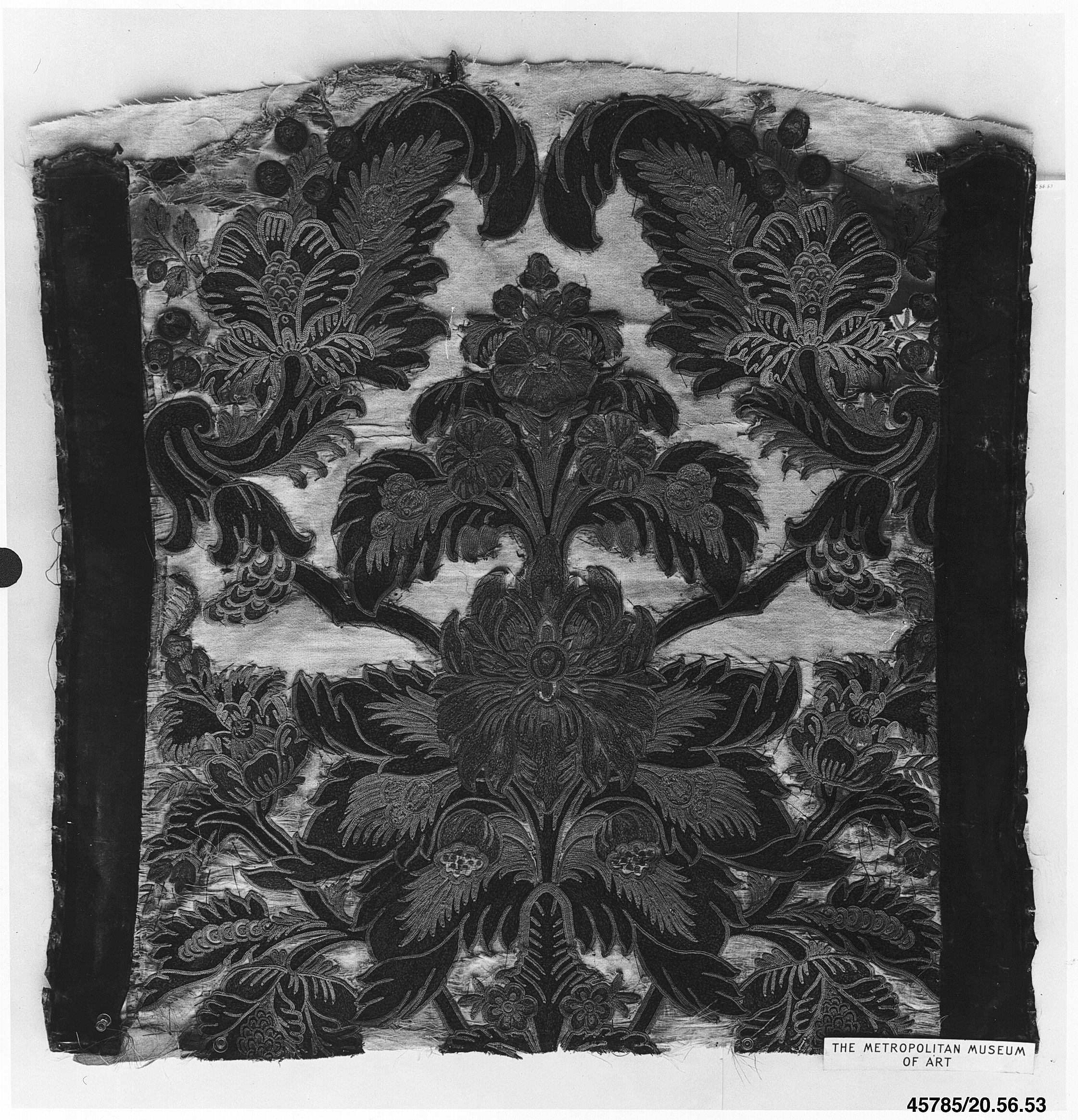
The Fragment: A Couture Analysis of Heritage, Material, and Narrative
In the rarefied world of haute couture, where craftsmanship meets artistic expression, the concept of the fragment occupies a uniquely provocative space. For Katherine Fashion Lab, the fragment is not a sign of incompleteness but a deliberate, sophisticated design philosophy—a lens through which global heritage is deconstructed and reimagined. This standalone study examines a singular couture piece, a silk garment born from the confluence of disparate cultural narratives, and analyzes how the fragment becomes a powerful tool for storytelling, material mastery, and conceptual innovation.
Deconstructing the Fragment: A Conceptual Framework
The fragment, in this context, is a paradoxical entity. It is both a remnant and a genesis—a piece of a larger whole that, when isolated, acquires new meaning. In the Katherine Fashion Lab piece, the fragment is not a flaw or an accident; it is a deliberate design choice that challenges the Western canon of seamless, unbroken couture. Instead, the garment is composed of multiple, distinct silk panels, each cut from a different historical or geographical source. These panels are not blended into a homogenous surface; rather, they are juxtaposed, their edges raw or subtly finished, creating a visual and tactile dialogue between cultures.
This approach echoes the global heritage embedded in the garment’s origin. The fragment references the patchwork traditions of nomadic tribes, the mosaic aesthetics of Islamic art, and the boro mending techniques of Japan. Yet, it does so without mimicry. Instead, the design abstracts these influences into a universal language of discontinuity. The wearer becomes a living archive, a walking museum of fragments that speak to the impermanence and migration of cultural artifacts. The garment asks: What happens when we honor the broken, the partial, the displaced? How do we construct identity from pieces that were never meant to belong together?
Silk as the Medium of Memory
Silk, the chosen material, is integral to this narrative. Its history is one of trade, luxury, and transmission—from the ancient Silk Road to the courtly robes of China and the opulent gowns of European aristocracy. In the Katherine Fashion Lab piece, silk is not used for its traditional associations with smoothness and continuity. Instead, it is manipulated to accentuate the fragment. The fabric is treated with a matte finish on some panels, a subtle sheen on others, and even a crinkled texture reminiscent of aged parchment. This textural variation creates a sensory map of the fragment’s journey.
Each silk panel is sourced from a different heritage: a handwoven Kesi silk from Suzhou, a resist-dyed Ikat from Uzbekistan, a Chirimen crepe from Kyoto, and a Brocade from Lyon. The fragments are not chosen for their uniformity but for their distinctness. The Kesi panel, with its intricate tapestry of mythological birds, evokes Chinese courtly elegance. The Ikat fragment, with its blurred, geometric patterns, speaks to Central Asian nomadism. The Chirimen, with its delicate crinkles, whispers of Japanese wabi-sabi—the beauty of imperfection. The Lyon brocade, with its metallic threads, recalls European opulence. These fragments are stitched together with a visible, contrasting thread, a deliberate choice that foregrounds the act of assembly. The seams are not hidden; they are celebrated as the connective tissue of a global narrative.
The materiality of silk also allows for a unique interplay of light and shadow. As the wearer moves, the fragments catch the light differently, creating a shifting, kaleidoscopic effect. This optical dynamism mirrors the fluidity of cultural identity—never static, always in flux. The silk, traditionally a symbol of purity and continuity, is here repurposed to embody fragmentation and reconstruction. It is a material that remembers its origins, even as it is recontextualized.
The Couture Construction: A Study in Tension and Balance
The garment’s silhouette is intentionally asymmetrical, echoing the fragment’s rejection of symmetry. A single shoulder is draped in a cascade of silk panels, while the opposite side is cut close to the body, revealing a structured bodice. The hem is uneven, with one panel trailing to the floor and another cut sharply at the hip. This deliberate imbalance creates a sense of tension—a visual friction that forces the eye to travel across the garment, piecing together its story.
The construction techniques are a masterclass in couture craftsmanship. Each fragment is carefully reinforced with a silk organza underlay to prevent fraying, while the visible seams are stitched with a silk thread dyed to match the most dominant hue—a deep indigo. The raw edges are left unhemmed on some panels, allowing the silk to fray slightly over time, creating a living, evolving texture. This embrace of impermanence is a direct nod to the fragment’s philosophical underpinning: nothing is permanent, and beauty lies in the transient.
The garment is also unlined, a deliberate choice that exposes the interior structure. The reverse side reveals the same fragments, but in a different arrangement—a hidden narrative that only the wearer knows. This duality speaks to the private versus public nature of heritage. The fragment, when worn, is a performance; when inverted, it is a confession. The couture construction thus becomes a metaphor for the layered, often invisible histories that shape our identities.
Standalone Significance: The Fragment as a New Couture Paradigm
As a standalone study, this piece by Katherine Fashion Lab challenges the conventional understanding of couture as a complete, finished object. In an industry obsessed with perfection, the fragment offers a counter-narrative: one of incompleteness as a creative force. The garment does not seek to resolve its contradictions but to hold them in suspension. It is a meditation on how global heritage is not a monolithic inheritance but a collection of fragments—some lost, some reclaimed, all reinterpreted.
This approach has profound implications for the future of couture. It suggests that sustainability and cultural respect can coexist with high fashion. By using fragments of heritage silks, the garment avoids the homogenization of mass-produced luxury. Each piece is unique, bearing the marks of its origins and the hands that assembled it. The fragment becomes a form of resistance against the erasure of cultural specificity in a globalized market.
Moreover, the garment’s standalone status—presented without a collection or a narrative context—forces the viewer to engage with it on its own terms. There is no runway show, no thematic explanation. The fragment is the story. This minimalism elevates the piece to a conceptual artwork, where the viewer must decode the fragments themselves. It is an intellectual as well as an aesthetic experience, demanding a deep reading of material, history, and design.
Conclusion: The Fragment as a Mirror
In the Katherine Fashion Lab’s couture analysis of the fragment, silk becomes more than a fabric; it is a repository of global memory. The garment does not celebrate fragmentation as a loss but as a generative condition. It mirrors our contemporary world—a mosaic of influences, migrations, and hybridities. The wearer of this piece is not just adorned but transformed into a curator of heritage, a storyteller of fragments. In a fashion landscape that often seeks to erase seams, this piece insists on showing them, reminding us that the most powerful narratives are those that embrace their own incompleteness.
The fragment, in this context, is not a broken thing. It is a whole in itself—a whole that contains multitudes. And in that, it achieves the highest ambition of couture: to transcend the garment and become a statement on the human condition.