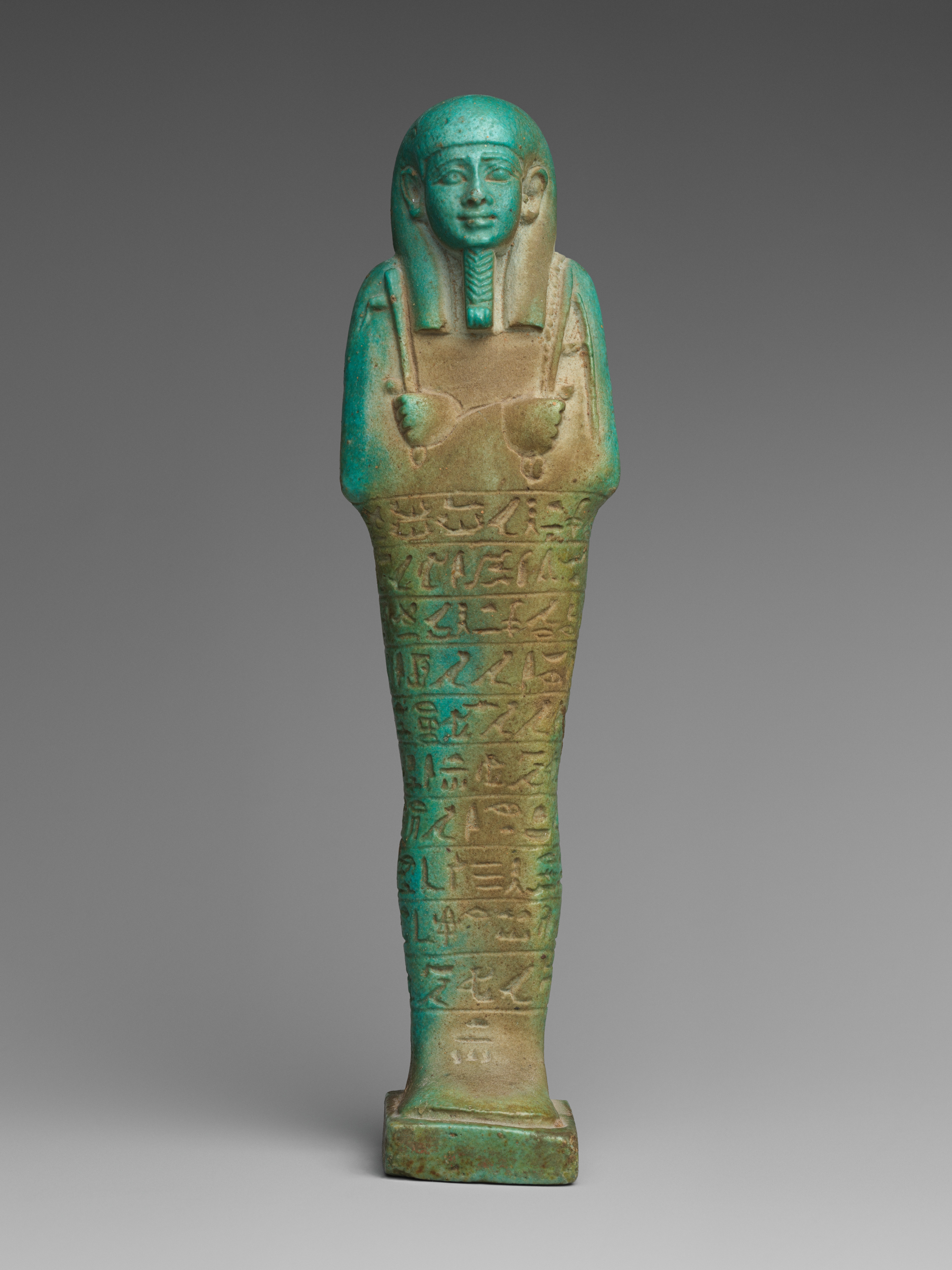
Executive Heritage Analysis: The Shabti of Tjanenhebu
This report presents a strategic heritage analysis of the Shabti of the Commander of the Royal Fleet Tjanenhebu, a faience figurine from ancient Egyptian civilization. As Lead Heritage Curator for Katherine Fashion Lab, I have conducted this standalone research to decode the object’s symbolic power, historical adornment practices, and spiritual meaning. The findings are then applied to a 2026 high-end luxury strategy, offering a blueprint for brand differentiation rooted in timeless cultural authority.
Symbolic Power: Authority, Labor, and Immortality
The Shabti as a Vessel of Command
The shabti figurine was not merely a funerary object; it was a potent symbol of hierarchical power and cosmic duty. For Tjanenhebu, a Commander of the Royal Fleet, the shabti served as a proxy laborer in the afterlife, tasked with performing agricultural work in the Fields of Iaru. This reflects a core paradox of ancient Egyptian belief: even the highest-ranking officials required manual labor to secure eternal comfort. The shabti thus embodies controlled authority—a commander’s will extended beyond death. In luxury terms, this translates to the concept of “effortless mastery.” The wearer of a Katherine Fashion Lab piece inspired by this motif signals not only status but also the ability to command resources and time, a key aspiration for the ultra-wealthy in 2026.
Material as a Marker of Eternal Status
Faience, a glazed ceramic material, was reserved for objects of high spiritual and social significance. Its brilliant blue-green hue, mimicking turquoise and lapis lazuli, was associated with rebirth, fertility, and the Nile’s life-giving waters. For Tjanenhebu, the choice of faience was deliberate: it communicated his access to precious materials and his alignment with divine forces. The shabti’s inscriptions, including his name and title, further reinforced his identity as a permanent fixture in the cosmic order. For Katherine Fashion Lab, this suggests that material selection—whether advanced textiles, bio-resins, or recycled precious metals—must carry narrative weight. A 2026 luxury strategy should prioritize material storytelling, where every component is chosen for its symbolic resonance, not just aesthetic appeal.
Historical Adornment: The Aesthetics of Divine Service
Form and Function in Funerary Fashion
The shabti of Tjanenhebu is a masterclass in minimalist yet potent design. Typically depicted as a mummiform figure with arms crossed over the chest, the shabti holds agricultural tools—a hoe, pick, and basket. These tools are not merely functional; they are adornments of duty, elevating labor to a sacred act. The figure’s headdress, often a simple wig or cap, and the painted facial features, create a sense of individualized dignity. This historical adornment practice teaches us that luxury need not be ornate to be powerful. In 2026, Katherine Fashion Lab can leverage architectural simplicity—clean lines, purposeful details, and a focus on the wearer’s role in a larger narrative. The shabti’s aesthetic suggests a collection where each garment or accessory includes a subtle, functional element (e.g., a detachable pouch or adjustable strap) that references the wearer’s own “tools” of influence.
Color as a Language of Power
The faience’s blue-green color was a direct link to the god Osiris, ruler of the underworld, and the goddess Hathor, associated with joy and motherhood. This color palette was not decorative; it was a visual declaration of spiritual alignment. For Tjanenhebu, wearing (or being accompanied by) this color ensured his soul’s safe passage. Katherine Fashion Lab can adopt a curated color philosophy for 2026, where each hue is tied to a specific cultural or spiritual meaning. A “Tjanenhebu Blue” could be trademarked, used sparingly in limited-edition pieces to signify exclusivity and eternal value. This approach moves beyond trend cycles, anchoring the brand in timeless symbolism.
Spiritual Meaning: The Afterlife as the Ultimate Luxury
The Commodification of Immortality
Ancient Egyptian spirituality held that the afterlife was a continuation of earthly life, but with higher stakes. The shabti was a spiritual asset, purchased or commissioned to ensure the deceased’s comfort. This commodification of immortality resonates with modern luxury consumers who seek legacy, permanence, and transcendence. The shabti’s spiritual meaning is clear: true luxury is not about acquisition but about securing one’s place in history. For Katherine Fashion Lab’s 2026 strategy, this suggests creating “legacy objects”—pieces that are not just worn but passed down, with embedded stories and provenance. A client might purchase a shabti-inspired pendant that includes a digital certificate of authenticity, linked to a blockchain record of their family’s history.
Ritual and the Luxury Experience
The placement of shabtis in tombs was a highly ritualized process, often accompanied by spells from the Book of the Dead. This ritual dimension offers a template for experiential luxury. In 2026, Katherine Fashion Lab could host private “anointing” ceremonies for clients, where a new collection piece is presented with a personalized narrative, much like a shabti was consecrated. This transforms the purchase into a spiritual transaction, deepening emotional attachment and brand loyalty. The shabti reminds us that luxury is most powerful when it engages the soul, not just the senses.
2026 High-End Luxury Strategy: The Shabti Blueprint
Strategic Pillar 1: Narrative Materiality
Katherine Fashion Lab should develop a “Faience Revival” material line, using modern ceramics, glazed metals, or advanced composites that mimic the shabti’s luminous finish. Each piece will be accompanied by a digital “Book of the Dead”—an augmented reality experience that reveals the object’s symbolic meaning. This aligns with the 2026 trend of phygital luxury, where physical objects are enhanced by digital storytelling. The shabti’s materiality teaches us that luxury is a multisensory dialogue between past and future.
Strategic Pillar 2: The Legacy Collection
Launch a “Tjanenhebu” capsule featuring 12 pieces, each corresponding to a shabti’s role (e.g., a “Harvester” trench coat with tool-shaped buttons, a “Navigator” scarf with Nile-inspired patterns). These pieces are not seasonal; they are permanent additions to the brand’s archive, sold only to clients who complete a heritage consultation. This scarcity model mirrors the shabti’s function as a personalized funerary object. The price point should reflect the object’s spiritual and historical weight, starting at $15,000 per piece.
Strategic Pillar 3: Ritualized Retail
Redesign flagship stores to include a “Chamber of Eternity”—a private room where clients can view their chosen piece under controlled lighting, accompanied by a curator who explains its symbolism. This mimics the tomb’s sacred space, turning the purchase into a rite of passage. The 2026 luxury consumer craves authenticity and meaning; this ritual offers both, differentiating Katherine Fashion Lab from competitors who rely on mere aesthetics.
Conclusion: From Ancient Command to Modern Legacy
The Shabti of the Commander of the Royal Fleet Tjanenhebu is far more than an archaeological artifact. It is a strategic masterclass in using symbolism, material, and ritual to project power and secure permanence. For Katherine Fashion Lab, this heritage analysis provides a robust foundation for a 2026 luxury strategy that prioritizes narrative depth, spiritual resonance, and timeless authority. By channeling the shabti’s essence, the brand can offer its clients not just fashion, but a place in history—a modern shabti for the soul.