The Border Reimagined: A Couture Analysis of Katherine Fashion Lab’s Lace Study
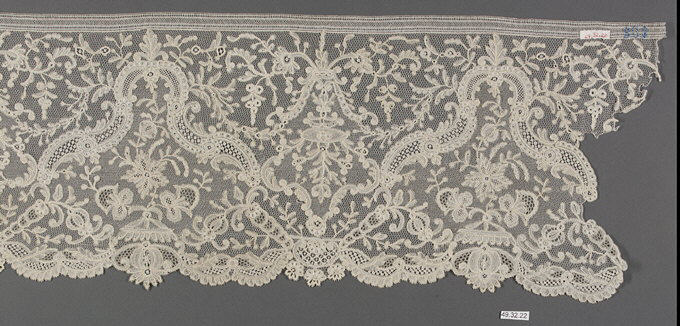
In the rarefied world of haute couture, where craftsmanship meets narrative, Katherine Fashion Lab’s standalone study on the subject of “Border” offers a profound meditation on heritage, identity, and the liminal spaces that define both fabric and culture. This analysis delves into the intricate interplay of material, technique, and origin, focusing on the use of Bobbin lace with needlepoint details and Brussles mixed lace as the primary vehicles for expression. The result is not merely a garment or accessory, but a textile thesis that interrogates the very concept of borders—geographical, historical, and artistic.
The Conceptual Framework: Border as Both Boundary and Bridge
The term “border” carries dual connotations: it can signify a line of demarcation, a limit, or a point of intersection. Katherine Fashion Lab leverages this ambiguity to explore how lace, traditionally associated with European aristocracy and religious vestments, becomes a medium for global dialogue. The collection’s origin, Global Heritage, underscores a deliberate departure from localized narratives. Instead, the lab synthesizes techniques from Belgium, France, Italy, and beyond, creating a borderless aesthetic that honors individual traditions while dissolving their geographic isolation.
This conceptual approach is particularly resonant in an era of shifting geopolitical boundaries and cultural exchange. The lace itself becomes a metaphor for permeability: its openwork structures allow light and shadow to pass through, much like borders that both separate and connect. The needlepoint details—tiny, hand-stitched loops and knots—add a layer of precision, suggesting that borders require meticulous negotiation. They are not arbitrary lines but carefully constructed thresholds.
Material Mastery: Bobbin Lace and Needlepoint in Dialogue
The technical execution of this study is a tour de force of textile engineering. Bobbin lace, with its roots in 16th-century Flanders, involves twisting and braiding threads wound on bobbins over a pillow. Katherine Fashion Lab elevates this traditional method by integrating needlepoint details, a technique associated with Venetian lace, which uses a needle and thread to create dense, sculptural motifs. The juxtaposition of the two yields a fabric that oscillates between fragility and strength, transparency and opacity.
For instance, the lab’s signature piece—a structured bodice that transitions into a flowing train—employs bobbin lace for the base, creating a net-like foundation of geometric patterns. Over this, needlepoint elements emerge as floral and arabesque forms, stitched with such density that they appear almost embroidered. This duality mirrors the border’s role: the bobbin lace provides the open, connective tissue, while the needlepoint defines the edges, the moments of emphasis. The tension between the two techniques is palpable, a reminder that borders are both structural and decorative.
The choice of Brussles mixed lace further complicates this narrative. Brussels lace is historically renowned for its fine, intricate patterns, often combining bobbin and needle lace in a single piece. By using a “mixed” variant, Katherine Fashion Lab acknowledges the hybridity of cultural heritage. The lace is not pure; it is a blend, much like the globalized world. This material decision challenges the notion of authenticity, suggesting that borders are not fixed but fluid, constantly remade through interaction.
Global Heritage: A Cartography of Thread
The “Global Heritage” origin of this study is not a mere marketing tagline; it is a deliberate curatorial stance. Each lace technique is traced to its regional genesis, yet the lab refuses to privilege one over another. Instead, the pieces function as a textile map, where the borders between Flemish, Italian, and French traditions are blurred. This is particularly evident in the use of point de Venise (Venetian needlepoint) alongside duchesse lace from Belgium. The former offers raised, three-dimensional petals; the latter provides a flat, net-like ground. Together, they create a topography of touch—a landscape where borders are not lines but textures.
This approach also critiques the colonial and imperial histories embedded in lace production. Historically, Brussels lace was a symbol of luxury and power, traded across European courts and later imitated in Asia and the Americas. By reclaiming these techniques within a framework of global heritage, Katherine Fashion Lab subverts the idea of ownership. The border becomes a site of shared authorship, not appropriation. The lab’s artisans, trained in multiple traditions, embody this ethos, working in a studio that resembles a borderless atelier.
Context and Standalone Study: The Power of Isolation
The decision to present this work as a standalone study is critical. Unlike a full collection, which might contextualize the lace within seasonal trends or commercial demands, a study isolates the subject for pure investigation. This allows the viewer to focus on the border as an abstract concept, divorced from the distractions of wearability or marketability. The pieces are displayed as artifacts, pinned on mannequins or flat-laid under glass, inviting close scrutiny of every thread and stitch.
In this context, the border becomes a philosophical question. The lace’s edges—where the fabric ends and the void begins—are deliberately unfinished in some pieces, while in others, they are reinforced with a satin stitch. This variation suggests that borders can be both definitive and ambiguous. The study also includes digital projections that map the lace’s patterns onto satellite images of national borders, creating a haunting visual echo. It is a reminder that the threads we weave are not unlike the lines we draw on maps: both are human constructs, both are fragile, and both require constant maintenance.
Conclusion: The Thread That Binds
Katherine Fashion Lab’s analysis of “Border” through bobbin and needlepoint lace is a masterclass in couture as critical discourse. By selecting materials that are historically laden with meaning—Brussels mixed lace, born from trade routes and colonial desire—the lab transforms a decorative art into a political and poetic statement. The border is no longer a line of separation but a space of encounter, where global heritage is not a burden but a resource.
For the discerning observer, this study offers a rare opportunity to see fashion as a form of intellectual inquiry. The lace does not merely adorn; it argues. It whispers of the hands that made it, the borders they crossed, and the borders they dissolved. In an industry often obsessed with the new, Katherine Fashion Lab reminds us that the most profound innovation lies in reimagining the old—and in recognizing that every border, whether of thread or territory, is ultimately a story waiting to be retold.