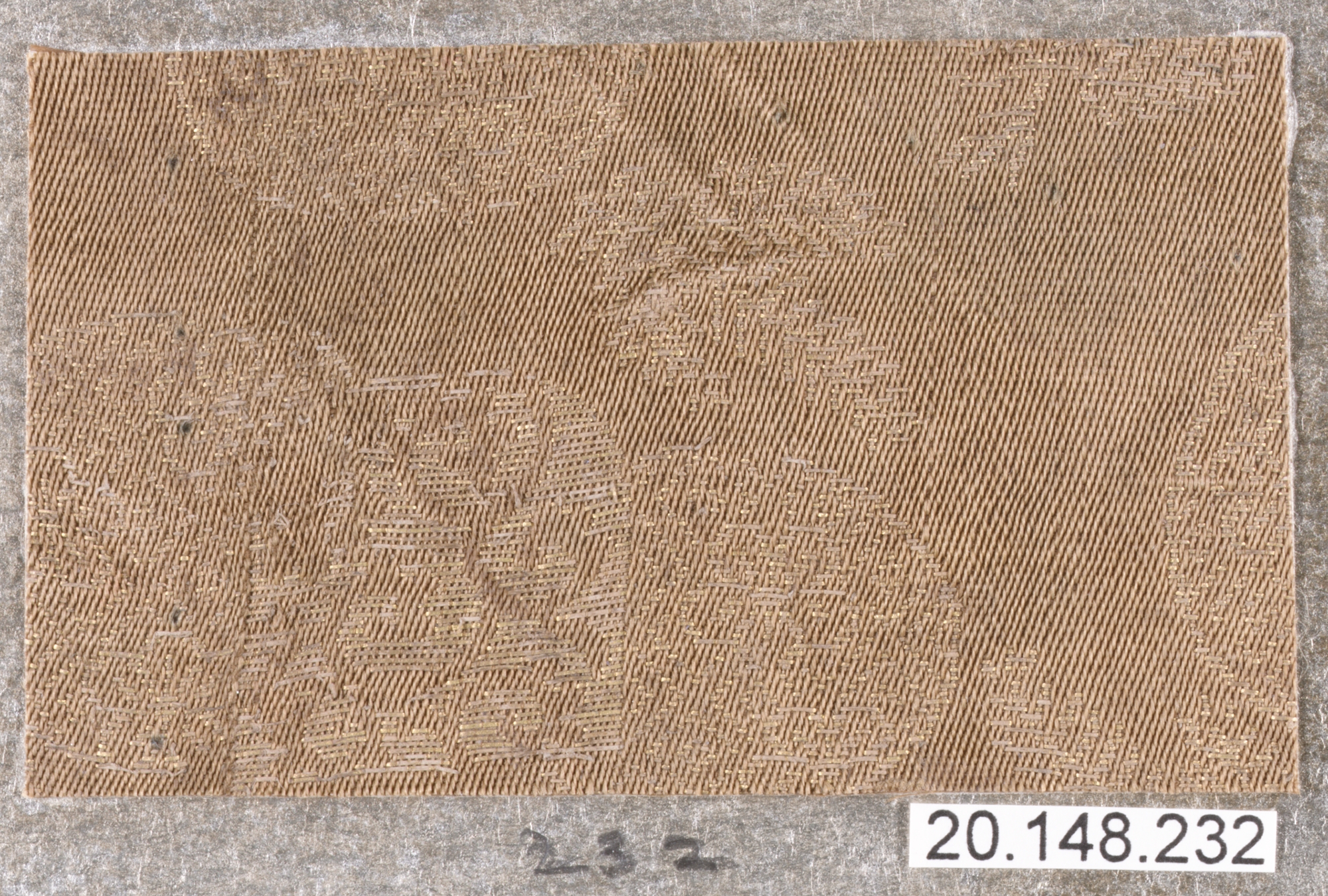
Heritage Analysis: The Japanese Silk Compound Weave as a Strategic Asset for Katherine Fashion Lab
This report presents a strategic heritage analysis of a singular textile artifact: a Japanese silk compound weave. The research is conducted as a standalone inquiry, intended to inform the 2026 high-end luxury strategy for Katherine Fashion Lab. By examining the piece through the lenses of symbolic power, historical adornment, and spiritual meaning, this analysis provides a framework for translating deep cultural resonance into tangible brand equity. The findings underscore that this textile is not merely a material but a repository of authority, ritual, and exclusivity—qualities directly transferable to a modern luxury context.
Symbolic Power: The Weave as a Language of Authority
Hierarchical Encoding in Thread
The compound weave structure of this Japanese silk piece is a deliberate, encoded system of power. Historically, such weaves—specifically those utilizing multiple warp and weft systems, often with supplementary patterning threads—were reserved for the aristocratic and military elite of Japan. The complexity of the weave directly correlated with the social standing of the wearer. A single piece could require months of labor from master artisans, making it an immediate, non-verbal declaration of rank. For Katherine Fashion Lab, this translates into a strategic principle: exclusivity is not a marketing tactic but a technical reality. In 2026, the brand can position its use of such weaves as a return to a pre-industrial standard of craftsmanship, where the time to produce a garment is itself a luxury metric.
Motifs of Dominion
Symbolic power is further embedded in the motifs woven into the compound structure. Common patterns include kiri (paulownia), kiku (chrysanthemum), and ryu (dragon), each carrying specific imperial or martial connotations. The chrysanthemum, for instance, is the crest of the Imperial Household. By incorporating such motifs—or their abstracted, contemporary equivalents—Katherine Fashion Lab can imbue its 2026 collections with a coded language of sovereignty. This is not about literal reproduction but about strategic allusion. A compound weave that subtly references a dragon scale or a chrysanthemum petal pattern signals to the discerning client that the garment belongs to a lineage of dominion, not mere decoration.
Historical Adornment: The Body as a Site of Cultural Narrative
From Armor to Attire
The historical use of compound weave silks in Japan reveals a profound connection between adornment and identity. During the Heian period (794–1185), the juni-hitoe (twelve-layered robe) of court ladies used complex weaves to create a spectrum of color that indicated season, rank, and poetic sensibility. In the Edo period (1603–1868), the kimono of the merchant class, despite sumptuary laws, used compound weaves to display wealth through textile innovation rather than overt ostentation. This history teaches that adornment is a form of social negotiation. For Katherine Fashion Lab, the 2026 strategy should treat each garment as a historical document. When a client wears a piece crafted from a compound weave, they are not just wearing a fabric; they are wearing a narrative of status, rebellion, and cultural preservation. The brand can leverage this by offering a "provenance note" with each piece, detailing the weave's historical analogues, thus transforming a purchase into an act of cultural stewardship.
The Art of the Hidden Detail
A critical aspect of historical Japanese adornment is the concept of ura-omote (front and back) or the hidden beauty. Compound weaves often featured patterns that were only visible under certain light or from specific angles. This aligns perfectly with the modern luxury client's desire for understated opulence. In 2026, Katherine Fashion Lab can design pieces where the compound weave’s full complexity is revealed only in motion—a sleeve turning, a dress swishing. This creates an intimate experience between the garment and the observer, elevating the brand from mere fashion to a form of private theater.
Spiritual Meaning: The Fabric as a Conduit for the Sacred
Shinto and Buddhist Resonances
In Japanese spiritual tradition, silk is not inert. It is considered a material with kami (spiritual essence), particularly when woven with intention. The compound weave, with its multiple layers and threads, is often seen as a microcosm of the universe—interconnected, ordered, and sacred. Historically, such weaves were used in shinto shrine vestments and buddhist altar cloths, where the act of weaving was a meditative practice. For Katherine Fashion Lab, this spirituality offers a powerful differentiation. In a 2026 market saturated with digital and synthetic experiences, a garment made from a hand-loomed compound weave can be marketed as a talisman of focus and tranquility. The brand can emphasize the "breath" of the artisan in each piece, positioning the garment not just as clothing but as a wearable meditation.
Wabi-Sabi and the Imperfect Perfect
The spiritual aesthetic of wabi-sabi—the beauty of imperfection and transience—is inherently present in historical compound weaves. The slight irregularities in hand-spun silk threads, the subtle shifts in pattern registration, are not flaws but signatures of humanity. For the 2026 luxury consumer, who is increasingly disillusioned with mass-produced perfection, this is a profound value proposition. Katherine Fashion Lab can strategically embrace wabi-sabi by allowing the natural characteristics of the silk and the weave to remain visible. A slight asymmetry in a pattern or a subtle variation in sheen becomes a mark of authenticity, a spiritual connection to the maker. This approach transforms the garment from a commodity into a relic, imbued with the spirit of its creation.
Strategic Implications for 2026 High-End Luxury
Positioning: Heritage as a Differentiator
In the 2026 luxury landscape, where "heritage" is often a marketing claim rather than a technical reality, Katherine Fashion Lab can achieve true differentiation by grounding its strategy in the literal heritage of the compound weave. This is not about a "Japanese-inspired" collection but about a direct lineage of technique. The brand should invest in partnerships with the few remaining master weavers of Kyoto or Kiryu, ensuring that the compound weave pieces are produced using authentic methods. This creates a barrier to entry that competitors cannot easily replicate.
Pricing and Scarcity
The compound weave's historical association with elite power justifies a supreme pricing strategy. Each piece produced should be limited to a single edition or a very small run (e.g., 5–10 pieces globally). The price point must reflect not only the material and labor but also the symbolic and spiritual value. A 2026 Katherine Fashion Lab compound weave gown should be positioned as an heirloom asset, comparable in investment value to fine jewelry or art.
Client Experience: The Ritual of Purchase
The acquisition of a compound weave piece should be a ritual. Katherine Fashion Lab can develop a bespoke "weave consultation" where the client selects the motif, color, and weave structure, with the production timeline communicated as a sacred process. The delivery should include a hand-written provenance document and a silk storage bag, reinforcing the garment's status as a spiritual and historical artifact. This transforms a transaction into a rite of passage.
2026 Collection Narrative: "The Sovereign Thread"
The recommended collection theme for 2026 is "The Sovereign Thread." This narrative weaves together the symbolic power of the compound weave (sovereignty), its historical use in adornment (the thread of lineage), and its spiritual meaning (the thread of life). The collection should feature silhouettes that respect the fabric's rigidity and drape—structured outerwear, floor-length coats, and sculptural dresses—allowing the weave's complexity to dominate. Marketing materials should focus on the artisan's hands, the loom's rhythm, and the client's role as a custodian of culture.
In conclusion, the Japanese silk compound weave is not merely a textile for Katherine Fashion Lab; it is a strategic asset that bridges the past and the future. By honoring its symbolic, historical, and spiritual dimensions, the brand can create a 2026 luxury offering that is profoundly authentic, deeply exclusive, and commercially powerful. The piece is the strategy.