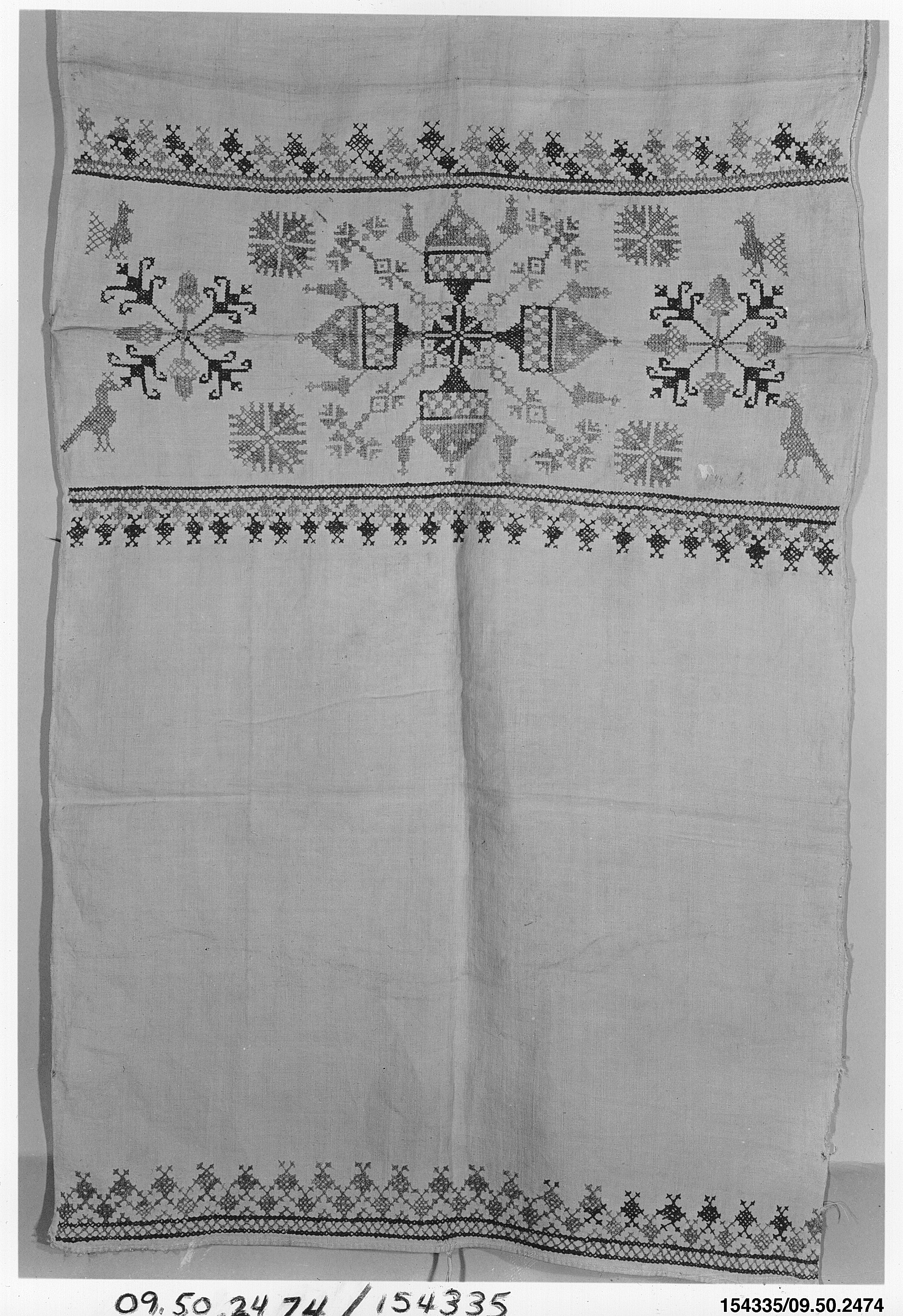
The Cover: A Study in Architectural Linen and Global Heritage
In the rarefied world of haute couture, where fabric often serves as a vehicle for ornamentation, the humble cover—a garment defined by its protective, enveloping function—rarely receives the analytical gravity it deserves. Yet, within the Katherine Fashion Lab’s latest standalone study, the cover is reimagined not as a mere utilitarian shell, but as a profound architectural statement. This analysis dissects the Lab’s interpretation of the cover, executed in pure linen, and grounded in a narrative of global heritage. The result is a piece that transcends seasonal trends, offering a masterclass in material integrity, cultural synthesis, and sculptural form.
Material as Metaphor: The Linen Imperative
The choice of linen is not incidental; it is the foundational thesis of this collection. Linen, derived from the flax plant, carries a lineage that spans millennia—from the burial shrouds of ancient Egyptian pharaohs to the sumptuary laws of medieval Europe. Its fibers are among the strongest natural textiles, yet they possess a unique, almost paradoxical, breathability. Katherine Fashion Lab leverages this duality to articulate a cover that is at once protective and porous. The fabric’s inherent crispness is preserved through a meticulous finishing process, avoiding the softening agents that often compromise its structural integrity. This allows the cover to hold its shape with the rigidity of a shell, while the natural wrinkles—often deemed imperfections in lesser garments—are celebrated as tactile evidence of the wearer’s journey.
The Lab’s material sourcing strategy further elevates the linen’s provenance. Fibers are drawn from heritage mills in Northern Ireland and Normandy, regions where flax cultivation is an art passed down through generations. Each yard of fabric is subjected to a cold-water retting process, a traditional method that preserves the fiber’s length and luster. The result is a textile that glows with a subtle, matte sheen, refusing the synthetic gloss of modern blends. In a standalone study, this material honesty becomes the garment’s primary language—a declaration that luxury need not be loud.
Architectural Silhouette: The Cover as Second Skin
The silhouette of this cover is where the Lab’s design philosophy converges with global heritage. It draws inspiration from the kimono’s modular geometry, the burnous’s hooded drape, and the poncho’s seamless wrap. Yet, it avoids direct pastiche. Instead, the cover is constructed from a single, continuous piece of linen, cut and folded to create an asymmetrical front closure that mimics the flight of a bird’s wing. The shoulders are reinforced with a hidden linen-canvas interlining, allowing the garment to stand away from the body without collapsing. This creates a negative space—a pocket of air—between the wearer and the fabric, which the Lab refers to as the “breathing volume.”
The hood, a hallmark of the cover archetype, is reimagined as a sculptural cowl. It is cut on the bias to achieve a fluid drape that frames the face without obscuring it. When worn, the cowl can be adjusted to fall over one shoulder, revealing the garment’s inner lining—a contrasting panel in raw, unbleached linen that references the unfinished edges of Japanese boro textiles. This detail is not mere decoration; it is a deliberate nod to the philosophy of wabi-sabi, where imperfection is revered as a record of the object’s history.
Global Heritage: A Cartography of Influence
To understand this cover is to trace a map of global textile traditions. The Lab’s research team conducted field studies across three continents, documenting the construction techniques of indigenous garments. From the Mongolian deel—a long, wrap-front coat secured with a sash—they borrowed the principle of asymmetrical wrapping that allows for ease of movement. From the North African djellaba, they adopted the integrated hood as a functional element, not an afterthought. And from the South American poncho, they internalized the rectangular cut that minimizes waste—a sustainable practice that predates modern eco-consciousness by centuries.
The cover’s palette is equally global. The primary hue is a “sun-bleached ochre,” achieved through a natural dye process using pomegranate rinds and alum. This color evokes the red earth of the Sahel, the terracotta of Mediterranean rooftops, and the dried flax fields of Ireland. The stitching, executed in a contrasting indigo thread, is left exposed along the seams—a technique borrowed from West African indigo-dyeing traditions, where the thread is often dyed separately to create a visual tension. The result is a garment that tells a story of cross-continental dialogue, where each stitch is a sentence in a shared textile language.
Contextualizing the Study: Standalone as Statement
This analysis exists within a standalone study, meaning the cover is not part of a larger collection or seasonal narrative. This context is critical. By isolating the garment, Katherine Fashion Lab forces the viewer to confront the cover on its own terms. There are no distracting accessories, no complementary trousers or skirts. The cover is the entire proposition. This decision speaks to the Lab’s belief that a single, well-considered garment can be a complete wardrobe—a philosophy rooted in the capsule wardrobe movement and the slow fashion ethos.
In a fashion industry increasingly defined by volume and velocity, the standalone cover becomes a radical act. It challenges the consumer to ask: What is the minimum number of garments required to express maximum identity? The Lab’s answer, embodied in this linen cover, is one. The garment functions as a coat, a dress, a shawl, and a shelter. It can be worn over a silk slip for evening or layered over denim for day. Its versatility is not a compromise but a design feature, achieved through the strategic placement of internal ties and adjustable toggles that allow the wearer to transform the silhouette at will.
Technical Precision: The Unseen Craft
What elevates this cover from a conceptual piece to a couture artifact is the technical precision of its construction. Each seam is finished with a French seam—a technique that encases raw edges within the seam allowance, ensuring durability and a clean interior. The hem is weighted with a linen cord inserted into a hand-stitched channel, allowing the garment to fall with a deliberate, weighted grace. The buttonholes, often a weak point in linen garments, are reinforced with silk gimp thread, a traditional couture technique that prevents fraying under stress.
The cover’s closure system is a study in itself. Rather than buttons or zippers, the garment uses hand-carved horn toggles sourced from a family workshop in the Italian Alps. These toggles are paired with braided linen loops, creating a closure that is both functional and tactile. The toggles are left unpolished, retaining the natural striations of the horn—a subtle reminder of the organic origins of all materials.
Conclusion: The Cover as Cultural Archive
In the final analysis, Katherine Fashion Lab’s linen cover is more than a garment; it is a portable archive of global heritage. It archives the wisdom of ancient weavers, the precision of medieval tailors, and the ingenuity of indigenous artisans. It archives the breath of flax fields and the weight of earth pigments. And it archives the possibility of a fashion system that values integrity over speed, and narrative over novelty.
For the discerning collector, this cover is not an acquisition but an investment in a philosophy. It asks the wearer to slow down, to feel the grain of the linen, to adjust the cowl with intention. In a world of disposable trends, the Katherine Fashion Lab cover stands as a testament to the enduring power of a single, perfect piece. It is, quite simply, a cover for the ages.