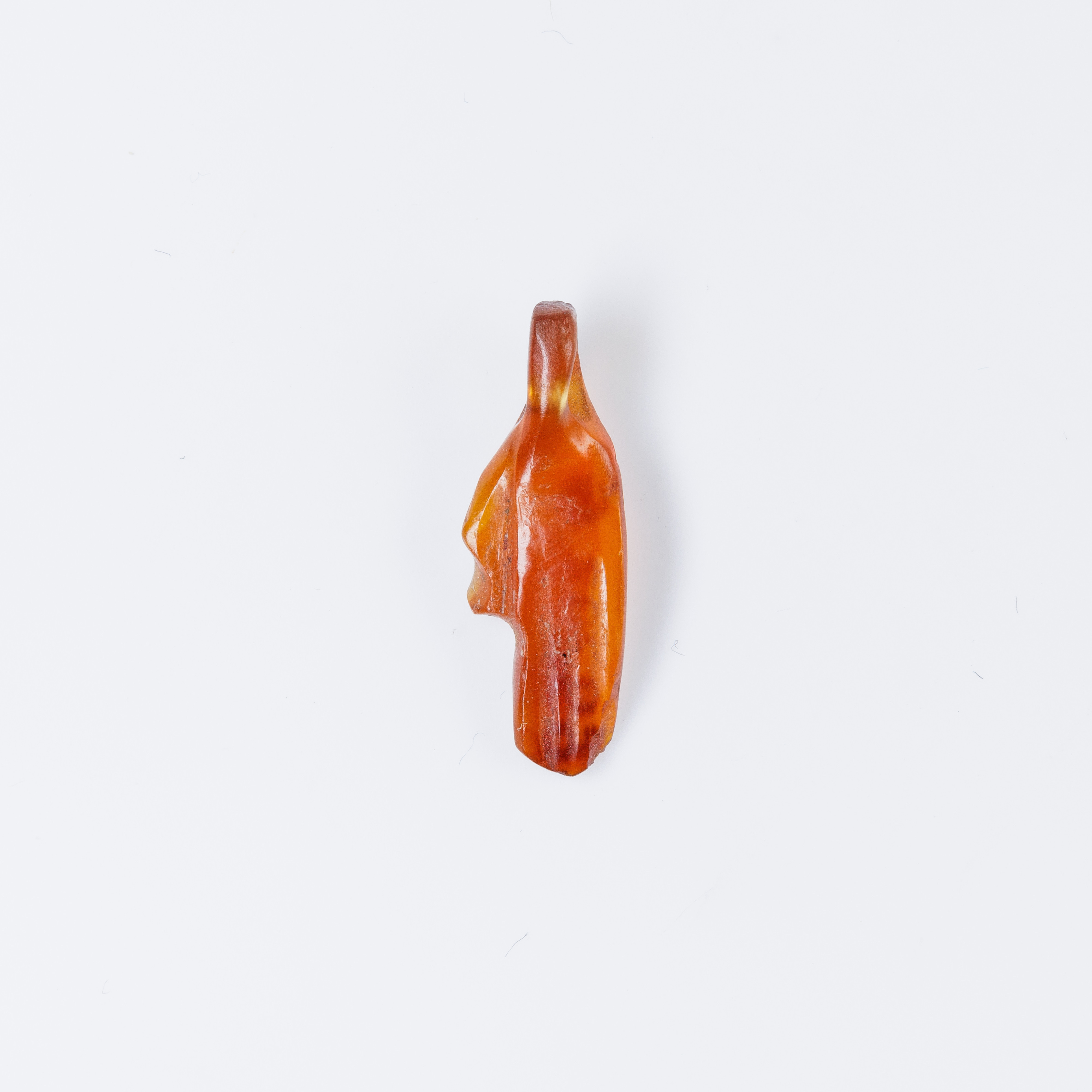
Executive Heritage Analysis: The Carnelian Hand Amulet
This strategic standalone research paper examines the carnelian hand amulet as a potent artifact of ancient civilization, focusing on its symbolic power, historical adornment practices, and spiritual meaning. The analysis concludes with a curated 2026 high-end luxury strategy for Katherine Fashion Lab, positioning this talisman as a cornerstone of heritage-driven brand elevation.
Symbolic Power: The Protective Gesture
The hand amulet, often rendered as an open right hand or a fist with extended index and little fingers, is one of humanity’s oldest apotropaic symbols. In ancient Mesopotamia, Egypt, and the Levant, the hand represented divine authority, warding off evil, and channeling protective energy. The gesture, known as the hamsa or Mano Cornuta in later traditions, was believed to deflect the “evil eye” and neutralize malevolent forces. For Katherine Fashion Lab, this symbolic power translates into a narrative of empowerment and resilience—qualities that resonate deeply with luxury consumers seeking meaning beyond aesthetics.
Carnelian, a translucent red-orange chalcedony, amplifies this symbolism. In ancient Egypt, carnelian was associated with the blood of the goddess Isis and the life force of the sun god Ra. It was placed in tombs to guide the soul, worn by warriors for courage, and used in amulets to promote vitality. The combination of the hand form and carnelian creates a dual-layer protective system: the hand acts as a physical barrier, while carnelian’s fiery hue invokes solar energy, courage, and creative drive. This synergy is critical for positioning the amulet as a power object in a 2026 luxury context, where consumers increasingly seek objects that offer psychological security and personal agency.
Historical Adornment: Status, Ritual, and Daily Life
Archaeological evidence from sites such as Ur, Thebes, and Byblos reveals that hand amulets were not mere ornaments but functional talismans integrated into daily life. They were worn as pendants on necklaces, sewn into garments, or carried in pouches. In ancient Egypt, carnelian hand amulets were often included in funerary jewelry, ensuring the deceased’s protection in the afterlife. In Mesopotamia, they were exchanged as diplomatic gifts, signifying alliance and mutual protection between city-states. The material—carnelian—was itself a status marker. Its deep, consistent color required skilled lapidary work, and its rarity made it accessible only to elites, priests, and royalty.
For Katherine Fashion Lab, this history offers a rich narrative of exclusivity and ritual. The amulet was not mass-produced; each piece was carved with intention, often inscribed with prayers or names of deities. This aligns with the modern luxury consumer’s desire for artisanal craftsmanship and personalized storytelling. By referencing ancient adornment practices—such as layering the amulet with other protective stones or incorporating it into ceremonial dress—the Lab can create a collection that feels both ancient and avant-garde.
Spiritual Meaning: The Talisman as Inner Compass
Beyond physical protection, the carnelian hand amulet held profound spiritual significance. In ancient cultures, it was believed to anchor the wearer’s soul during times of transition—birth, marriage, travel, and death. Carnelian’s association with the sacral chakra and the root chakra in later metaphysical systems underscores its role in grounding creative energy while fostering courage. The hand, as an extension of the self, symbolized agency and action. Together, the amulet served as a reminder that the wearer possessed the inner strength to navigate life’s challenges.
This spiritual dimension is particularly relevant for 2026 luxury consumers, who are increasingly drawn to mindful consumption and objects with soul. The amulet is not a passive accessory but an active participant in the wearer’s well-being. For Katherine Fashion Lab, this opens opportunities for ritual-based marketing—such as a “blessing ceremony” at point of sale, or collaboration with spiritual practitioners to create a narrative of activation. The amulet becomes a personal totem, not just a fashion statement.
2026 High-End Luxury Strategy: The Carnelian Hand Amulet as Brand Cornerstone
To leverage the carnelian hand amulet for 2026, Katherine Fashion Lab must adopt a strategy that transcends mere replication. The following pillars are recommended:
1. Artisanal Reissue with Provenance
Partner with master lapidaries from regions historically associated with carnelian carving, such as Gujarat, India, or Idar-Oberstein, Germany. Each amulet should be hand-carved from ethically sourced carnelian, with a certificate of authenticity detailing its geological origin, carving lineage, and symbolic meaning. This creates a scarcity-driven narrative—limited to 100 pieces per year—mirroring the exclusivity of ancient elite adornment.
2. Narrative-Driven Collection Architecture
Position the amulet within a broader collection titled “The Protective Hand: Ancient Guardians for Modern Times.” Include complementary pieces such as carnelian rings, earrings, and cufflinks, all referencing the hand motif. Use digital storytelling—short films, AR experiences, and scholarly essays—to immerse clients in the amulet’s journey from ancient tomb to modern wardrobe. Each piece should be accompanied by a ritual guide explaining how to “activate” the amulet through intention setting.
3. Experiential Retail and Private Events
Launch the collection with a private exhibition at a heritage venue, such as a museum’s ancient art wing. Host curator-led talks on the symbolism of the hand and carnelian, followed by a blessing ceremony conducted by a cultural historian or spiritual guide. Offer clients the option to have their amulet personally inscribed with a protective symbol or initial, reinforcing the idea of a bespoke talisman.
4. Strategic Collaborations and Cultural Capital
Collaborate with a contemporary artist known for exploring ancient symbolism, such as Anish Kapoor or Yayoi Kusama, to create a limited-edition amulet. Alternatively, partner with a luxury wellness brand—like La Mer or Susanne Kaufmann—to co-create a “protection and renewal” set that includes the amulet and a skincare ritual. This bridges the gap between spiritual luxury and wellness culture, a dominant trend for 2026.
5. Digital Authentication and Blockchain Integration
Embed each amulet with a blockchain-based provenance record, allowing clients to trace its journey from mine to atelier. This appeals to the growing cohort of conscious luxury collectors who value transparency and heritage. The digital record can also include a virtual “activation” via an app, where the client receives a personalized affirmation or meditation based on the amulet’s ancient meaning.
Conclusion: The Amulet as a Bridge Across Time
The carnelian hand amulet is far more than a decorative object; it is a living artifact that carries millennia of protective, spiritual, and status-driven meaning. For Katherine Fashion Lab, this heritage analysis reveals a clear path to 2026 luxury leadership: authenticity, scarcity, and ritual. By honoring the amulet’s ancient roots while reimagining it for contemporary desire, the Lab can create a product that not only adorns but empowers—a talisman for the modern elite seeking connection, protection, and purpose in an increasingly fragmented world.