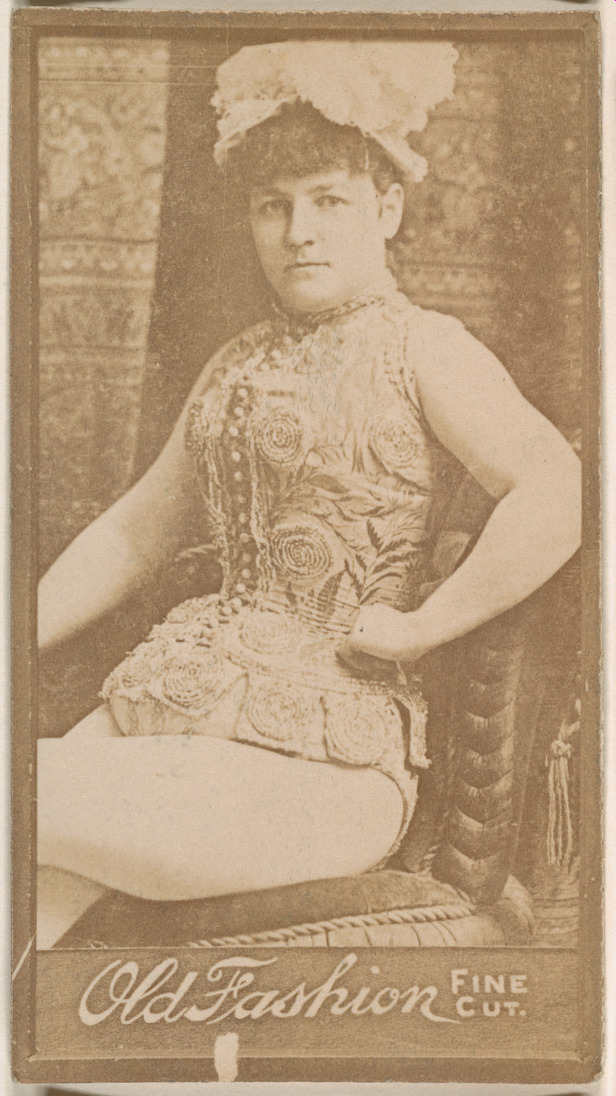
Theatrical Stillness: Deconstructing the Actress in the Chair
Within the annals of late 19th-century commercial photography, the Actresses series (N664) for Old Fashion Fine Cut Tobacco represents a fascinating intersection of nascent celebrity culture, theatrical artifice, and the emerging language of commodity branding. The subject under analysis—an actress seated in a chair—is a standalone study that transcends its promotional origins to become a compelling artifact of sartorial and performative identity. For Katherine Fashion Lab, this albumen photograph offers a rich case study in how posture, fabric, and photographic technique conspire to construct a narrative of poised femininity, one that resonates with contemporary haute couture’s obsession with controlled elegance.
The Architecture of the Pose: Power in Passivity
The seated posture is deceptively simple. The actress does not slump; she occupies the chair with a deliberate, almost architectural precision. Her spine is elongated, shoulders drawn back, creating a vertical line that anchors the composition. This is not a casual recline but a staged presentation of self. In the context of late 1800s portraiture, a seated figure often signified accessibility without intimacy—a performer available for the viewer’s gaze, yet protected by the formality of the setting. The chair itself, likely a Victorian parlor piece with carved wood and plush upholstery, functions as a throne, elevating her from the mundane. The fabric of her gown—presumably a heavy silk or velvet with discernible folds—catches the studio light, emphasizing texture over movement. This stillness is a directorial choice: the actress is not caught in a dramatic scene but is instead frozen in a moment of potential. For modern couture, this speaks to the power of the static silhouette. A garment must first command attention in repose before it can captivate in motion.
Draping the Narrative: Fabric as Stage
The dress’s construction is a masterclass in the grammar of 19th-century fashion. The bodice is structured, likely boned, creating a rigid corseted torso that contrasts sharply with the softer, billowing skirt. This dichotomy—control above, release below—is a recurring motif in theatrical costume. The sleeves are elaborate, possibly with a leg-of-mutton or pagoda silhouette, drawing the eye outward and emphasizing the breadth of the shoulders. The neckline, modest but not prudish, frames the actress’s face and décolletage, directing attention to her expression. The fabric’s sheen suggests a luxurious material, perhaps a shot silk that shifts color in the light, a detail that the albumen process captures with remarkable depth. The skirt’s drapery falls in heavy, sculptural folds, pooling around the chair legs. This is not a dress that moves freely; it is a garment that announces its own weight. In contemporary terms, this is analogous to the use of substantial, architectural fabrics in haute couture—think of a structured ball gown by Giambattista Valli or a sculptural piece from Iris van Herpen. The fabric is not merely covering the body; it is creating volume, shadow, and a palpable sense of presence.
The Photographic Gaze: Light, Shadow, and the Commercial Imperative
As an albumen photograph, the image carries a distinct tonal quality—warm sepia tones, soft focus, and a high contrast that accentuates the actress’s features and the garment’s details. The lighting is theatrical: a key light from the front-left casts a gentle shadow to the right, modeling the contours of her face and the folds of the dress. This is not the flat, uniform lighting of a passport photo; it is a cinematic illumination that creates depth and drama. The actress’s gaze is direct, meeting the camera with a composed, almost challenging look. She is not demure; she is aware of her role as a commodity. The tobacco company’s logo or text is absent from this standalone study, allowing the image to function as an autonomous work of art. This commercial context, however, is crucial. The actress is selling not just tobacco but an aspirational identity—a vision of sophistication, leisure, and beauty. The dress, the chair, the lighting—all are props in this transaction. For the modern fashion analyst, this reveals the enduring truth that every photograph is a negotiation between the subject, the garment, and the market.
Global Heritage and the Universal Feminine
The designation of “Global Heritage” for this image is particularly telling. While the actress is likely American or European, the visual language she embodies—the corseted silhouette, the theatrical pose, the luxurious fabric—draws on centuries of cross-cultural exchange. The albumen process itself, invented in France, became the dominant photographic medium worldwide. The chair’s design might reference Rococo, Gothic, or even Orientalist motifs, reflecting the 19th-century fascination with global aesthetics. This fusion of influences creates a universal archetype of the actress: a figure who is both of her time and timeless. In Katherine Fashion Lab’s curation, this photograph serves as a reminder that heritage is not a static concept but a living dialogue between past and present. The actress’s dress, with its structured bodice and flowing skirt, echoes the silhouettes of ancient Greek chitons, Renaissance farthingales, and the bustles of the 1880s. It is a garment that carries the weight of history while being utterly contemporary in its execution.
Implications for Contemporary Couture
For the modern designer, this photograph offers three key lessons. First, the power of the pose. A garment’s true test is how it appears in stillness, when the wearer is not walking a runway but sitting, thinking, being. The actress’s posture teaches us that confidence is expressed through the spine, not just the fabric. Second, the narrative of texture. The albumen print’s ability to capture subtle variations in sheen and shadow reminds us that fabric is a storytelling device. A couture gown must have visual depth—a play of light and dark that changes with every angle. Third, the commercial soul of art. This photograph was made to sell cigarettes, yet it endures as a work of aesthetic merit. The fashion industry must embrace this duality: that commerce and creativity are not enemies but collaborators. The actress in the chair is not diminished by her commercial purpose; she is elevated by it, becoming a symbol of how beauty can be both a product and a pursuit.
Conclusion: The Enduring Gaze
The Actress in the Chair from the Old Fashion Fine Cut Tobacco series is far more than a historical curiosity. It is a testament to the power of stillness, the eloquence of fabric, and the enduring allure of the staged self. For Katherine Fashion Lab, this image serves as a touchstone for understanding how fashion, photography, and commerce have always been intertwined. The actress’s direct gaze, her poised yet accessible posture, and the luxurious drape of her gown speak to a universal truth: that couture is not merely about clothing the body but about framing the soul. In an era of rapid digital consumption, this albumen photograph reminds us of the value of a single, deliberate moment—a moment when a woman, a chair, and a dress conspired to create an image that still captivates, over a century later. This is the essence of heritage: not a relic, but a living inspiration for the future of fashion.