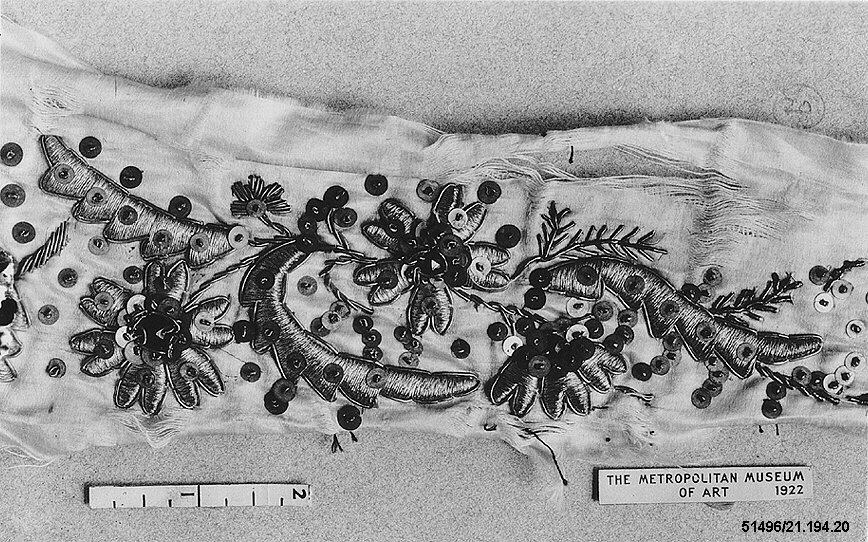
The Fragment as a Complete Narrative: Deconstructing Global Heritage Through Metal Thread on Silk
In the rarefied realm of haute couture, the fragment is often perceived as an incomplete whisper—a vestige of a larger, lost whole. Yet, in the latest standalone study from Katherine Fashion Lab, the fragment is repositioned not as a remnant, but as a deliberate, self-sufficient statement. This analysis dissects the lab’s exploration of a singular subject: the Fragment, rendered through the medium of metal thread on silk, and rooted in a concept of Global Heritage. The piece, presented as a standalone study rather than part of a collection, offers a profound meditation on memory, materiality, and the poetics of imperfection.
Conceptual Framework: The Fragment as a Universal Language
Katherine Fashion Lab’s choice to center the Fragment is a deliberate departure from the conventional couture obsession with completeness. In a world saturated with fast fashion and digital perfection, the fragment evokes authenticity. It speaks to the human condition—our histories are not seamless narratives but collages of broken moments, inherited traditions, and reimagined futures. The lab draws from a Global Heritage that transcends geographic boundaries: the fragment is not a relic of one culture but a universal artifact of human making. It references the shattered ceramics of the Ming dynasty, the torn textiles of Andean weavers, and the fractured manuscripts of medieval Europe. By abstracting these references into a single garment, the lab argues that heritage is not a fixed archive but a mutable, fragmented dialogue across time and place.
The standalone study format further amplifies this concept. Without the context of a runway narrative or a seasonal theme, the viewer is forced to confront the object on its own terms. There is no story to distract from the material truth. The Fragment becomes a singular artifact—a couture specimen that demands close reading, much like a museum piece. This curatorial approach elevates the garment from fashion to art, inviting analysis of its structural and symbolic integrity.
Material Alchemy: Metal Thread on Silk
The choice of materials is central to the piece’s resonance. Silk, a fabric synonymous with luxury, fluidity, and organic warmth, is juxtaposed with metal thread—cold, rigid, and industrial. This dichotomy is not merely aesthetic; it is philosophical. The silk represents the ephemeral, the soft, the body’s memory. The metal thread, often associated with armor, circuitry, and permanence, introduces tension. Together, they create a textile that is both delicate and unyielding, a metaphor for the fragment itself: a broken piece that still holds structural power.
Technically, the execution is a feat of couture craftsmanship. The metal thread—likely a blend of fine silver or copper yarns—is hand-embroidered onto the silk base using techniques that blend traditional broderie d’art with experimental freehand stitching. The thread is not woven but applied, creating irregular, tactile surfaces that catch light in unpredictable ways. The fragment is not a clean cut; it is a jagged, organic shape, with frayed silk edges left raw to emphasize the rupture. The metal thread traces these edges, sometimes mimicking the silk’s weave, sometimes breaking away into abstract, calligraphic lines. This interplay suggests a dialogue between the organic and the engineered, the ancient and the modern.
From a sustainability perspective, the use of metal thread on silk also gestures toward longevity. Unlike synthetic embellishments that degrade, metal thread endures. The fragment, in this sense, is not a waste product but a preservation of value. The lab challenges the fashion industry’s obsession with newness by celebrating the broken, the repaired, and the reclaimed.
Structural Analysis: The Fragment as Architecture
The garment’s silhouette is deliberately ambiguous. It is neither a dress, a jacket, nor a cape—it is a fragment of a garment. The piece drapes asymmetrically over one shoulder, with a single sleeve that ends mid-forearm, while the other side is left bare, exposing the silk’s reverse. The cut is sharp yet organic, as if torn from a larger whole. The metal thread embroidery concentrates around the neckline and the hem, creating a visual weight that anchors the piece. This asymmetry is not random; it is a calculated study in balance. The fragment, despite its incompleteness, achieves a gravitational equilibrium—a lesson in how absence can define form.
The lab’s approach to volume is equally intentional. The silk is left unlined in places, allowing the fabric to breathe and move with the body. The metal thread, however, creates zones of stiffness, restricting movement in some areas while freeing it in others. This tension between fluidity and constraint mirrors the fragment’s dual nature: it is both a remnant of action and a static object of contemplation. The garment becomes a wearable sculpture that asks the wearer to negotiate space differently, to inhabit incompleteness with grace.
Cultural Resonance: Global Heritage in a Single Fragment
The Global Heritage origin is not presented as a literal pastiche of motifs. Instead, it is embedded in the material’s history. Silk, originating from China, carries millennia of trade routes, cultural exchange, and luxury. Metal thread, from the zardozi of India to the or nué of France, speaks to global traditions of opulence. By combining these materials, the lab collapses time and space. The fragment becomes a palimpsest—a surface onto which multiple heritages are inscribed, yet none dominates. This is a post-colonial couture that refuses to exoticize or appropriate; instead, it synthesizes.
The jagged edges of the fragment recall the Japanese aesthetic of wabi-sabi—the beauty of imperfection and transience. The metal thread’s reflective quality evokes the kintsugi practice of repairing broken pottery with gold, celebrating the crack as part of the object’s history. Yet, the piece also nods to Western deconstruction, from the punk ethos of safety-pinned garments to the architectural tears of Rei Kawakubo. The fragment, in Katherine Fashion Lab’s hands, is not a sign of damage but of intentionality. It is a global artifact that speaks a universal language of repair and reinvention.
Commercial and Artistic Implications
As a standalone study, this piece resists easy commodification. It is not designed for mass production or even for the typical couture client seeking a complete wardrobe. Instead, it functions as a prototype for thought—a proof of concept that challenges the industry to reconsider value. For collectors and museums, the fragment holds immense appeal. It is a conversation piece, a wearable artwork that embodies the tension between heritage and innovation. For the luxury market, it offers a new narrative: one where imperfection is not a flaw but a premium feature.
The lab’s decision to foreground the fragment also has pedagogical value. It serves as a masterclass in material storytelling, demonstrating how a single garment can carry the weight of global history without resorting to cliché. It asks designers to think beyond the silhouette and into the philosophical underpinnings of their work. In an era of hyper-consumption, the fragment is a quiet rebellion—a reminder that less is not only more, but also more meaningful.
Conclusion: The Fragment as a Future Artifact
Katherine Fashion Lab’s Fragment is more than a couture study; it is a manifesto. By isolating a broken form, the lab reveals the power of incompleteness to generate new narratives. The metal thread on silk is not just a material choice but a philosophical statement—a union of fragility and strength, tradition and disruption. The Global Heritage origin is not a source of nostalgia but a foundation for innovation. This piece stands alone, yet it speaks to everything. In its ragged edges and shimmering threads, we see the future of couture: not as a pursuit of perfection, but as an embrace of the fragmentary, the inherited, and the ever-evolving human story.