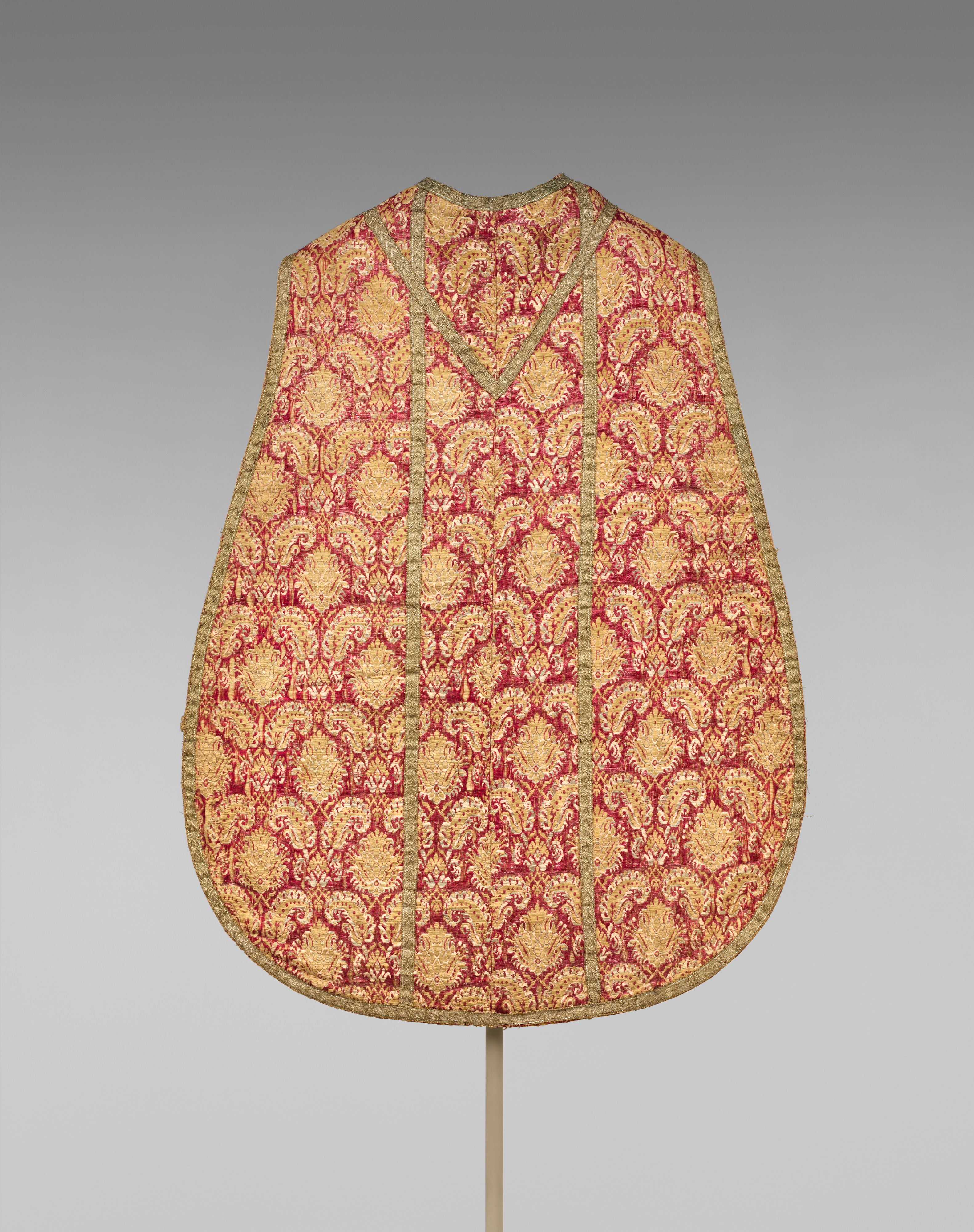
Heritage Analysis: The Chasuble as a Source of Symbolic Power and Luxury Strategy
As Lead Heritage Curator for Katherine Fashion Lab, I present this strategic standalone research on the chasuble—a garment of profound historical and spiritual significance. Originating from the ancient civilizations of the Mediterranean and Near East, the chasuble, in its earliest forms, was a simple, circular cloak known as the paenula, worn by travelers and laborers. Its evolution into a sacred vestment within the early Christian church, and its construction from silk, linen, and metal thread, positions it as a uniquely potent artifact for high-end luxury strategy in 2026. This analysis examines its symbolic power, historical adornment, and spiritual meaning, culminating in a strategic framework for Katherine Fashion Lab.
Historical Adornment and Material Origins
From Common Garment to Sacred Vestment
The chasuble’s journey from a practical, everyday cloak to a symbol of divine authority is a masterclass in the transformation of material culture. In ancient Rome, the paenula was a utilitarian garment, often made of coarse wool or linen, designed for protection against the elements. However, as the Christian church formalized its liturgy between the 4th and 6th centuries, this simple garment was elevated. The chasuble became the principal vestment for celebrating the Eucharist, signifying the yoke of Christ and the virtue of charity. The materials used—silk, linen, and metal thread—were not arbitrary. Silk, imported from the East via the Silk Road, represented wealth, purity, and the divine light of heaven. Linen, associated with the burial shroud of Christ, symbolized humility and sacrifice. Metal thread, often gold or silver, signified the eternal, incorruptible nature of God. This tripartite material composition created a garment that was at once earthly and celestial, functional and transcendent.
Adornment as a Language of Power
The historical adornment of the chasuble was a deliberate act of encoding power. Early examples were relatively plain, but by the medieval period, chasubles became canvases for intricate embroidery, known as opus Anglicanum in England or or nué in France. These embroideries depicted biblical scenes, saints, and cosmological symbols, transforming the priest’s body into a living narrative. The use of metal thread created a shimmering surface that caught candlelight, suggesting the presence of the divine. In the context of ancient civilizations, this practice echoes the pharaonic Egyptian use of gold and lapis lazuli in priestly regalia, or the Mesopotamian tradition of adorning statues of deities with precious metals. The chasuble thus became a portable temple, a wearable architecture of faith and authority. For Katherine Fashion Lab, this historical precedent underscores the power of material storytelling—where every thread and stitch carries a weight of meaning that transcends mere aesthetics.
Spiritual Meaning and Symbolic Power
The Chasuble as a Cosmic Garment
Spiritually, the chasuble is a garment of cosmic proportion. Its circular shape, when laid flat, represents the universe, while the opening for the head signifies the passage from the material to the spiritual realm. In Christian theology, the chasuble is often interpreted as the “yoke of Christ” (Matthew 11:29-30), a burden that is light and a symbol of service. However, its symbolic power extends beyond Christianity. In ancient mystery cults, similar circular garments were worn by initiates to denote rebirth and transcendence. The chasuble’s spiritual meaning is rooted in the concept of liminality—it is worn at the threshold between the human and the divine, the earthly and the heavenly. This liminal space is where the most profound human experiences occur: birth, death, transformation. For a luxury brand, this spiritual resonance offers a unique opportunity to create garments that are not merely worn, but inhabited—pieces that facilitate a shift in the wearer’s state of being.
Symbolic Power in the Context of Authority
The chasuble’s symbolic power is intrinsically linked to authority. In ancient civilizations, the right to wear specific garments was a marker of social and spiritual hierarchy. The Roman toga picta or the Egyptian nemes headdress were exclusive to emperors and high priests. Similarly, the chasuble was reserved for the celebrant at the altar, granting him a unique status as mediator between the congregation and the divine. This exclusivity is a foundational principle of luxury. The chasuble teaches us that scarcity, ritual, and hierarchy are potent tools for creating desire and reverence. For Katherine Fashion Lab, this suggests a strategy where garments are not just products but objects of investiture—pieces that confer status and meaning upon the wearer, much like a crown or a scepter.
2026 High-End Luxury Strategy: The Chasuble as a Blueprint
Strategic Pillars for Katherine Fashion Lab
To translate the chasuble’s heritage into a 2026 high-end luxury strategy, Katherine Fashion Lab must adopt three key pillars: Material Authenticity, Ritualistic Experience, and Symbolic Exclusivity.
Material Authenticity: The chasuble’s power derived from the intrinsic value of its materials. In 2026, luxury consumers are increasingly discerning, seeking provenance and narrative. Katherine Fashion Lab should source silk from heritage Italian mills, linen from Belgian ateliers, and metal threads from artisans who preserve traditional techniques like filé or passementerie. Each material should be accompanied by a digital certificate of authenticity, tracing its journey from raw fiber to finished garment. This transparency builds trust and elevates the product from commodity to artifact.
Ritualistic Experience: The chasuble was worn within a structured ritual—the Mass. Katherine Fashion Lab can create a “Ritual Collection” where each garment is designed for specific moments of transformation: a coat for a boardroom presentation, a gown for a gala, a jacket for a personal milestone. The purchase experience should mimic an investiture ceremony, with private viewings, personalized fittings, and a narrative booklet explaining the garment’s symbolic lineage. This transforms buying into a meaningful act, not a transaction.
Symbolic Exclusivity: Just as the chasuble was reserved for the priest, Katherine Fashion Lab should limit production of its most significant pieces. A “Pontifical Line” of no more than 100 pieces per year, each numbered and registered, would create a sense of sacred scarcity. These pieces would feature embroidered motifs drawn from ancient civilizations—Egyptian ankhs, Mesopotamian lamassu, or Byzantine chrismons—reinterpreted through a contemporary lens. The wearer becomes part of a select group, a modern-day custodian of ancient power.
2026 Market Positioning
In the 2026 luxury landscape, where sustainability and meaning are paramount, the chasuble offers a counter-narrative to fast fashion and transient trends. Katherine Fashion Lab should position itself as a “House of Sacred Luxury”, where garments are heirlooms, not disposable items. The chasuble’s legacy of being passed down through generations—many medieval chasubles survive in museums today—is a powerful model for a circular economy. A repair and restoration program, akin to a cathedral’s vestment care, would ensure that each piece remains in use for decades. This aligns with the growing consumer demand for longevity, craftsmanship, and emotional resonance.
Conclusion: A Garment of Transcendence
The chasuble, born from the looms of ancient civilizations and consecrated by centuries of spiritual use, is far more than a historical artifact. It is a blueprint for how luxury can reclaim its original purpose: to elevate the human experience. By understanding its symbolic power, historical adornment, and spiritual meaning, Katherine Fashion Lab can create a 2026 strategy that is not only commercially viable but culturally profound. The chasuble teaches us that true luxury is not about excess—it is about presence, purpose, and the sacred. As we move into an era of heightened consciousness, this ancient garment offers a timeless path forward.