Deconstructing the Threads of Time: A Couture Analysis of the Embroidered Silk and Linen Fragment
Introduction: The Fragment as a Complete Narrative
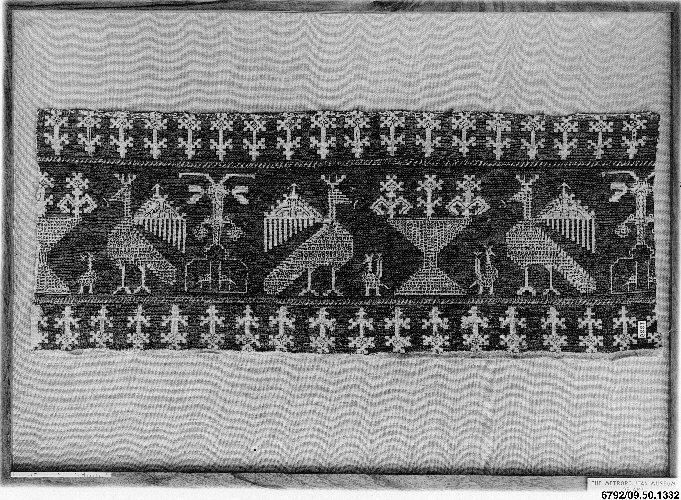
In the rarefied world of haute couture, the textile fragment often occupies a paradoxical space: it is both a relic of a bygone era and a living blueprint for future creation. At Katherine Fashion Lab, we approach such fragments not as incomplete objects, but as autonomous studies—standalone works that encapsulate the full spectrum of artisanal intelligence, material philosophy, and cultural memory. The subject of this analysis is a singular piece: an embroidered textile fragment of silk and linen, sourced from the vast repository of Global Heritage. It is not a garment, nor a swatch destined for a larger composition. It is, in its own right, a finished statement—a microcosm of the dialogue between human hands, natural fibers, and the intangible narratives of heritage.
This analysis seeks to decode the fragment’s intrinsic value, examining its material composition, the technical virtuosity of its embroidery, and its profound resonance within the context of global textile traditions. We will argue that this fragment, though physically modest, embodies the core principles of couture: rarity, manual mastery, and a deep, almost archaeological respect for origin.
Material Dialogue: The Union of Silk and Linen
The foundation of this fragment is a deliberate and sophisticated pairing of two distinct natural fibers: silk and linen. This is not a random composite but a strategic marriage of opposing qualities, each enhancing the other to create a textile of exceptional depth.
Linen, derived from the flax plant, provides the structural backbone. Its inherent crispness and tensile strength offer a stable ground for the delicate work to come. The linen’s natural, undyed ecru tone—ranging from pale ivory to a soft, sun-bleached beige—serves as a neutral canvas, allowing the embroidery to command visual attention. Its subtle irregularities, the slight slubs and variations in thread thickness, are not flaws but signatures of authenticity, speaking to a pre-industrial hand-looming process. This linen is not merely a substrate; it is a document of soil and climate, carrying the memory of flax fields and the labor of retting and spinning.
In contrast, the silk embroidery threads introduce a dimension of luminosity and fluidity. The silk, likely reeled from domesticated Bombyx mori cocoons, possesses a natural sheen that captures and refracts light, creating a dynamic surface that shifts with the viewer’s angle. Where the linen is matte and grounded, the silk is ethereal and animated. The embroidery is executed with a density that transforms the silk into a relief-like texture—a technique that elevates the fragment from a flat textile to a sculptural artifact. The interplay of these materials is not merely aesthetic; it is a tactile conversation between restraint and opulence, earth and air.
Embroidery as Cartography: Decoding the Stitch Language
The embroidery itself is the fragment’s central thesis. It is not decorative in the conventional sense; rather, it functions as a form of cartography, mapping cultural symbols, botanical motifs, and abstract geometries onto the linen surface. The stitches employed are a lexicon of global heritage techniques, each chosen for its specific expressive capacity.
We observe a predominance of satin stitch, used to fill broad areas with a smooth, unbroken field of silk. This technique demands extraordinary precision, as each stitch must lie parallel to its neighbor to achieve a mirror-like finish. The motifs themselves—stylized floral forms, perhaps lotus or peony derivatives—suggest an East Asian or Central Asian influence, where such symbols carry connotations of purity, prosperity, and cyclical renewal. The color palette is restrained yet potent: indigo blue, madder red, and a single accent of saffron yellow. These are not synthetic dyes; they are organic chromophores extracted from plants and insects, their hues mellowed by time into a harmonious patina.
Interspersed with the floral elements are geometric border patterns, executed in chain stitch and stem stitch. These borders create a rhythmic frame, anchoring the organic forms within a structure of order. The chain stitch, in particular, is a universal language—found from the Coptic textiles of Egypt to the embroidery of the Silk Road—and its presence here signals a confluence of traditions. The fragment’s embroidery is not a random scattering of motifs; it is a deliberate composition that balances negative space with densely worked areas, creating a visual rhythm that guides the eye across the surface. This is couture-level composition, where every stitch is a deliberate act of design.
Global Heritage Context: The Fragment as a Cultural Nexus
To fully appreciate this fragment, we must situate it within the broader framework of Global Heritage. This is not a single-nationality artifact; it is a hybrid object, bearing the marks of trade, migration, and cultural exchange. The use of linen—a fiber historically associated with Europe and the Mediterranean—alongside silk—a quintessentially Asian luxury—points to a transcontinental dialogue. The embroidery techniques, particularly the precision of the satin stitch, align with traditions seen in Chinese Suzhou embroidery, while the color palette echoes the natural dyes of the Indian subcontinent.
This fragment likely originated from a workshop or domestic context where multiple textile traditions converged—perhaps along the Silk Road, in a trading port like Samarkand or Kashgar, or in a courtly atelier that employed artisans from diverse regions. It is a living document of globalization before the modern era, a testament to how textiles served as carriers of aesthetic and technical knowledge across vast distances. The fragment’s condition—slightly faded, with minor wear along one edge—only enhances its historical authenticity. It is not a pristine museum piece; it is a witness to time, a survivor of centuries of handling, storage, and perhaps even repurposing.
Standalone Study: The Fragment as a Complete Couture Object
In the context of Katherine Fashion Lab, this fragment is studied not as a preparatory sample but as a finished work of art. Its status as a “fragment” is misleading; it is, in fact, a self-contained composition that requires no additional context to be understood. The decision to present it as a standalone study reflects a curatorial philosophy that values the integrity of the object over its utility. In an era of fast fashion and digital reproduction, this fragment stands as a counterpoint to disposability. It demands slow looking, tactile engagement, and intellectual reflection.
From a couture perspective, the fragment teaches us about material restraint and maximalist detail. The linen ground is humble, yet the embroidery is opulent. The scale is intimate—perhaps 30 by 40 centimeters—yet the visual impact is monumental. This is a lesson in proportion and focus: that luxury does not require vastness, but rather intensity of craft. The fragment also demonstrates the sustainability of heritage. Every material is natural, every dye is organic, and every stitch is made by hand. It is a model of circular fashion long before the term was coined, as the fragment itself may have been repurposed from a larger garment or textile, given new life as a standalone piece.
Conclusion: The Threads That Bind
This embroidered silk and linen fragment, sourced from Global Heritage, is far more than a textile sample. It is a compressed universe of cultural memory, technical mastery, and material poetry. Through its union of linen and silk, its intricate embroidery, and its global provenance, it speaks to the timeless principles of couture: respect for material, reverence for craft, and the belief that even the smallest fragment can contain the whole of human creativity. At Katherine Fashion Lab, we honor such objects as primary texts—not relics of the past, but living inspirations for the future of fashion. In their threads, we find not just history, but a blueprint for authenticity in an increasingly artificial world.