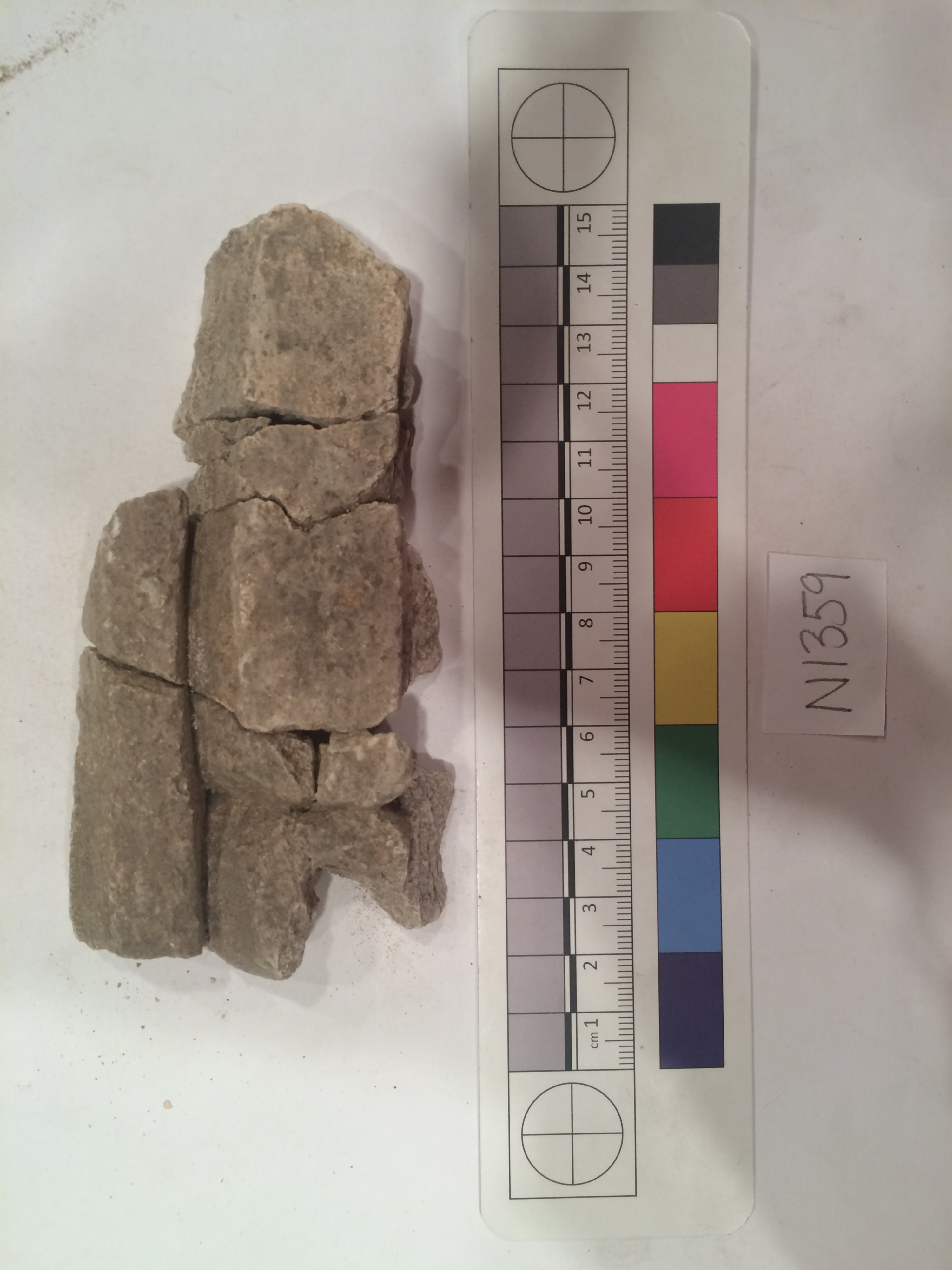
The Paradox of Permanence: A Couture Analysis of the Stucco Fragment
In the rarefied atmosphere of haute couture, where silk and tulle often dominate the lexicon of luxury, the Stucco Fragment emerges as an unexpected yet profoundly resonant muse. Sourced from a global heritage context—its precise origin lost to time but its aesthetic language universally understood—this standalone artifact of carved and painted mortar challenges our conventional notions of fabric, form, and finish. For Katherine Fashion Lab, this piece is not merely a decorative relic; it is a masterclass in structural integrity, textural storytelling, and the deliberate embrace of imperfection. This analysis deconstructs the fragment’s materiality, its sculptural grammar, and its potential to redefine a couture collection centered on the tension between fragility and endurance.
Materiality as Metaphor: Stucco’s Couture Lexicon
At first glance, stucco—a humble composite of lime, sand, and water—seems antithetical to the fluidity of fashion. Yet the Stucco Fragment reveals a sophisticated dialogue between rigidity and movement. The material’s inherent porosity, when carved, creates a surface that absorbs and reflects light in unpredictable patterns, much like a finely pleated organza or a hand-embroidered brocade. The painted layers—faded ochres, muted terracottas, and whispers of azure—tell a story of oxidation and age, a palette that no synthetic dye can replicate. For the couturier, this fragment offers a blueprint for architectural draping: where traditional fabrics are cut and sewn, stucco is built and layered. The material’s “memory” is literal—every crack, every brushstroke is a permanent trace of its making. In a collection, this translates to garments that hold their shape with the authority of sculpture, yet invite the wearer to inhabit their history.
Consider the structural parallels: a stucco fragment’s carved reliefs mimic the volume of a bustle or the rigidity of a corset, but without the constraints of boning. The material’s ability to be molded into sharp geometric edges or undulating organic curves suggests a new vocabulary for three-dimensional embellishment. Katherine Fashion Lab could translate this into garments where appliqués are not sewn but “cast” onto fabric using resin-infused textiles, or where sleeves are constructed as self-supporting architectural arcs. The fragment’s painted surface, with its subtle gradations of hue, inspires a technique of color blocking through erosion—where pigments are applied in stages, then partially abraded to reveal the base layer beneath, creating a depth that mirrors the passage of time on the original artifact.
Carved Narratives: The Grammar of Relief and Void
The Stucco Fragment’s carved motifs—fragments of foliage, abstracted geometric patterns, and the ghost of a human hand—are not merely decorative; they are a grammar of absence and presence. In couture, this translates to a design philosophy of negative space as narrative. The deep recesses of the carving create shadows that shift with the viewer’s perspective, a dynamic quality that can be replicated in fabric through strategic cutouts, laser-etched leathers, or hand-stitched openwork. The fragment’s reliefs, some worn smooth by time, others sharp and precise, suggest a hierarchy of texture: the high points catch the light, while the low points hold it, creating a visual rhythm akin to a gradated sequin pattern or a layered tulle overlay.
For a standalone study, the fragment’s most compelling feature is its incompleteness. It is not a whole; it is a fragment, a piece of a larger story. This invites the designer to embrace the aesthetic of the unfinished—raw hems, exposed seams, and intentionally frayed edges that celebrate the process of creation rather than its finality. The fragment’s edges, jagged and uneven, become a design element in themselves: a jacket’s hem might mimic the irregular break, or a skirt’s train might dissolve into a cascade of unbound threads. This is not an homage to deconstruction, but a redefinition of completion—where the garment’s narrative is left open, inviting the wearer to complete it through movement and interaction.
Global Heritage, Local Intimacy: The Standalone Context
The fragment’s origin as “global heritage” is both a challenge and an opportunity. Without a specific provenance, it becomes a universal archetype—a piece that speaks to the shared human impulse to adorn and preserve. In couture, this translates to a collection that transcends cultural appropriation by focusing on material translation rather than direct mimicry. For instance, the fragment’s painted motifs could inspire a series of hand-painted silks that abstract the original patterns, using indigo, madder, and ochre dyes sourced from multiple traditions. The carved reliefs might inform a technique of embossed leather or molded felt, where the material is physically altered to create depth without adding weight.
The standalone context of this study—a fragment examined in isolation—forces a focus on micro-details. In a couture garment, this translates to an obsessive attention to the interior architecture: the lining, the seam finishes, the hidden boning. The fragment’s reverse side, often rough and unadorned, inspires a philosophy of honest construction where the inside of a garment is as considered as its exterior. A gown might feature a corseted back with visible, hand-stitched channels that echo the fragment’s tool marks, or a jacket’s interior might reveal a painted pattern that only the wearer sees. This intimacy—the fragment’s secret history—becomes the garment’s hidden luxury.
The Couture Collection: Translating the Fragment
Envision a collection titled “Aeons in Mortar.” The opening look is a column dress in a heavy, unbleached linen, its surface hand-painted with a fresco-like gradient of earth tones, then partially sanded to reveal the fabric’s natural weave. The neckline is a sculptural collar of molded resin, mimicking the fragment’s carved foliage, while the hem is left raw, its edges frayed into a deliberate, dusty fringe. The second look introduces architectural volume: a coat of stiffened wool, its shoulders built as cantilevered curves that reference the fragment’s geometric reliefs. The fabric is treated with a metallic patina—a nod to the painted surface—that shifts from bronze to verdigris under light.
The collection’s centerpiece is a ball gown that reimagines the fragment’s carved void. The skirt is constructed from multiple layers of tulle, each layer laser-cut with a pattern derived from the fragment’s motifs, creating a three-dimensional shadow play. The bodice is a corset of hand-carved leather, its surface painted and then abraded to mimic the stucco’s texture. The train is a cascade of silk organza, its edges deliberately burnt and torn, evoking the fragment’s jagged perimeter. The final look is a minimalist sheath in a single panel of silk charmeuse, hand-painted with an abstract interpretation of the fragment’s faded pigments. The only embellishment is a single, heavy bronze pendant—a direct cast of a small section of the fragment—that hangs at the nape, a talisman of permanence against the fabric’s fluidity.
Conclusion: The Fragment as a Living Document
The Stucco Fragment is not a static object; it is a living document of craft, time, and human touch. For Katherine Fashion Lab, it offers a radical departure from the ephemeral nature of fashion, proposing instead a couture that embraces aging, wear, and incompletion as virtues. The fragment teaches that luxury is not found in perfection, but in the patina of process—the visible hand of the maker, the inevitable marks of time, the beauty of a story only partially told. In translating this lesson into fabric and form, the lab can create garments that are not just worn, but inhabited—pieces that grow more resonant with each passing season. The fragment’s ultimate couture legacy is this: that the most enduring design is one that acknowledges its own fragility, and in doing so, achieves a kind of timelessness.