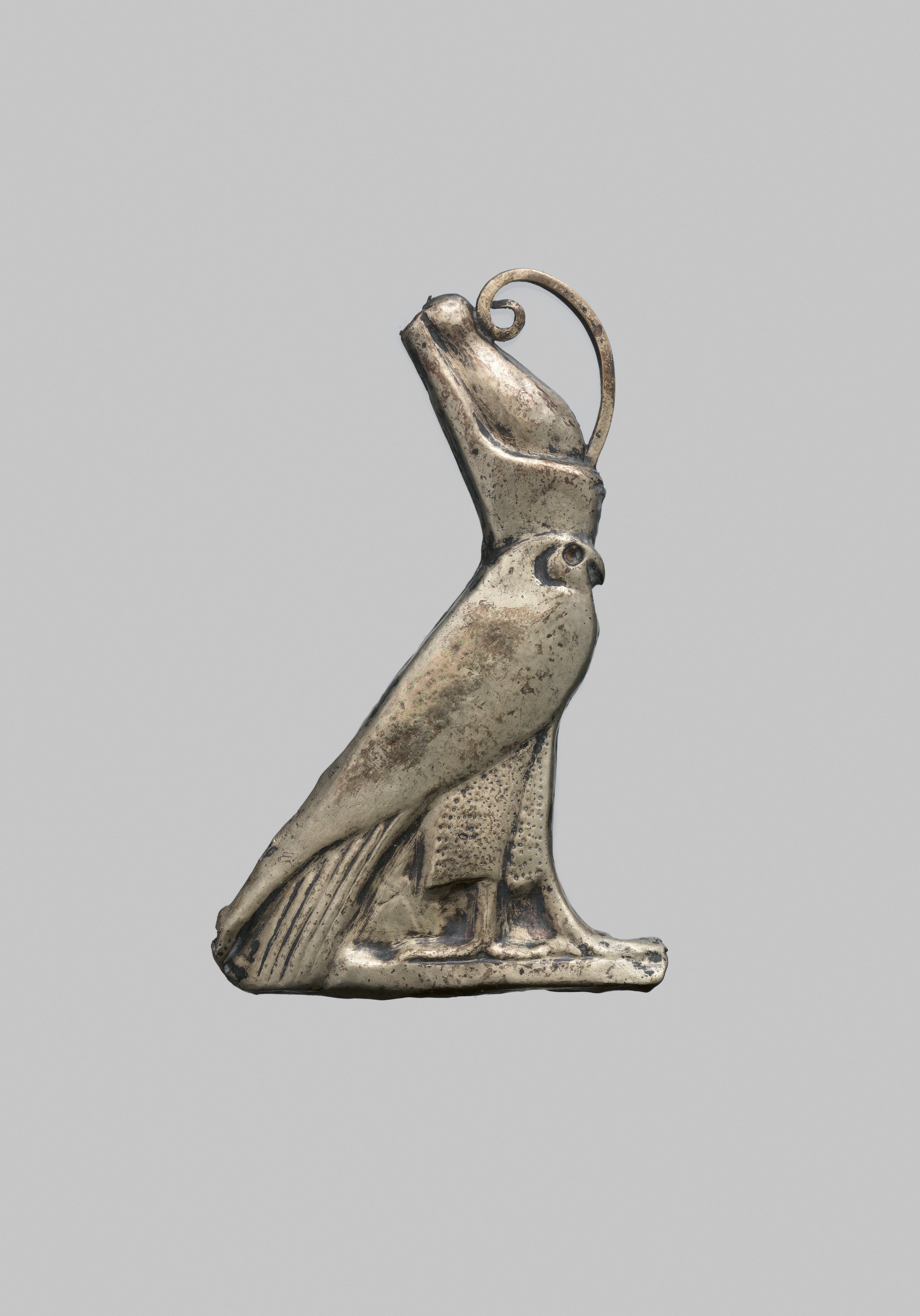
Heritage Analysis: The Pendant of Horus Wearing the Double Crown
This report presents a strategic heritage analysis of the Pendant of Horus wearing the double crown, an artifact rendered in electrum over plaster from an ancient civilization. Commissioned as a standalone research piece for Katherine Fashion Lab, this analysis explores the pendant’s symbolic power, its role in historical adornment, its spiritual meaning, and a forward-looking strategy for positioning such heritage within the 2026 high-end luxury market. The pendant, representing the falcon-headed god Horus adorned with the pschent (the double crown of Upper and Lower Egypt), serves as a potent emblem of divine kingship, protection, and unification—attributes that resonate deeply with contemporary luxury branding.
Symbolic Power: The Double Crown as a Marker of Authority
The pendant’s central motif—Horus wearing the double crown—is a masterclass in symbolic convergence. The double crown, or pschent, combines the white crown of Upper Egypt (hedjet) and the red crown of Lower Egypt (deshret), signifying the pharaoh’s dominion over a unified realm. Horus, as the sky god and protector of the monarchy, embodies the living king’s divine right to rule. When depicted wearing the double crown, Horus becomes a visual declaration of absolute sovereignty, merging celestial power with terrestrial governance.
For Katherine Fashion Lab, this symbolism offers a rich lexicon for high-end luxury. In a market where exclusivity and authority are paramount, the double crown motif can be abstracted into design elements that convey dominion—such as layered, interlocking forms or dual-toned finishes. The electrum medium, a natural alloy of gold and silver, further amplifies this symbolism: gold represents the sun’s eternal radiance and the flesh of the gods, while silver evokes the moon and purity. Together, they create a material metaphor for balance and unity, aligning with the 2026 luxury trend toward holistic, meaningful craftsmanship.
Historical Adornment: Electrum Over Plaster as a Statement of Prestige
The pendant’s construction—electrum over plaster—reveals a sophisticated approach to adornment in antiquity. Electrum was prized for its luminous, reflective quality, often reserved for royal regalia and temple offerings. The plaster core allowed for intricate detailing while reducing weight, enabling the pendant to be worn comfortably as a pectoral or amulet. This technique reflects a culture that valued visual opulence without sacrificing practicality—a principle that resonates with modern luxury consumers who seek both aesthetic impact and wearability.
In the context of historical adornment, the pendant was likely part of a ceremonial ensemble, worn by priests or pharaohs during rituals to invoke Horus’s protection. The electrum surface would have caught torchlight, creating a shimmering effect that signaled divine presence. For Katherine Fashion Lab, this historical context offers a blueprint for creating pieces that transcend mere accessory status. By emphasizing materials like electrum (or modern equivalents such as high-karat gold alloys) and layered construction, the brand can position its collections as artifacts of personal power—objects that confer status and spiritual resonance upon the wearer.
Spiritual Meaning: Horus as a Guardian of the Soul
Beyond political symbolism, the pendant carries profound spiritual significance. Horus, as the son of Isis and Osiris, embodies resurrection, protection, and the triumph of order over chaos. The double crown, when worn by Horus, represents the unification of the earthly and the divine—a reminder that the wearer is under the watchful eye of a cosmic guardian. In funerary contexts, such amulets were placed on mummies to ensure safe passage through the underworld, reinforcing the pendant’s role as a talisman of eternal protection.
For the 2026 luxury market, where consumers increasingly seek emotional and spiritual connections with their purchases, this heritage offers a compelling narrative. Brands like Katherine Fashion Lab can leverage the pendant’s spiritual meaning by framing their designs as modern amulets—pieces that offer protection, confidence, or a sense of purpose. The electrum-over-plaster technique can be reinterpreted through sustainable materials, such as recycled metals over bio-resin, aligning with the growing demand for ethical luxury. By emphasizing the pendant’s role as a spiritual artifact, the brand can differentiate itself in a crowded market, appealing to consumers who value meaning over mass production.
2026 High-End Luxury Strategy: Integrating Heritage into Modern Branding
To position the Pendant of Horus wearing the double crown within a 2026 high-end luxury strategy, Katherine Fashion Lab must adopt a three-pillar approach: narrative authenticity, material innovation, and experiential engagement.
Narrative Authenticity
Luxury consumers in 2026 will demand transparent provenance and cultural respect. The brand should partner with Egyptologists and heritage consultants to develop a detailed backstory for the pendant, including its archaeological context and symbolic nuances. This narrative can be embedded into product descriptions, digital lookbooks, and in-store displays, creating a story-driven purchase experience. For example, a limited-edition collection titled “The Pschent Line” could feature pieces that reinterpret the double crown’s dual-color motif, with each piece accompanied by a QR code linking to a short documentary on ancient Egyptian symbolism.
Material Innovation
Electrum over plaster is a historically specific technique, but its essence can be translated into modern luxury materials. For 2026, Katherine Fashion Lab could develop a proprietary alloy of recycled gold and silver, mimicking electrum’s natural hue, over a lightweight, sustainable core such as 3D-printed bio-resin. This approach honors the original craftsmanship while addressing contemporary concerns about environmental impact. Additionally, the brand could offer custom patina finishes, allowing clients to choose the degree of “aging” on their pieces, thereby creating a sense of personalized antiquity.
Experiential Engagement
The spiritual and symbolic weight of the pendant lends itself to immersive retail experiences. Katherine Fashion Lab could host private viewing events in partnership with museums, where clients can examine original artifacts alongside the modern reinterpretations. Virtual reality (VR) experiences might allow customers to “wear” the pendant in a reconstructed temple setting, deepening their emotional connection. In 2026, such phygital experiences—blending physical and digital—will be key to commanding premium pricing. The pendant’s role as a talisman could also inspire a ritual-based marketing campaign, where pieces are “blessed” or presented in ceremonial packaging, reinforcing their spiritual authenticity.
Conclusion
The Pendant of Horus wearing the double crown is far more than an ancient artifact; it is a strategic asset for Katherine Fashion Lab’s 2026 high-end luxury positioning. Its symbolic power as a marker of unified authority, its historical role as a prestigious adornment, and its spiritual meaning as a protective talisman offer a rich tapestry of narrative, material, and experiential opportunities. By respecting the heritage while innovating for modern tastes, Katherine Fashion Lab can create collections that resonate with discerning consumers seeking not just beauty, but depth, meaning, and a connection to timeless power. This heritage analysis confirms that the pendant’s legacy is not merely preserved but can be actively leveraged to define the future of luxury.