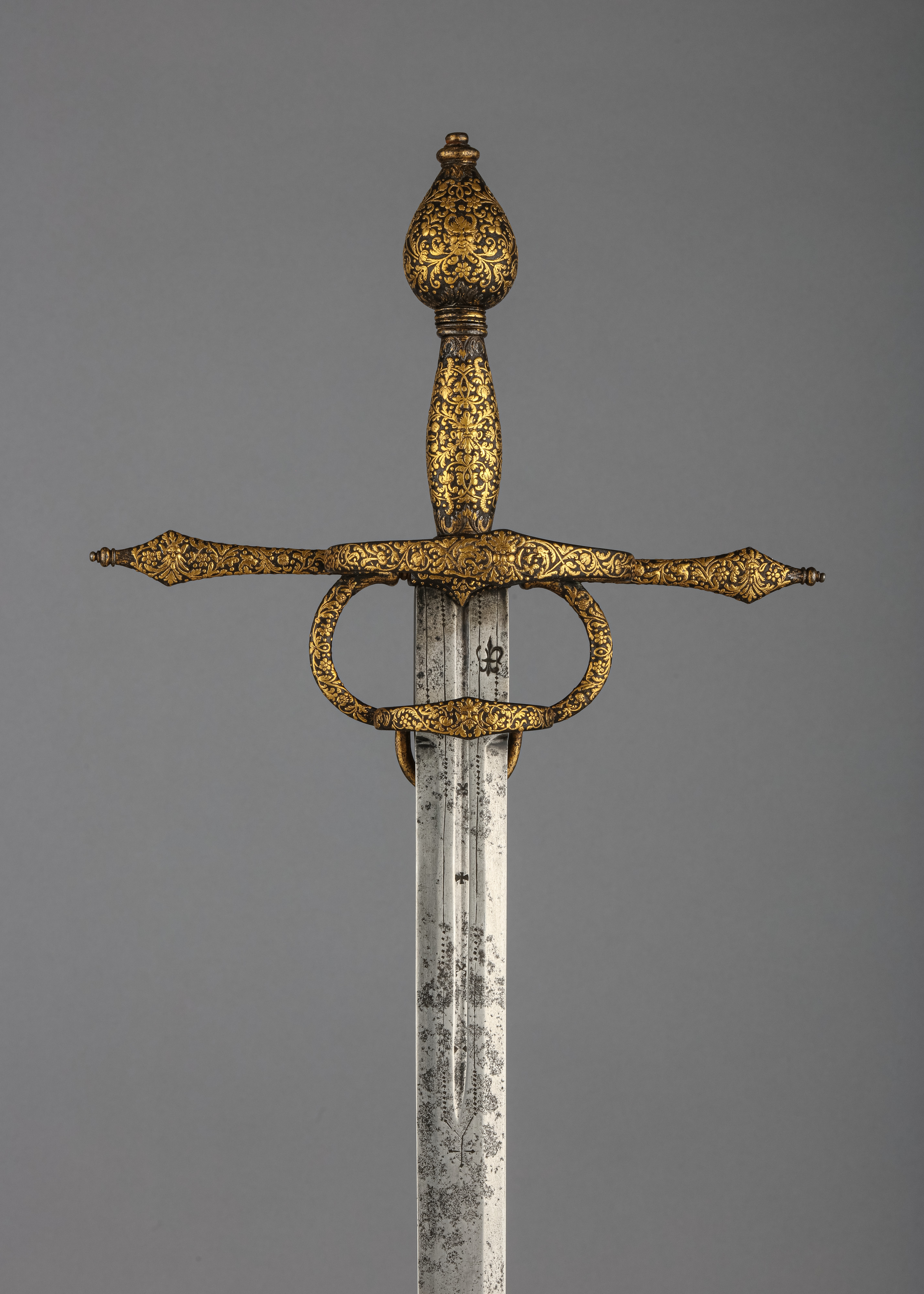
The Rapier: An Analysis of Form, Function, and Aristocratic Aesthetic
To analyze the rapier is to engage in a study of Renaissance paradox. It is an instrument of lethal precision born from an era of unparalleled artistic flourishing. Originating in Italy during the 16th century, the rapier represents a fundamental shift in the philosophy of personal armament, moving from the brutal, battlefield-oriented hacking of the medieval broadsword to a tool of civilian dueling, social performance, and refined violence. For Katherine Fashion Lab, this standalone study of the Italian rapier—crafted from steel and iron, and often adorned with gold—is not merely an historical artifact review; it is a masterclass in the integration of technical innovation with a powerful, identity-driven aesthetic. The rapier is, in essence, the ultimate Renaissance accessory, where metallurgy meets mannerism, and function is inseparable from formidable style.
Material Innovation: The Architecture of the Thrust
The core materials—steel and iron—tell a story of evolving technology. Unlike earlier swords, the rapier’s primary function was the thrust. This demanded a blade that was long, narrow, stiff, and acutely pointed. Italian swordsmiths, particularly those from cities like Milan and Brescia, achieved this through advanced forging and tempering techniques. The result was a blade of remarkable tensile strength, capable of piercing through the gaps in plate armor or, more commonly in civilian contexts, through fine fabrics and into the body with deadly efficiency. The iron provided the core structure, while the high-carbon steel edges and point allowed for a weapon that could be both incredibly resilient and sharp.
This material choice dictated a new silhouette. The typical Italian rapier blade could extend to 45 inches or more, creating a long, linear profile that emphasized reach and precision. The cross-section evolved from a flattened diamond to more complex hexagonal or fullered designs, each engineered to add rigidity while managing weight. The handle, or hilt, underwent its own revolution, transitioning from a simple cross-guard to an increasingly elaborate cage of protective steel bars, rings, and plates. This complex hilt, the guardia composta, was a direct material response to the new fencing style: as the off-hand (often holding a dagger or cloak) became occupied with parrying, the sword hand needed integral protection. Thus, steel was sculpted into functional art—a basket of safety that also became the canvas for extraordinary decoration.
The Gold Standard: Aesthetics of Power and Persona
Here, the third material—gold—enters the analysis, transforming the weapon from a tool into a socio-economic signifier. Gold, in the form of gilding, inlay, or damascening, was applied to the hilt, the quillons, and the pommel. This was not mere ostentation; it was a deliberate communication of status. The rapier was the constant companion of the Renaissance gentleman, the cortegiano, and its appearance was a direct reflection of his wealth, taste, and family prestige. The intricate scrollwork, mythological scenes, and floral patterns etched or inlaid into the steel with gold spoke of a patron’s education and classical sensibility.
The aesthetic philosophy mirrored the contemporary ideals of sprezzatura—the studied nonchalance and effortless grace that defined the aristocratic elite. A beautifully appointed rapier, worn with elegant civilian dress, demonstrated that the wearer was a man of culture and refinement, yet one inherently prepared to defend his honor. The gold highlights caught the light in the piazza or the palace chamber, drawing the eye and announcing presence. In this context, the rapier’s hilt became a piece of wearable sculpture, its design often commissioned from renowned artists and goldsmiths, blurring the line between the armorer’s forge and the jeweler’s bench. The material contrast between the cold, deadly steel and the warm, luminous gold perfectly encapsulated the duality of the Renaissance man: both civilized courtier and lethal duelist.
Contextual Silhouette: The Rapier as a Defining Element of Dress
As a standalone object, the rapier’s impact on the human silhouette cannot be overstated. Its extended length necessitated a specific manner of carriage—angled backward, with the pommel often forward of the hip to facilitate the smooth, swift draw. This posture influenced the very way a man moved through space, imposing a conscious, poised gait. The fashion of the period adapted to accommodate it; doublets were cut to allow the hanger or baldric to sit correctly, and the entire ensemble was balanced around the weapon’s weight and line.
More profoundly, the rapier completed the architectural structure of male Renaissance dress. The padded doublet, trunk hose, and stockings created a base form, but the long, vertical line of the sheathed rapier provided a dramatic counterpoint, an exclamation mark of verticality that enhanced the wearer’s height and bearing. When drawn, the extended blade became a dynamic extension of the arm, a line of intent that literally and figuratively projected personal space and authority. In portraits of the era, the rapier is rarely an afterthought; it is a central compositional element, anchoring the subject and symbolizing their readiness, their nobility, and their participation in the codes of honor that governed elite society.
Conclusion: A Legacy of Integrated Design
The Italian rapier stands as a pinnacle of integrated design thinking. Its material composition—the marriage of functional steel and iron with decorative gold—was a direct response to a confluence of social, technological, and artistic drivers. It solved a practical problem (civilian dueling defense) with technical brilliance, while simultaneously serving as a potent vehicle for personal and social identity. For Katherine Fashion Lab, the rapier offers timeless lessons: it demonstrates how silhouette is dictated by purpose, how materials communicate beyond their physical properties, and how the most powerful aesthetic statements are those where ornamentation is inherent to the object’s reason for being. It reminds us that true luxury lies not in decoration applied, but in a profound unity of form, function, and symbolic meaning—a principle as relevant to the atelier today as it was in the workshops of Renaissance Milan.