The Divine Silhouette: Deconstructing the Madonna and Child Through a Couture Lens
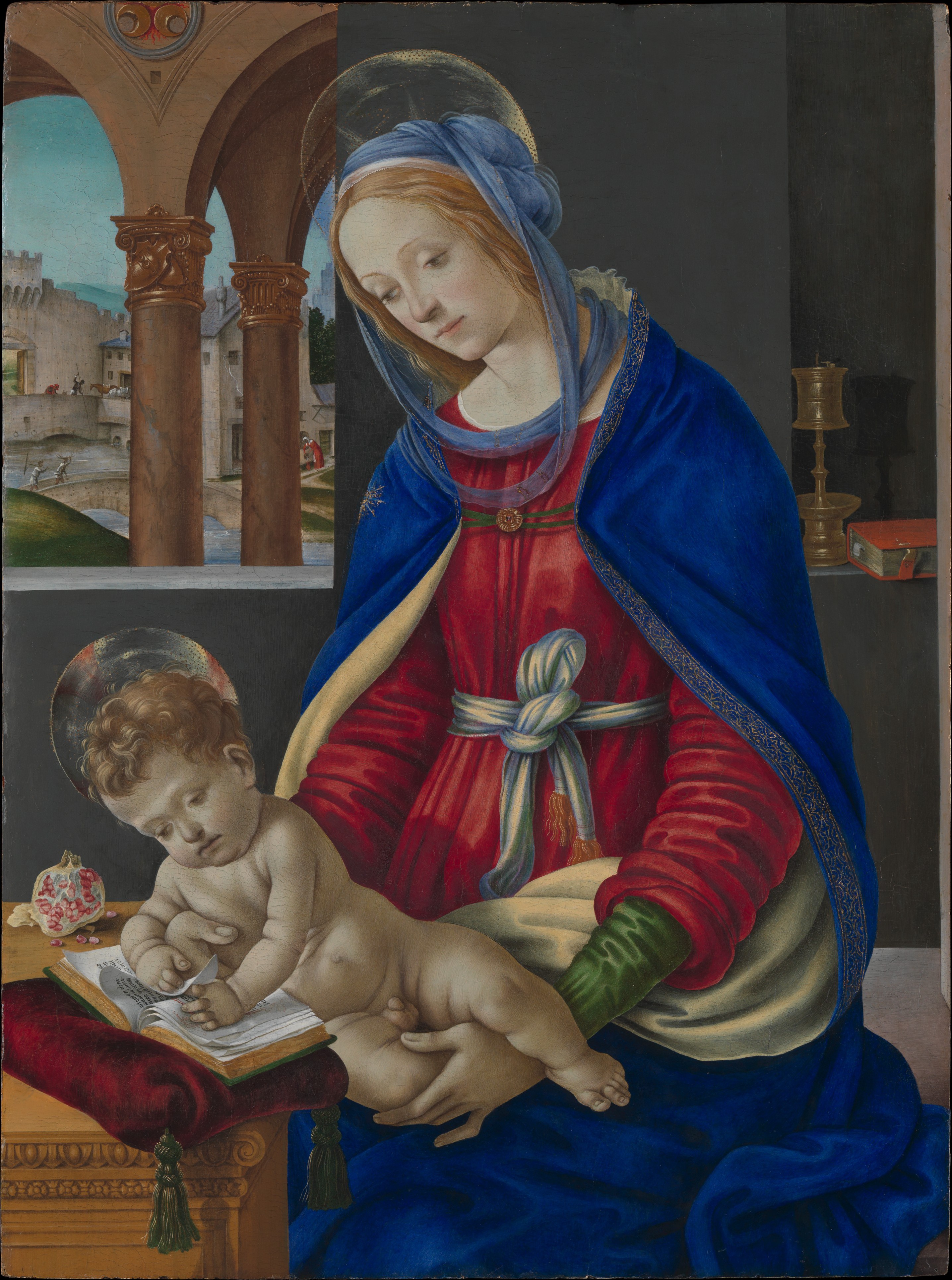
In the hallowed halls of art history, few subjects possess the enduring narrative power of the Madonna and Child. Yet, to confine this iconography solely to the realm of religious devotion would be to overlook its profound influence on the language of haute couture. At Katherine Fashion Lab, we approach this standalone study not as a mere reproduction of a sacred image, but as a masterclass in structural elegance, symbolic drapery, and the alchemy of material. Our analysis deconstructs the Madonna and Child—executed in the sacred trinity of tempera, oil, and gold on wood—as a blueprint for a garment that transcends time, merging global heritage with the precision of modern tailoring.
The Palette of Prestige: Tempera, Oil, and Gold
The medium itself dictates the first layer of our couture analysis. Tempera, with its rapid drying and luminous opacity, demands a discipline reminiscent of a master seamstress working with stiff silk organza. Each brushstroke is a deliberate, irreversible stitch. The introduction of oil glaze, applied in translucent layers, mimics the fluidity of a liquid chiffon—allowing for depth, shadow, and the illusion of movement. This interplay between the matte finish of tempera and the glossy sheen of oil creates a textural dialogue that we translate into fabric selection: a bodice of matte duchesse satin, structured like the tempera base, paired with an overskirt of oiled silk taffeta that catches light with every step.
Gold leaf, however, is the couturier’s ultimate statement. In the original work, gold is not merely a color but a structural element—a halo, a border, a divine light source. For our garment, we interpret this through hand-embroidered goldwork using pure 24-karat thread and metallic bullion knots. The gold is applied not as an afterthought but as an architectural armature, framing the neckline and cascading down the spine like a Byzantine iconostasis. This technique, drawn from global heritage—from the gold-threaded brocades of the Mughal courts to the sacred vestments of the Orthodox Church—anchors the design in a universal language of reverence.
Drapery as Devotion: The Madonna’s Mantle
The Madonna’s iconic blue mantle is more than a garment; it is a sculptural element that defines the composition. In our analysis, we deconstruct its folds as a series of engineered pleats and darts. The tempera technique, with its sharp, defined edges, informs the precision of our pattern cutting. We use a heavy-weight wool-cashmere blend, dyed in a deep ultramarine sourced from lapis lazuli—a pigment historically more valuable than gold. The fabric is pre-creased using a combination of steam and heat to create permanent, architectural folds that echo the linear precision of the tempera brushwork. These folds are not random; they follow the gravitational logic of the painting, drawing the eye toward the Child as the focal point.
This mantle, however, is not static. The oil glaze in the original painting lends a softness to the shadows, a liquidity that we replicate through the use of a detachable, double-faced cape. One side is the structured wool; the reverse is a liquid silk charmeuse, hand-painted with a gradient of indigo to cerulean. This duality allows the garment to transform from a rigid, icon-like silhouette into a flowing, ethereal form—mirroring the dual nature of the Madonna as both human mother and divine vessel.
The Child as Couture Motif: Structural Symmetry and Symbolism
The Christ Child in this composition is not a passive infant but an active component of the design’s balance. His posture—blessing, gazing, reaching—dictates the asymmetry of the Madonna’s silhouette. In our garment, we interpret this through a single shoulder drape, a technique borrowed from the chiton of ancient Greece and the toga of Rome. This asymmetrical line is reinforced by a gold chain that connects the shoulder to the waist, evoking the golden rays of the halo. The Child’s nudity, a symbol of vulnerability and purity, is translated into a sheer, flesh-toned mesh inset at the bodice, embroidered with tiny seed pearls that mimic the glimmer of oil highlights on skin.
The positioning of the Child’s hand in a blessing gesture becomes a literal design element: a single, elongated sleeve on the left arm, terminating in a gold-embroidered hand motif. This sleeve is constructed from a double layer of organza—one layer painted with tempera-like opacity, the other left sheer—creating a visual echo of the painting’s layered glazes. The right arm remains bare, a couture choice that disrupts symmetry and forces the viewer to engage with the garment’s narrative tension.
Global Heritage in Every Stitch
This analysis draws from a global heritage that extends beyond the European Renaissance. The use of gold on wood evokes the gilded altarpieces of Siena, but also the gold-leafed textiles of the Song Dynasty and the hammered gold ornaments of the pre-Columbian Andes. The tempera technique, with its egg-yolk binder, is a cousin to the natural dyes and binders used in Indian miniature painting. The verticality of the composition, with its elongated proportions, recalls the ikat-woven tunics of the Maya and the draped statues of the Buddha in Gandhara. At Katherine Fashion Lab, we do not appropriate these traditions; we synthesize them. The result is a garment that speaks a universal language of craftsmanship, where a single seam can reference a Chinese court robe and a Florentine altarpiece simultaneously.
From Panel to Pavé: The Standalone Study as a Runway Moment
This standalone study is not a costume for a period drama. It is a conceptual garment designed for the modern runway, where the painting’s wooden panel becomes a structured corset, and the gold leaf becomes a pavé of Swarovski crystals and metallic thread. The back of the garment is left deliberately unfinished, with raw edges and exposed seams, referencing the untreated wood of the original panel. This juxtaposition of raw and refined, of sacred and secular, is the hallmark of a couture piece that challenges the viewer to see beyond the icon.
The silhouette is a hybrid of the Renaissance “cone” shape and the modern architectural gown. A high, structured waistline elongates the torso, while a full, floor-length skirt is constructed from multiple panels of hand-painted silk. The painting of the skirt mirrors the tempera technique: each panel is built up in layers of pigment and oil, then sealed with a thin layer of beeswax for a matte finish. The gold accents are applied last, using a combination of embroidery and appliqué, creating a surface that is both flat and dimensional, much like the gilded halos of the original work.
The Verdict: A Garment of Transcendence
In conclusion, the Madonna and Child as a subject for couture analysis reveals the profound intersection of art, faith, and fashion. The materials—tempera, oil, and gold on wood—are not limitations but invitations to innovate. The global heritage embedded in this iconography allows for a design that is both specific and universal, rooted in tradition yet forward-looking in its execution. At Katherine Fashion Lab, we see this standalone study as a testament to the power of slow, deliberate creation. Every fold, every stitch, every glint of gold is a prayer to the craft. This garment does not merely clothe the body; it elevates the spirit, transforming the wearer into a living icon of grace, structure, and timeless beauty. It is, in the truest sense, a divine silhouette.